In coffee, cupping is routine: samples roasted to a standard, brewed to a standard, scored on a form, and a number comes out. Cacao has an equivalent system, no less rigorous — but far fewer people outside the trade know it exists. This is how it works.
191
samples assessed in the 2025 edition, from 45 origins
14
sensory attributes on the cacao mass evaluation form
5 kg
minimum bean quantity per submitted sample
Why a Shared Standard Is Needed
When one person calls a lot "fruity" and another calls it "a bit sour", are they describing the same thing or two different things? Without a shared language, every comment about flavour is personal opinion and cannot be used to trade on.
The Cacao of Excellence programme, running since 2008, exists to solve exactly that. Its assessment toolkit was built with experts from more than 60 cacao-producing countries, and the complete guide was published on 25 September 2023.
The toolkit has three parts: a guide to assessing cacao quality and flavour, a flavour wheel, and a glossary defining each descriptor precisely. The aim is that a farmer in South America, a roaster in Europe and a buyer in Asia understand a given word the same way.
Three Stages of Assessment
STAGE 01 — THE BEAN
Physical assessment and the cut test
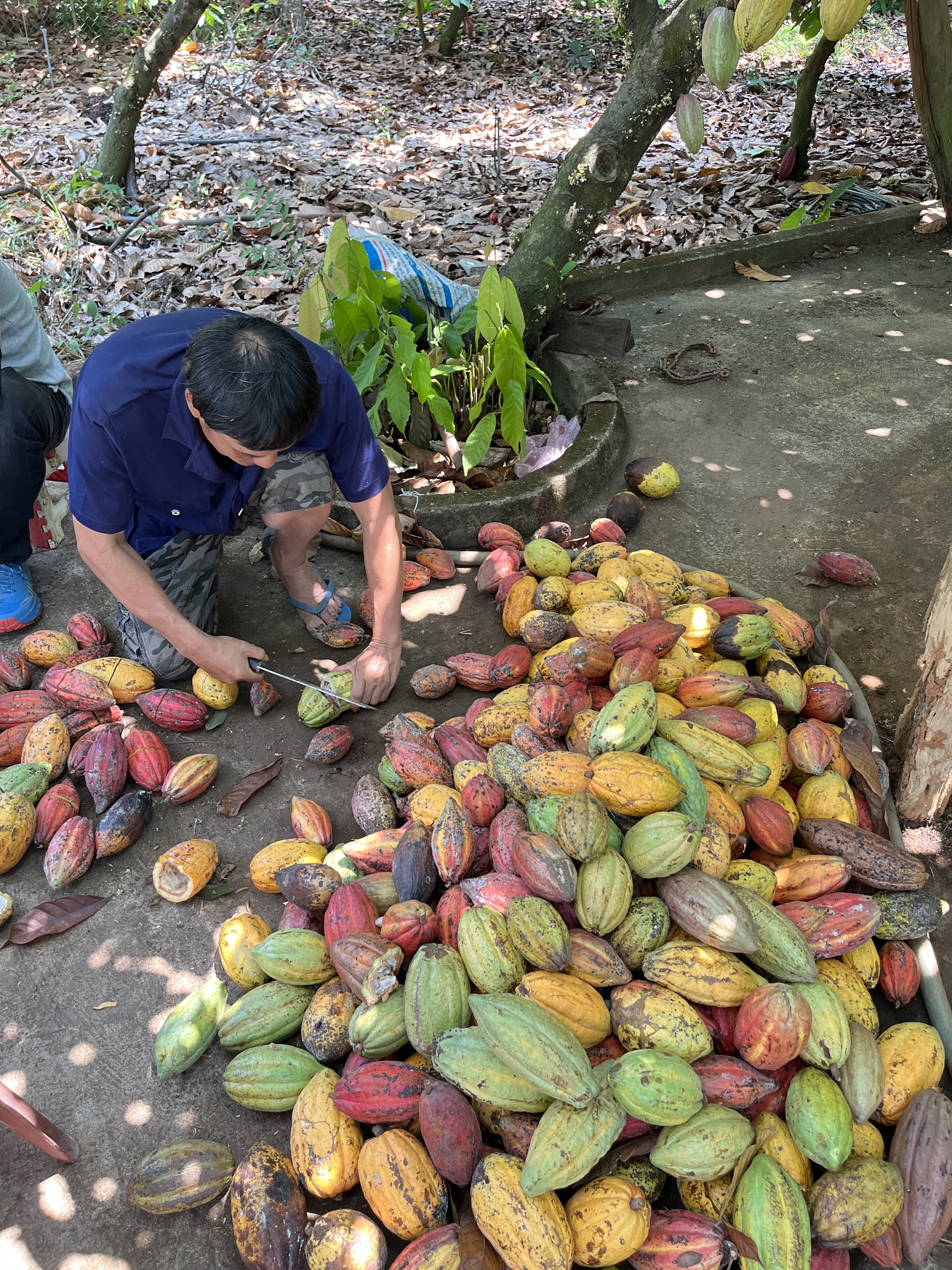
Arriving samples are assigned a blind code so evaluators cannot see the origin. Whole beans are checked for appearance and aroma, then comes the cut test — beans cut open to inspect the interior.
Cut-surface colour indicates fermentation: fully purple means unfermented or under-fermented, chocolate brown means fully fermented. The acceptance thresholds are tight: a maximum of 3% slaty beans (grey, unfermented) and a maximum of 4% internal mould. Exceed either and the sample is out, however promising the flavour.
STAGE 02 — CACAO MASS
Identical processing, then blind tasting
This is the crux, and where the parallel with coffee cupping is closest. Every sample is processed under identical, controlled conditions: the same cleaning, roasting, winnowing, grinding and tempering.
The reason is simple. If each sample were roasted differently, what is being compared is the roaster's skill, not the quality of the bean. Standardising processing is the only way to isolate the variable you actually want to measure. A panel of international sensory experts then tastes blind and scores on the standard form.
STAGE 03 — CHOCOLATE
One recipe for every sample
Samples reaching the final round are made into dark chocolate to a single fixed recipe, unchanged between samples: 61% cacao nibs, 5% deodorized cocoa butter, 33.65% sugar and 0.35% soya lecithin — 66% total cacao.
Same principle: every variable other than the bean is locked down. The final panel is broader, including chocolate makers and bean buyers, tasting blind to select the awards.
Fourteen Attributes on the Form
The cacao mass evaluation form covers the following, each recorded as an intensity rather than as liking or preference:
Cocoa
Acidity
Bitterness
Astringency
Fresh fruit
Browned fruit
Floral
Woody
Spice
Nutty
Caramel / panela
Roast degree
Off-flavours
Global quality
When the assessment is made on finished chocolate, sweetness is added to the form. Alongside it sits the cacao flavour wheel, running from fruity and floral through to nutty and earthy, guiding the evaluator from broad description down to specific terms layer by layer.
Compared to Coffee Cupping
Coffee cupping
The form covers fragrance and aroma, flavour, aftertaste, acidity, body, balance, uniformity, clean cup, sweetness and an overall score.
Each attribute is scored from 6 to 10 in 0.25 increments. Defects are deducted: taints cost 2 points, faults cost 4.
The output is a single number on a 100-point scale. Scores of 80 and above are generally treated as specialty grade.
Cacao assessment
The form covers 14 attributes, most of them recording the intensity of a flavour group rather than a preference rating.
A physical stage with the cut test comes first, carrying hard rejection thresholds — something coffee cupping has no direct equivalent to.
The output is closer to a flavour portrait than a single score, though a global quality field does exist.
The core difference is purpose. A coffee cupping score feeds directly into grading and pricing — one number, universally understood. Cacao assessment is descriptive: it answers "what does this lot taste like" rather than "what is this lot worth out of 100". For a chocolate maker, a flavour portrait is more useful than a score, because they need to know which recipe the bean suits, not merely whether it is good or bad.
The most important thing the two share is the principle of standardising everything except the variable being measured. Coffee standardises roast level, brew ratio and water temperature. Cacao standardises roasting, grinding and even the chocolate recipe. Without that step, no comparison means anything.
What This Means for Buyers
First, fermentation is settled before roasting is. The cut test sits at stage one and carries rejection thresholds, meaning a poorly fermented lot is eliminated before anyone tastes it. No roasting technique rescues badly fermented beans.
Second, ask suppliers in this language. Instead of "is the cacao good", ask for the slaty percentage, the internal mould percentage, and a flavour portrait against the standard groups. Specific questions filter for serious suppliers.
Third, do not compare differently roasted lots. To judge two bean sources on their merits, bring them to the same processing first.
Vietnamese Cacao and BALAVA
Vietnam has appeared on the International Cocoa Organization's list of countries exporting fine or flavour cocoa, with a determined share of 80% of export volume per the listing revised in April 2024 — a high proportion by world standards.
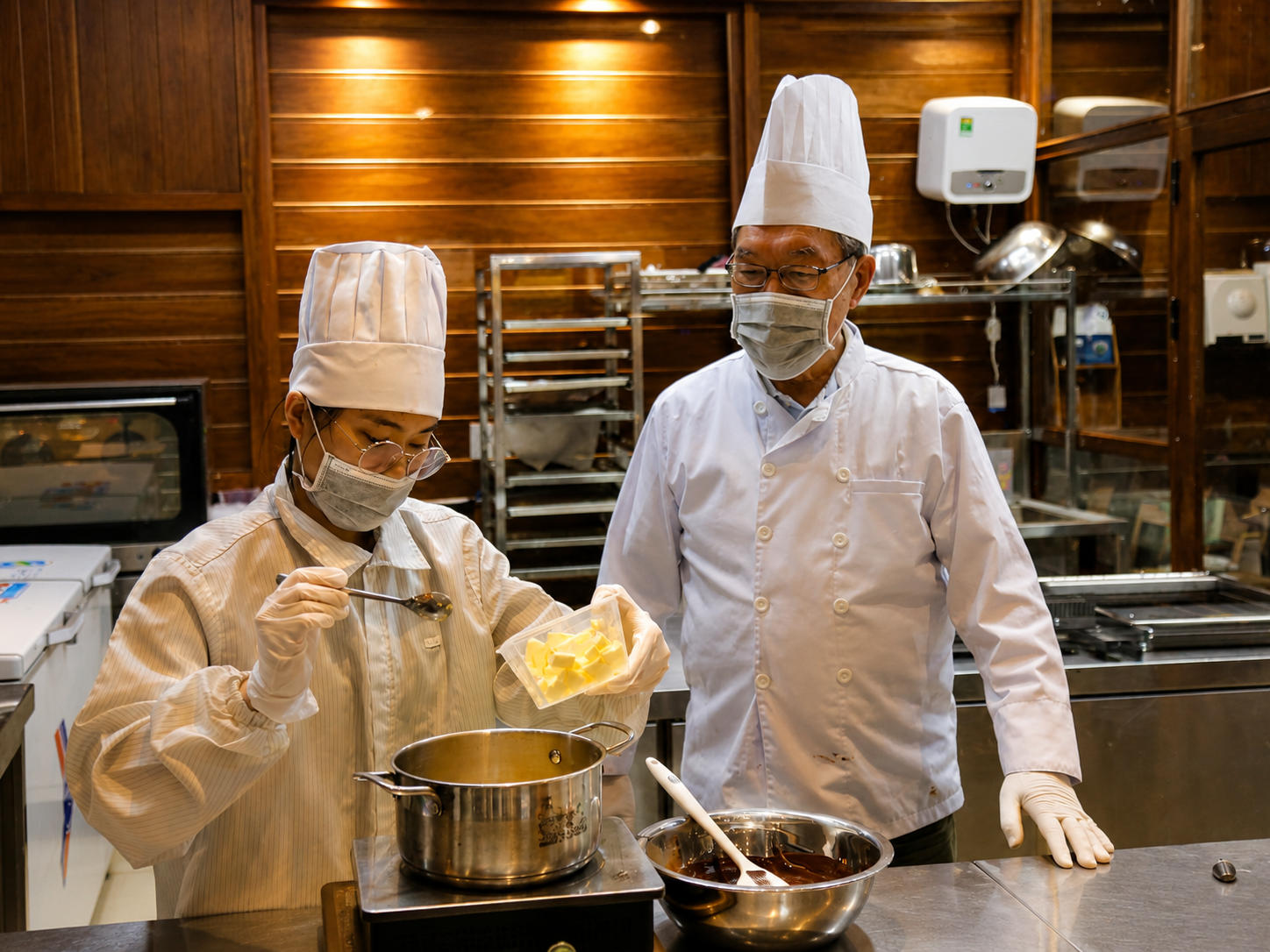
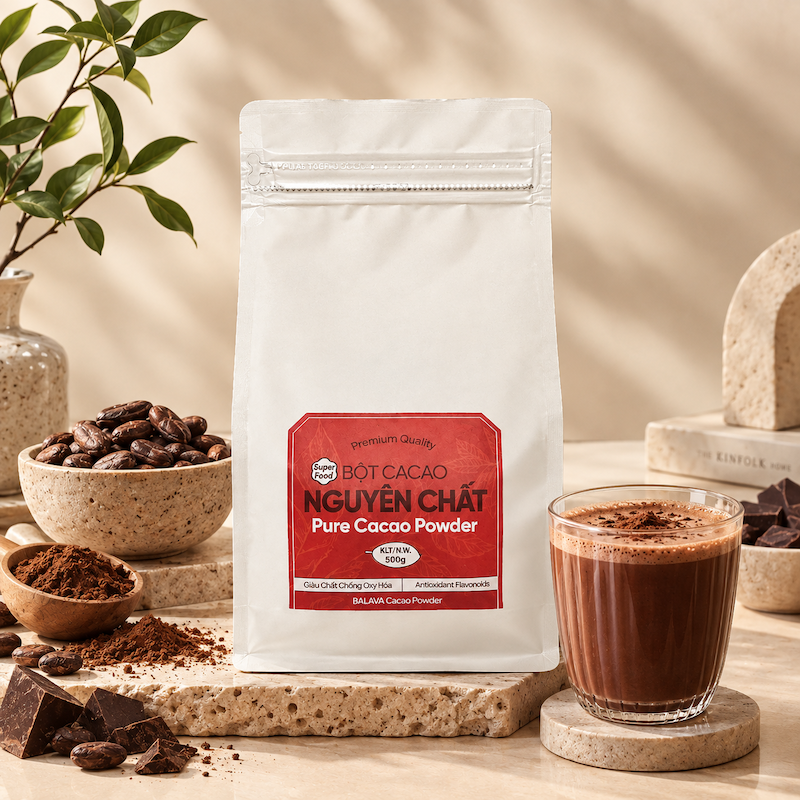
BALAVA uses cacao from Lam Dong, Vietnam, and runs the full processing chain in its own workshop in Da Lat: fermentation via the Nakano Mame method, then roasting, stone grinding, butter pressing, sifting and moulding. Our cocoa powder is non-alkalized with 22–25% cocoa butter.
If you need technical documentation — fermentation parameters, moisture, flavour description — contact TGROUP and we will assemble what your market requires.
Sources: the three-stage process, sensory attribute list, cut test thresholds, standard chocolate recipe and 2025 edition figures are drawn from published Cacao of Excellence programme documentation. Coffee cupping attributes and scoring scale are from the official Specialty Coffee Association cupping form. Vietnam's fine or flavour share is published by the International Cocoa Organization. This article describes an international assessment methodology for reference purposes; BALAVA makes no claim to having entered or placed in any of the evaluations described.
Wholesale, Export & Corporate Gifting
TGROUP is BALAVA's distribution partner. Contact us for pricing, product specifications and export documentation.
Other review products
.png "Roasted Cacao Beans")