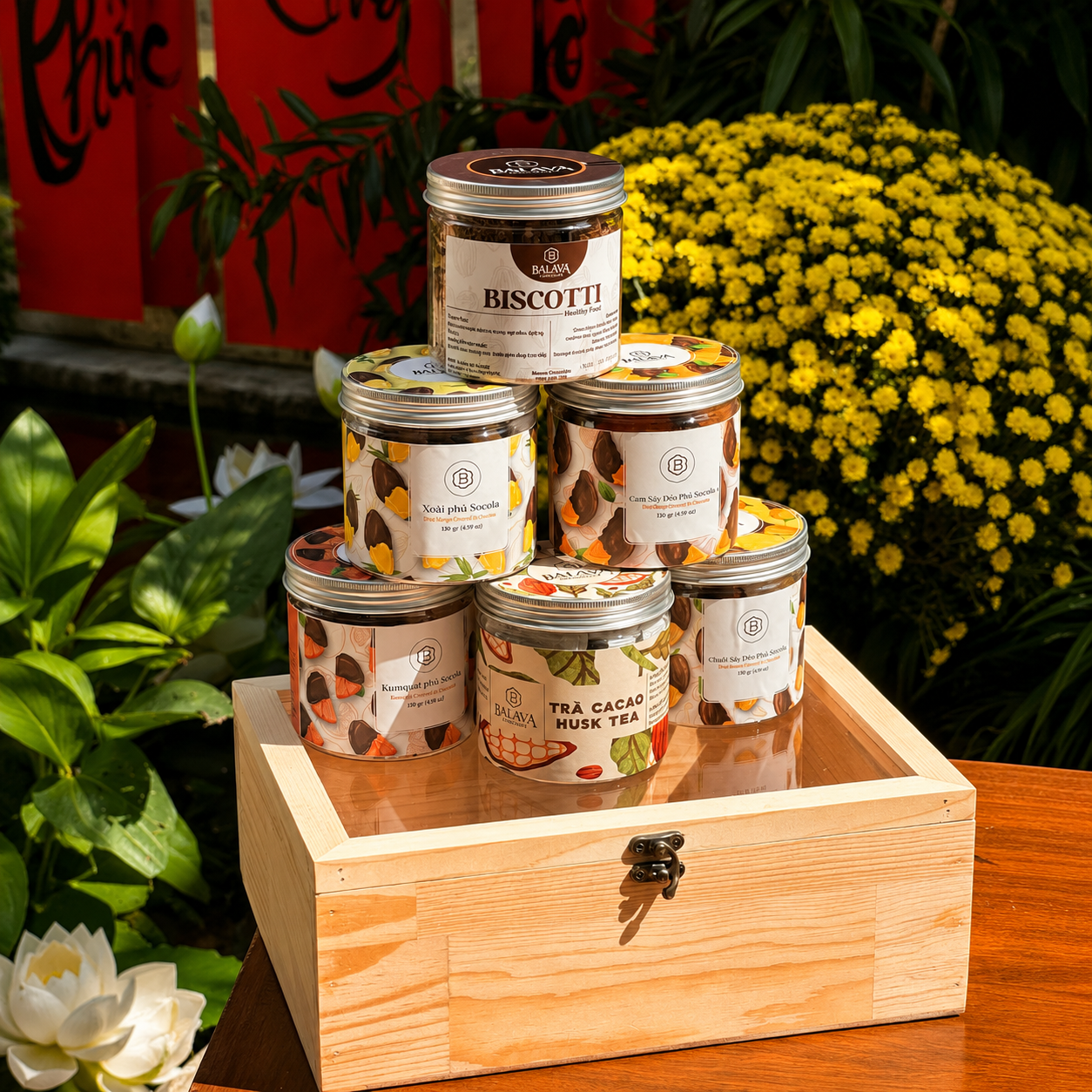
The most repeated piece of chocolate advice is “never put it in the refrigerator”. That advice was written in Europe, where room temperature in summer rarely passes 25°C. In tropical conditions it does not transfer, and following it literally will ruin stock. The accurate answer: the refrigerator is not the default, but there are cases where it is mandatory — and when you use it, method matters.
Ideal conditions
| Factor | Target | Why |
|---|---|---|
| Temperature | Around 15–18°C, and above all stable | Temperature swings drive cocoa butter to the surface where it recrystallises as fat bloom |
| Humidity | Below roughly 50–55% | Moisture dissolves surface sugar and leaves crystals behind as sugar bloom |
| Light | Dark | Light accelerates oxidation of the fat, producing rancid notes |
| Air | Fully sealed | Cocoa butter absorbs odours strongly — stored near coffee, spices or onions, it will taste of them |
Read that table in a tropical setting and the problem is immediate: almost nowhere in a Vietnamese home sits naturally at 15–18°C. Ambient temperature in the hot season commonly runs 28–35°C at 70–85% humidity. The cocoa butter crystal form that tempering aims for begins to melt at about 33.8°C — meaning that on many summer days, a bar left on a table is already at or past that threshold.
So should it go in the fridge?
A refrigerator carries two real risks, and both are manageable.
The first is condensation. Take cold chocolate out and airborne moisture condenses on the chilled surface, dissolves sugar, then evaporates leaving a white sandy film. That is sugar bloom, and at tropical humidity it happens fast.
The second is odour. A domestic fridge holds a great deal of strongly scented food, and cocoa butter absorbs odours better than most things in there.
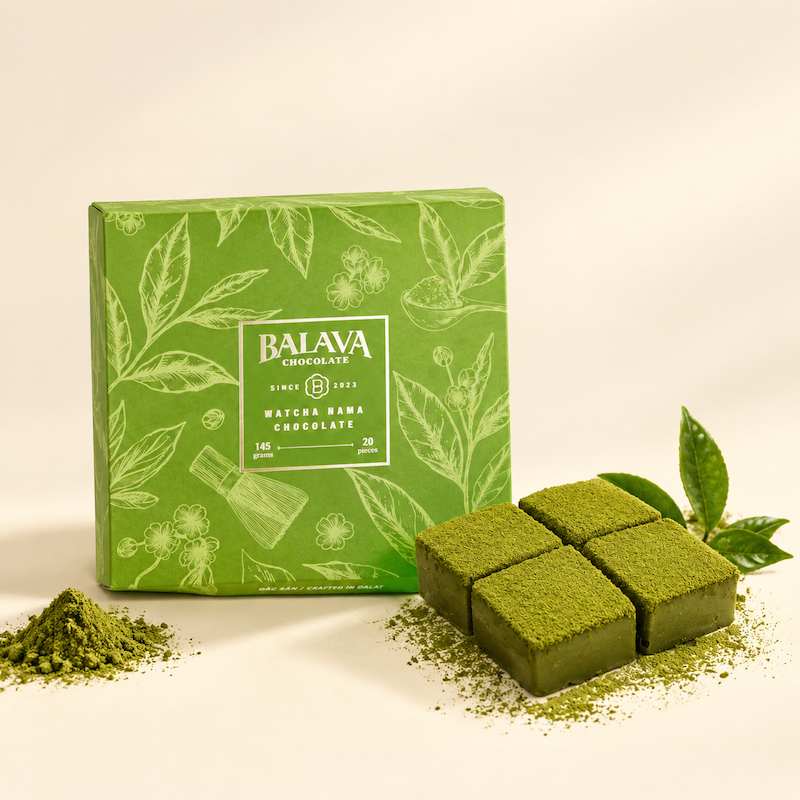
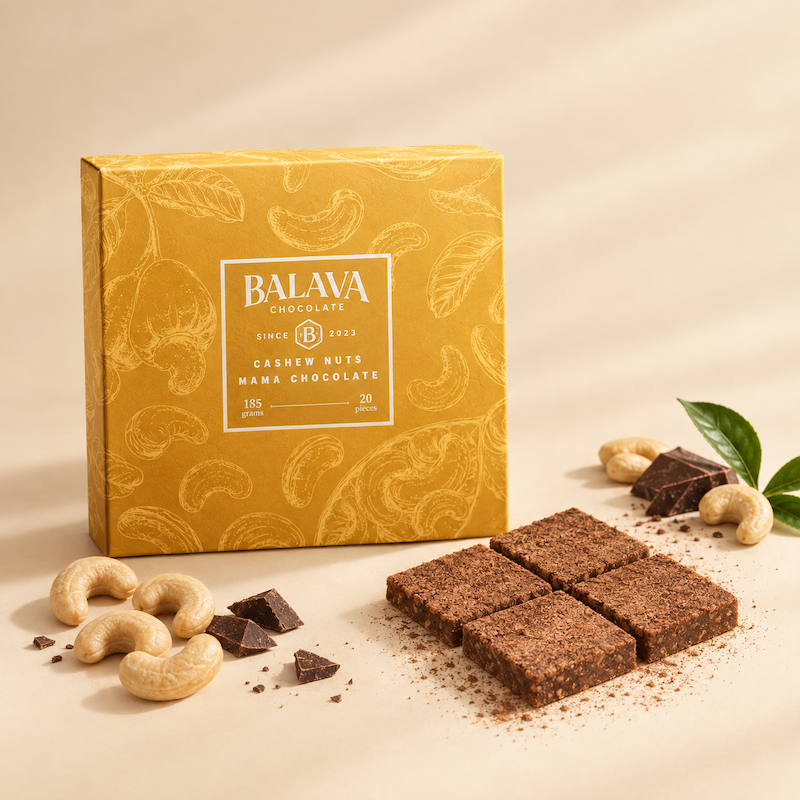
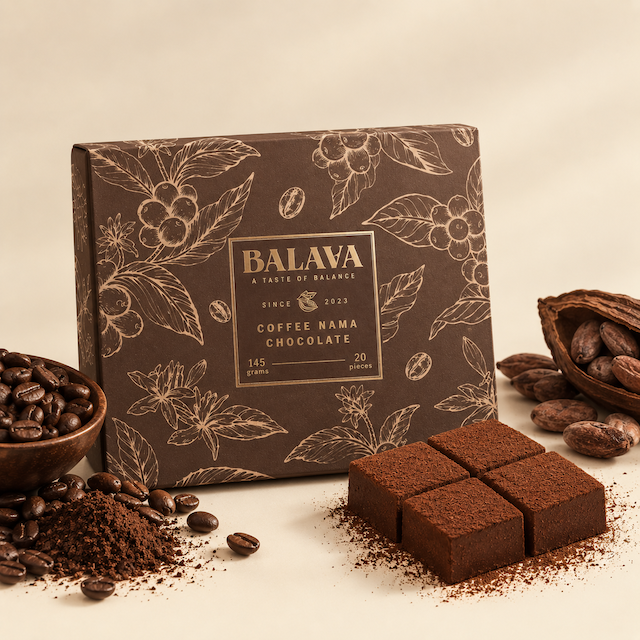
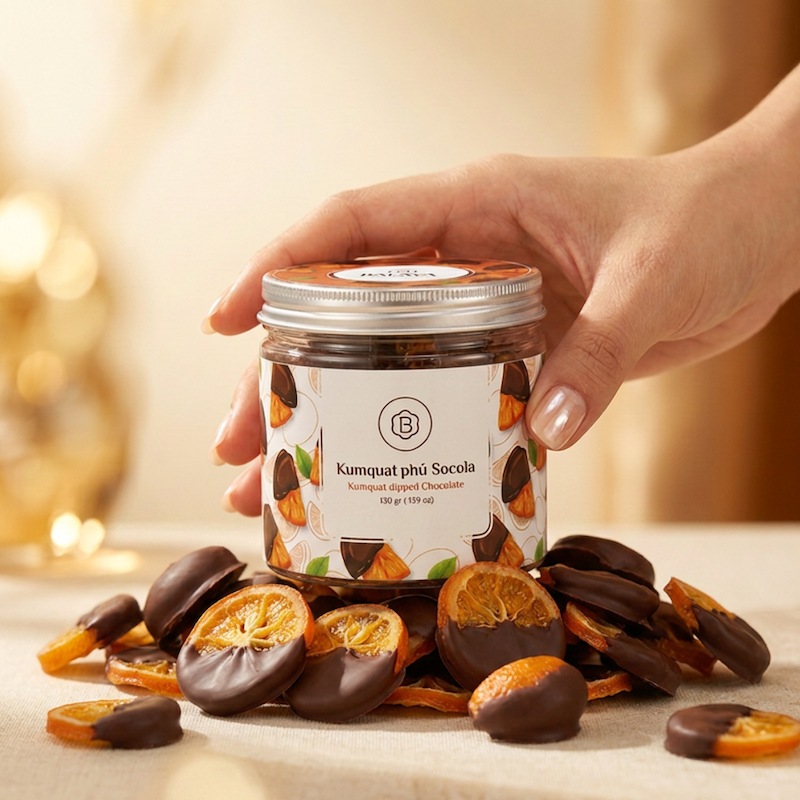
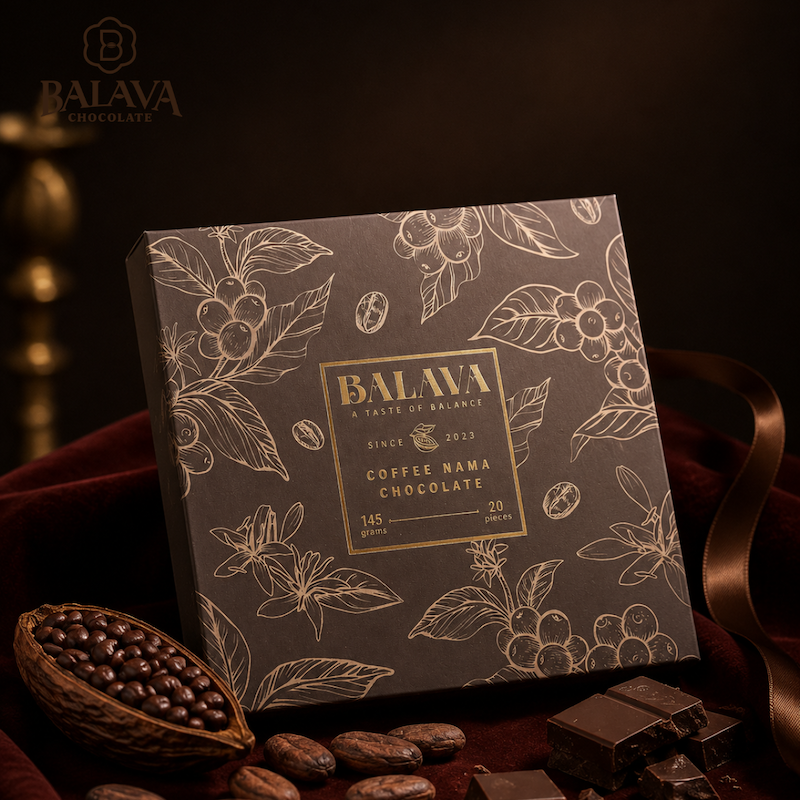
When refrigeration is compulsory. Nama chocolate, ganache-filled chocolates, chocolate-coated fruit and anything containing cream or fresh fruit must be refrigerated. That is a food safety requirement, not an aesthetic preference. These products contain free water, so they genuinely spoil and genuinely grow mould. There is no debate here.
The decision rule, in four lines
| Situation | What to do |
|---|---|
| Your ambient temperature is below about 25°C and steady | Store outside the fridge — dark, sealed, away from heat sources. |
| Above 25°C, or swinging, with no cool store available | Use the refrigerator, following the procedure below. Mild bloom beats a softened, deformed bar. |
| Nama, ganache, filled chocolates, coated fruit | Always refrigerated. No alternative. |
| Cocoa powder, cocoa butter | No refrigeration. Sealed and dry is what matters; a fridge only adds moisture risk. |

If you do refrigerate, do it like this
Keep the original wrapper on, then add a second airtight layer — a tightly closed container or a zip bag with the air pressed out. Two layers, not one. Put it in the least-opened part of the fridge and as far as possible from anything aromatic.
The critical step is taking it out. Do not unwrap cold chocolate. Leave it sealed at room temperature until the whole mass has warmed to ambient — roughly half an hour for a small bar, one to two hours for a large box. The moisture then condenses on the outside of the packaging instead of on the chocolate. Opening one step early undoes the entire procedure.
The freezer. Only for long storage, and accepting a texture trade-off. Thaw in stages: freezer to fridge for several hours, fridge to room temperature, packaging sealed throughout. Going straight from freezer to open air is the fastest way to produce a fully bloomed block.
Mistakes we see most often
Leaving a box in a car parked in the sun — a closed cabin can pass 50°C within fifteen minutes, and nothing recovers from that. Displaying chocolate under retail spotlights, which put heat directly onto the product. Storing it on the same shelf as coffee or spices, which you will taste within days. And packing chocolate as a gift into checked luggage in summer: the aircraft hold is cool, but the wait on the apron is not.
Talk to BALAVA
Wholesale pricing, private label, samples and export documentation — we answer in English.
Sources. Storage temperature and humidity ranges, the mechanisms producing fat bloom and sugar bloom, and the sealed-warm-up procedure are standard confectionery practice. The figure of approximately 33.8°C is the melting point of Form V cocoa butter — the crystal form tempering targets — from the classical polymorph classification of cocoa butter. Mandatory refrigeration for nama chocolate, ganache and coated fruit follows from the high water activity of those products. Ambient temperature and humidity figures for Vietnam are typical ranges, not measurements at a specific site.
Other review products
.png "Roasted Cacao Beans")