Two questions reach us almost every week. A bar left in a cupboard has developed a chalky white film — has it gone off, or is it still edible? And does chocolate have a shelf life in the ordinary sense at all? Short answers: that white film is almost certainly not mould, and chocolate does not spoil the way fresh food spoils. It does degrade — just by a different mechanism.
What the white film actually is
It is called bloom. There are two kinds with entirely different causes, and you can tell them apart with a fingertip — no equipment required.
FAT BLOOM
Cause: cocoa butter migrates to the surface and recrystallises. It happens when chocolate is cycled through temperature swings, or when the temper was not correct to begin with.
Recognising it: soft, uneven whitish streaks, sometimes marbled. To the touch it feels slightly greasy and melts under the warmth of your finger.
SUGAR BLOOM
Cause: moisture condenses on the surface, dissolves sugar, then evaporates and leaves sugar crystals behind. The classic route is taking chocolate out of a refrigerator and unwrapping it while it is still cold.
Recognising it: a dry, rough, sandy-looking surface. To the touch it feels gritty and does not melt.
The quickest test: press a fingertip to the white layer and hold it there for a few seconds. If it melts and leaves a glossy mark, it is fat. If it still feels like fine sand, it is sugar.
Is it safe to eat?
Yes. Neither bloom is mould and neither is harmful. Nothing has been added or spoiled — the cocoa butter or the sugar has simply relocated. What you lose is appearance, gloss, snap and some of the smoothness on the palate.
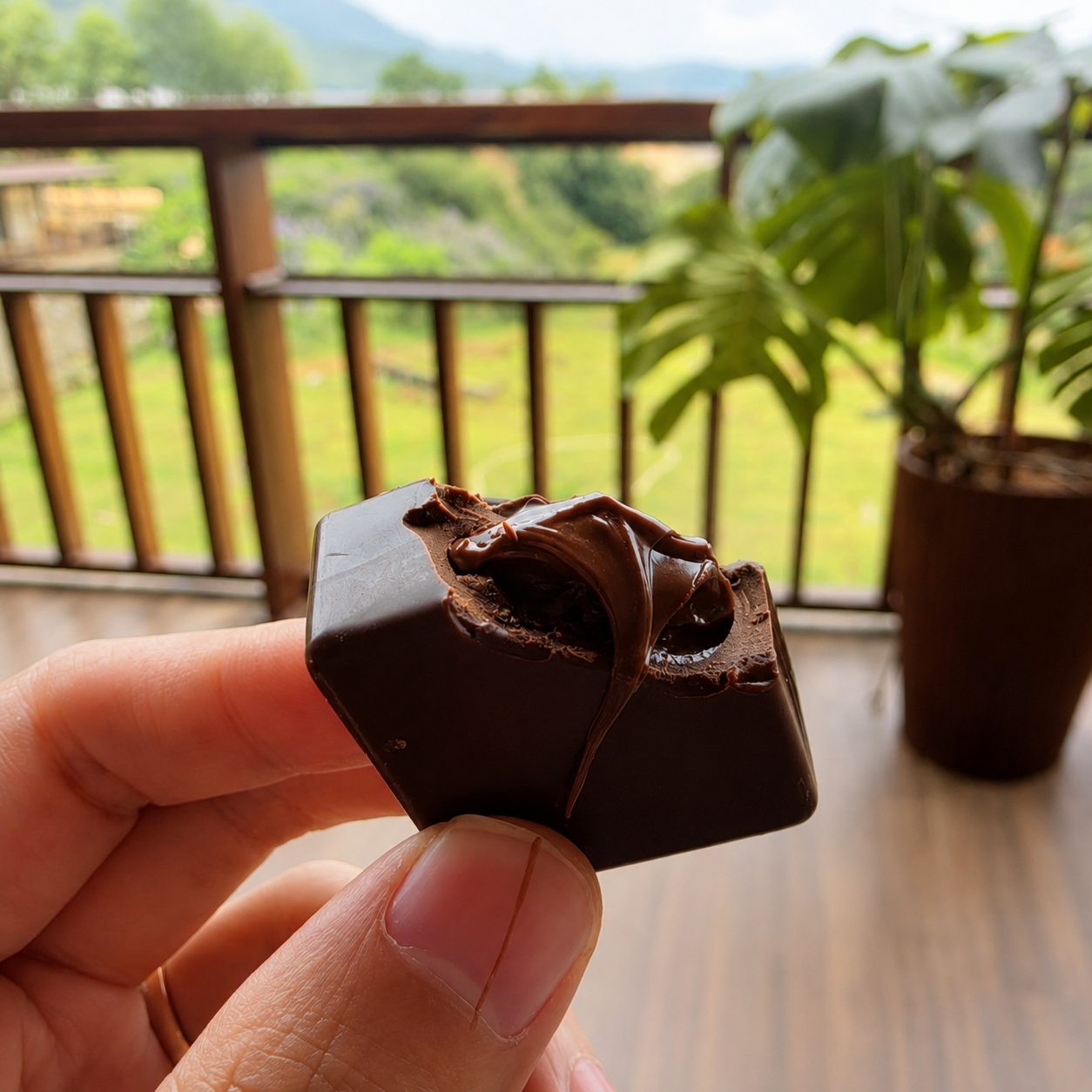
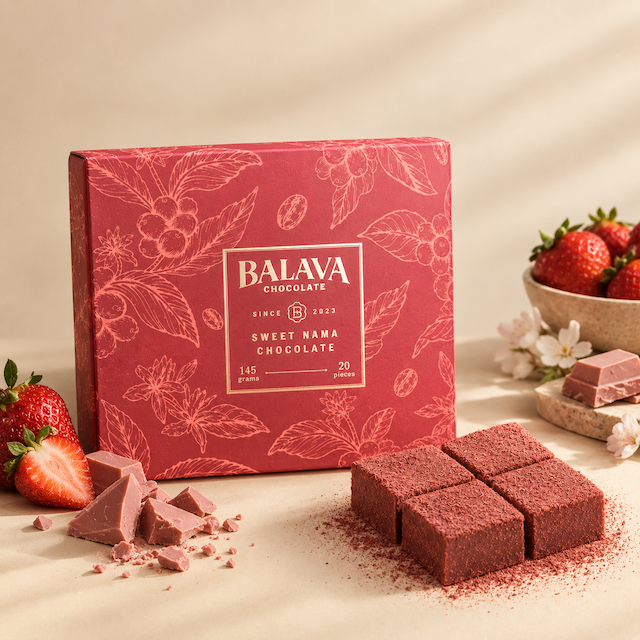
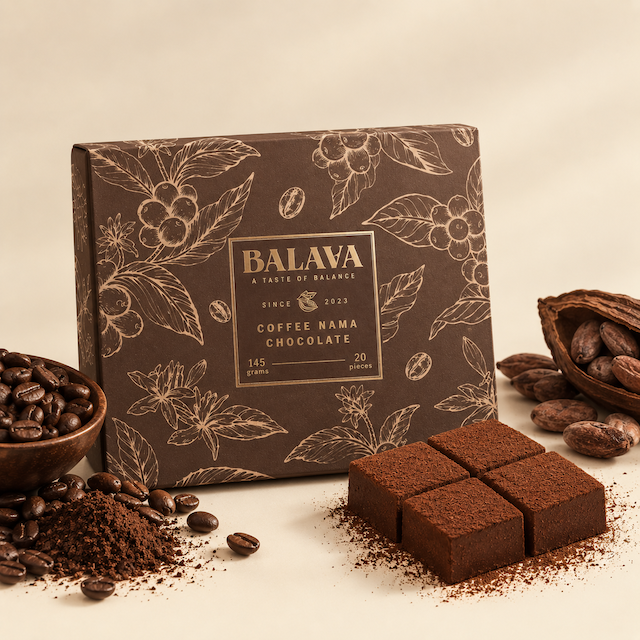
When to throw it out. Bloom has no smell. If a bar smells rancid, of old oil, or of something it has absorbed from its surroundings, or if you see fuzzy spots, green or blue-grey patches, that is not bloom. And filled chocolates, ganache, nama chocolate and chocolate-coated fruit contain moisture in the centre, so those genuinely can grow mould — they need far stricter handling than a plain bar.

Why chocolate does not spoil like other food
Microorganisms need free water to grow. A plain chocolate bar has almost none: it is solids dispersed in fat, with very low water activity. That is why a bar forgotten for months does not grow mould while a loaf of bread fails in three days.
What degrades chocolate instead is lipid oxidation and odour absorption. Cocoa butter exposed over time to oxygen, light and heat develops rancid notes. Milk powder in milk and white chocolate oxidises considerably faster than cocoa butter does, which is why the three types have distinctly different shelf lives.
Relative shelf life by product group
| Group | Relative shelf life | What decides it |
|---|---|---|
| High-percentage dark chocolate | Longest of the groups | Little or no milk powder, so oxidation is slow |
| Milk chocolate | Shorter than dark | Milk fat oxidises faster than cocoa butter |
| White chocolate | Shortest among bars | All the fat is cocoa butter plus milk solids, with no cocoa solids acting as antioxidants |
| Cocoa powder | Long, if sealed and dry | The enemies are moisture and stray odours, not microbes |
| Nama chocolate, ganache, coated fruit | Very short, refrigeration required | Cream and water present — this group genuinely spoils, and not by blooming |
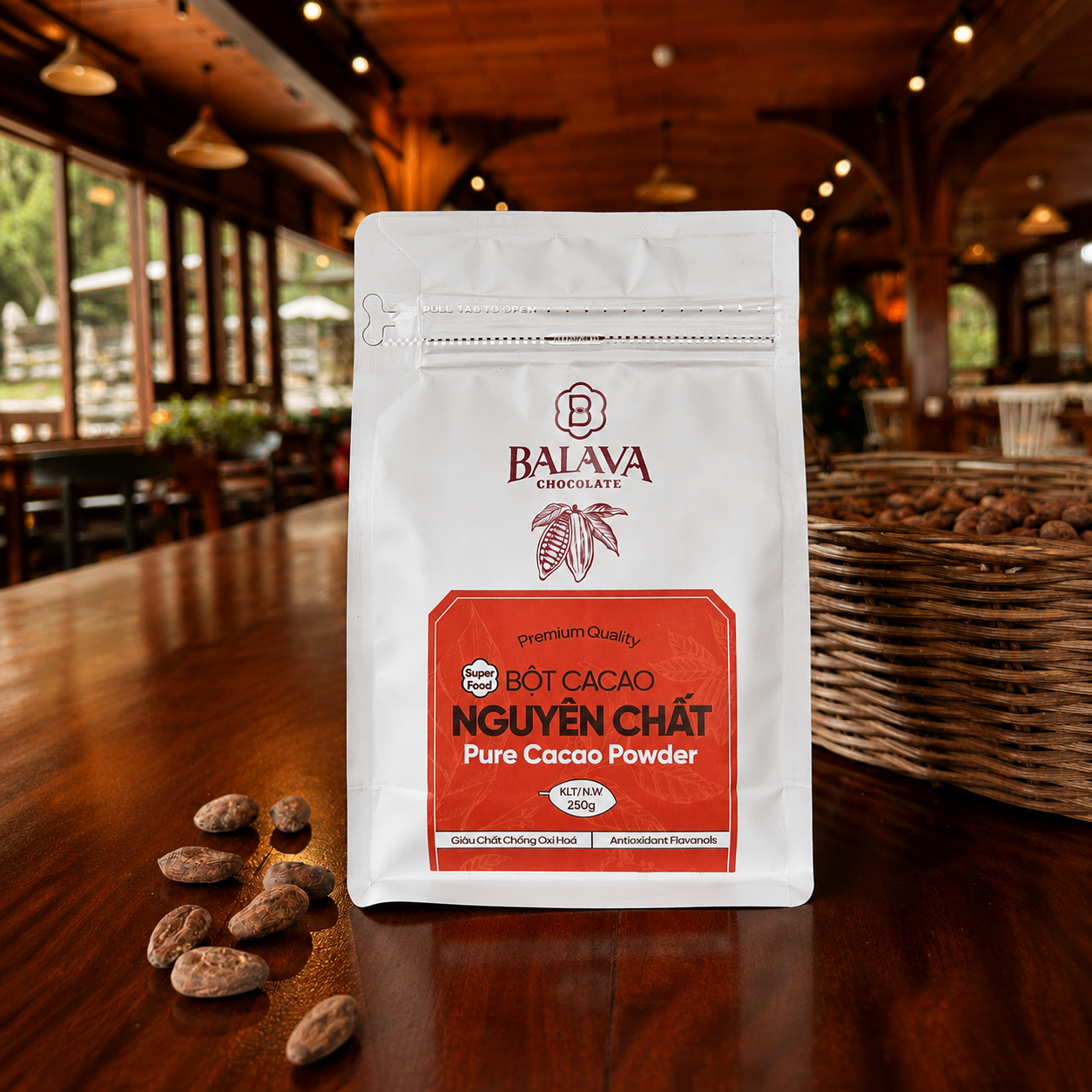
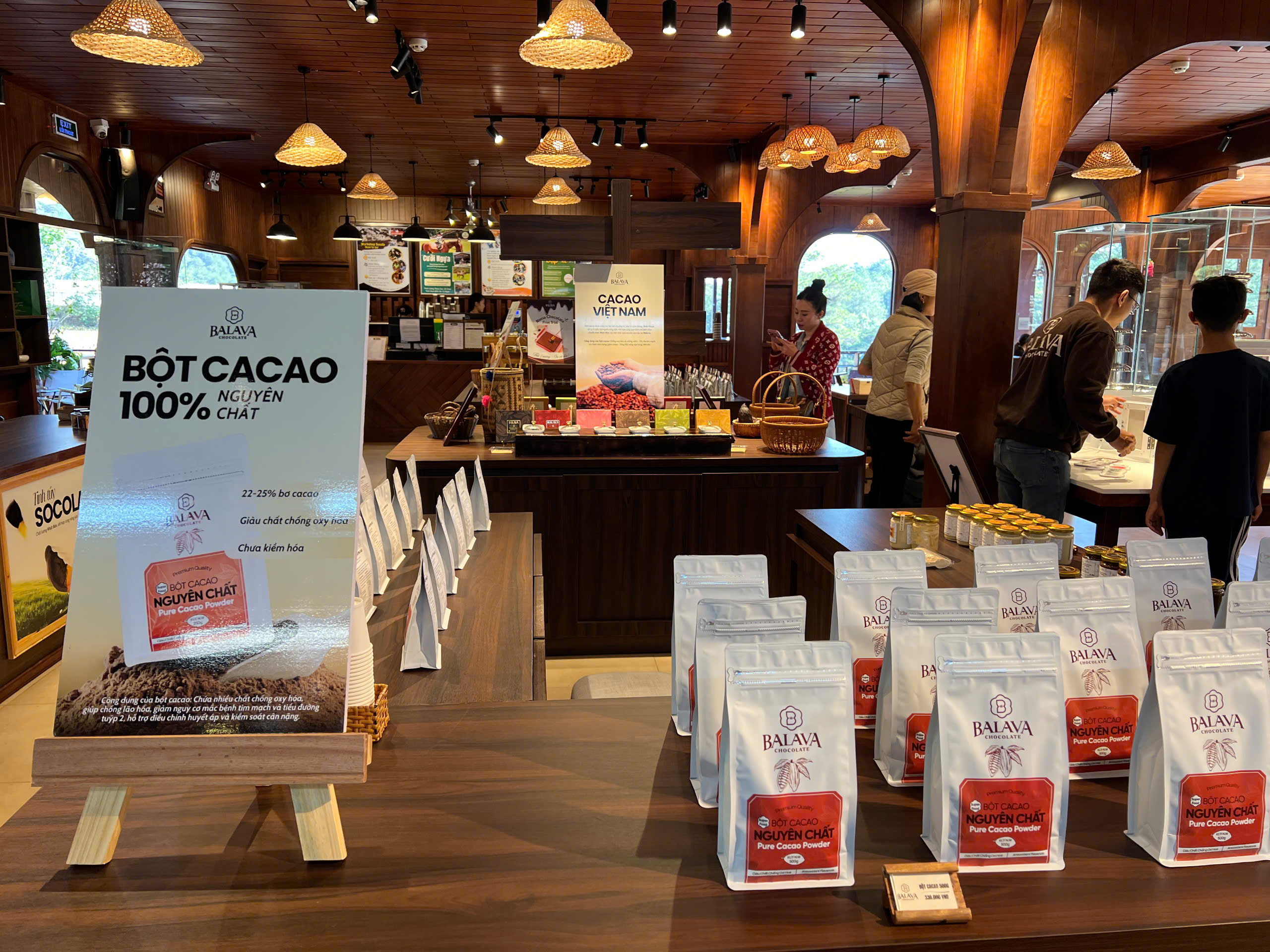
The actual number is always on the pack. Shelf life depends on recipe, packaging and transport conditions for each producer, so the table above describes relative order rather than replacing the printed date. BALAVA cocoa powder is labelled 12 months from date of production.
Three things that extend the life of a bar
Stable temperature matters more than low temperature; it is the cycling up and down that drives fat bloom. Keep it sealed against both moisture and smell — cocoa butter absorbs odours readily, and a bar stored beside coffee or spices will taste of them. And keep it out of direct light, which accelerates oxidation of the fat.
Storage method in detail, including whether chocolate belongs in a refrigerator, is covered in a separate article.
Talk to BALAVA
Wholesale pricing, private label, samples and export documentation — we answer in English.
Sources. The mechanisms of fat bloom and sugar bloom, the fingertip distinction, and the low-water-activity explanation for microbial stability are standard confectionery science. Fat bloom is associated with the transition of cocoa butter crystals from Form V to Form VI; see our article on melting behaviour for that detail. The relative shelf-life ordering of dark, milk and white chocolate follows from the faster oxidation of milk fat compared with cocoa butter. No specific shelf-life figures are given for products other than BALAVA’s, since those are published by each manufacturer. The 12-month figure for cocoa powder is BALAVA’s own specification.
Other review products