Two hot drinks, two fermented and roasted seeds, two histories bound up with ritual and trade. Set side by side with the numbers, though, a cup of cocoa and a cup of coffee are very different objects — different stimulant, different response curve, and different in what you get besides alertness.

The direct comparison
| One cup of cocoa 10 g unsweetened pure cocoa powder |
One cup of brewed coffee about 240 ml |
|
|---|---|---|
| Caffeine | about 23 mg | about 96 mg |
| Theobromine | about 206 mg | negligible |
| Dietary fibre | about 3.7 g | essentially none |
| Magnesium | about 50 mg | very low |
| Iron | about 1.4 mg | very low |
| Energy | about 23 kcal (before sugar or milk) | close to zero, taken black |
Cocoa figures derived from USDA composition data for unsweetened cocoa powder. Coffee caffeine from the Mayo Clinic reference table for an 8 oz brewed cup. Both vary with preparation and bean.
The core difference: two different stimulants
This is the crux, and it is routinely skipped. Coffee works almost entirely through caffeine. Cocoa contains a little caffeine, but its dominant compound is theobromine — and the two are not interchangeable.
| Caffeine | Theobromine | |
|---|---|---|
| Potency | Strong | Considerably milder |
| Onset | Fast and distinct | Slower and gentler |
| Half-life | Commonly given in the 3–7 hour range | About 6–10 hours in serum |
| Typical description | A sharp lift, sometimes with jitteriness | Mild alertness, less jitter |
The point about sleep. Many people assume cocoa is the “safer” evening drink. In fact theobromine has a longer half-life than caffeine. The total stimulant load in a cup of cocoa is far lower, but it stays around longer. Sensitive individuals should factor that in.
What you get besides alertness
Here the two drinks separate completely. Coffee is essentially an infusion — you drink what dissolved, and the grounds are discarded. Cocoa made from pure powder means drinking the material itself, because cocoa powder is the finely milled bean.
The consequence: cocoa carries fibre, magnesium, iron, potassium and cocoa butter into the cup. Coffee does not, or does so only marginally. Conversely, coffee contains its own compounds, most notably the chlorogenic acids, which cocoa does not.
In other words this is not a contest for which is better, but two different sets of compounds.
What breaks the comparison in practice
The table above assumes unsweetened cocoa powder and black coffee. In real life most cocoa is drunk with sugar and milk, while coffee is more often taken black or lightly sweetened. A sachet of instant drinking chocolate can carry 15 to 20 g of sugar, enough to reverse the whole nutritional picture. If you are comparing for health reasons, compare pure cocoa, not the instant mix.
Which one, when
| Situation | The better fit | Why |
|---|---|---|
| Need alertness quickly and clearly | Coffee | Caffeine acts fast, and the dose per cup is roughly four times higher |
| Caffeine-sensitive, prone to jitters | Pure cocoa | Much lower total stimulant load, gentler effect |
| Drinking in the evening | Think twice about both | Theobromine lingers longer than caffeine; do not assume cocoa is harmless |
| Want minerals and fibre with the drink | Pure cocoa | You drink the material, not just the extract |
| Managing energy intake | Black coffee | Essentially zero calories; cocoa only matches it unsweetened |
A note on quality
If flavanols are the reason you drink cocoa, the processing decides almost everything. Per Miller and colleagues (Journal of Agricultural and Food Chemistry, 56(18), 2008), heavily alkalized cocoa retains only around 11% of the flavanols of non-alkalized powder.
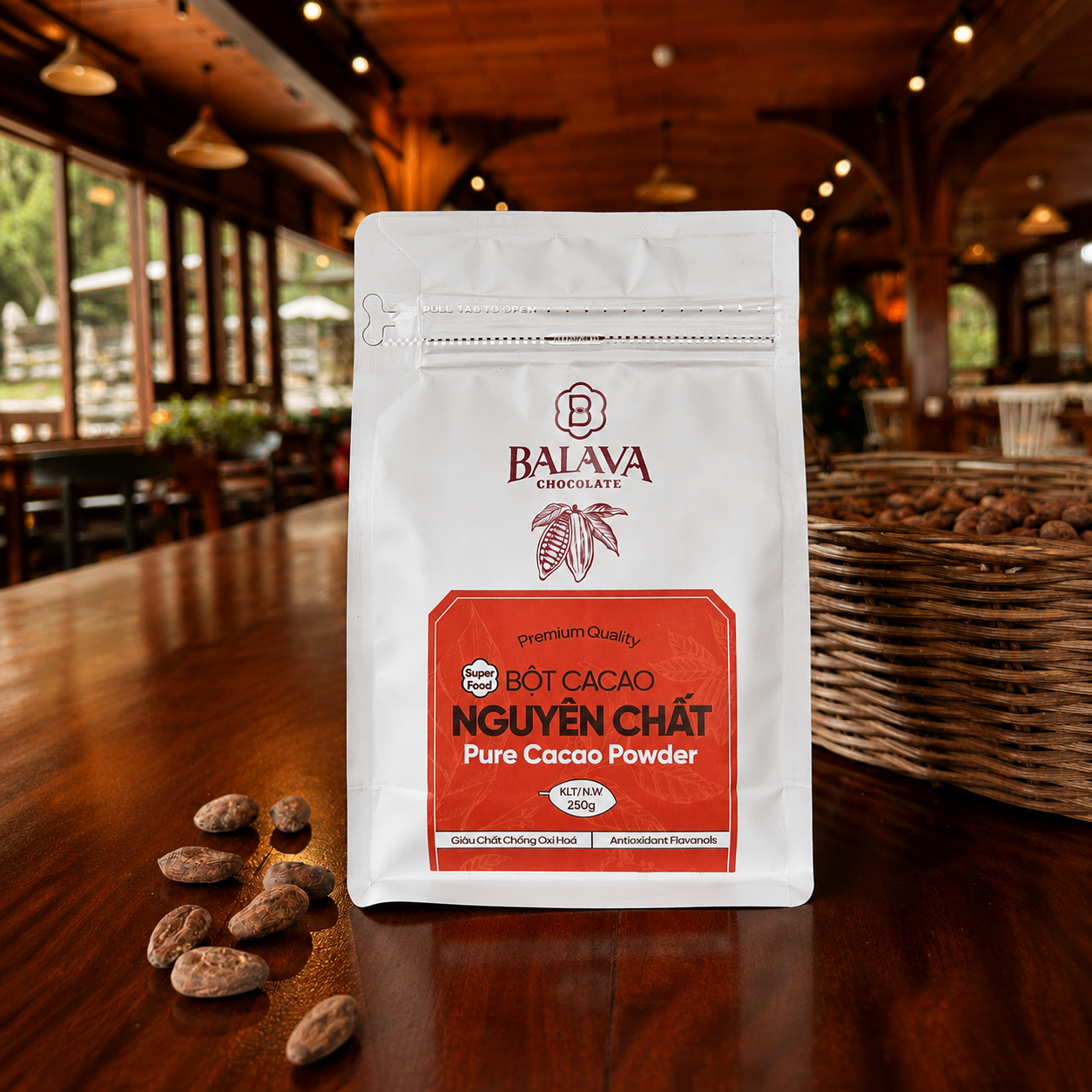
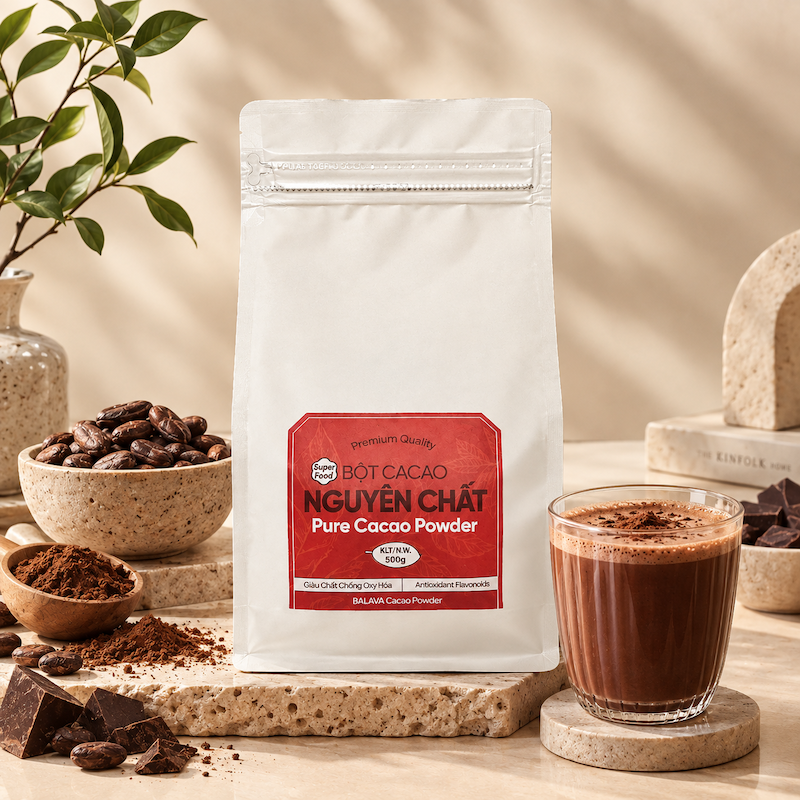
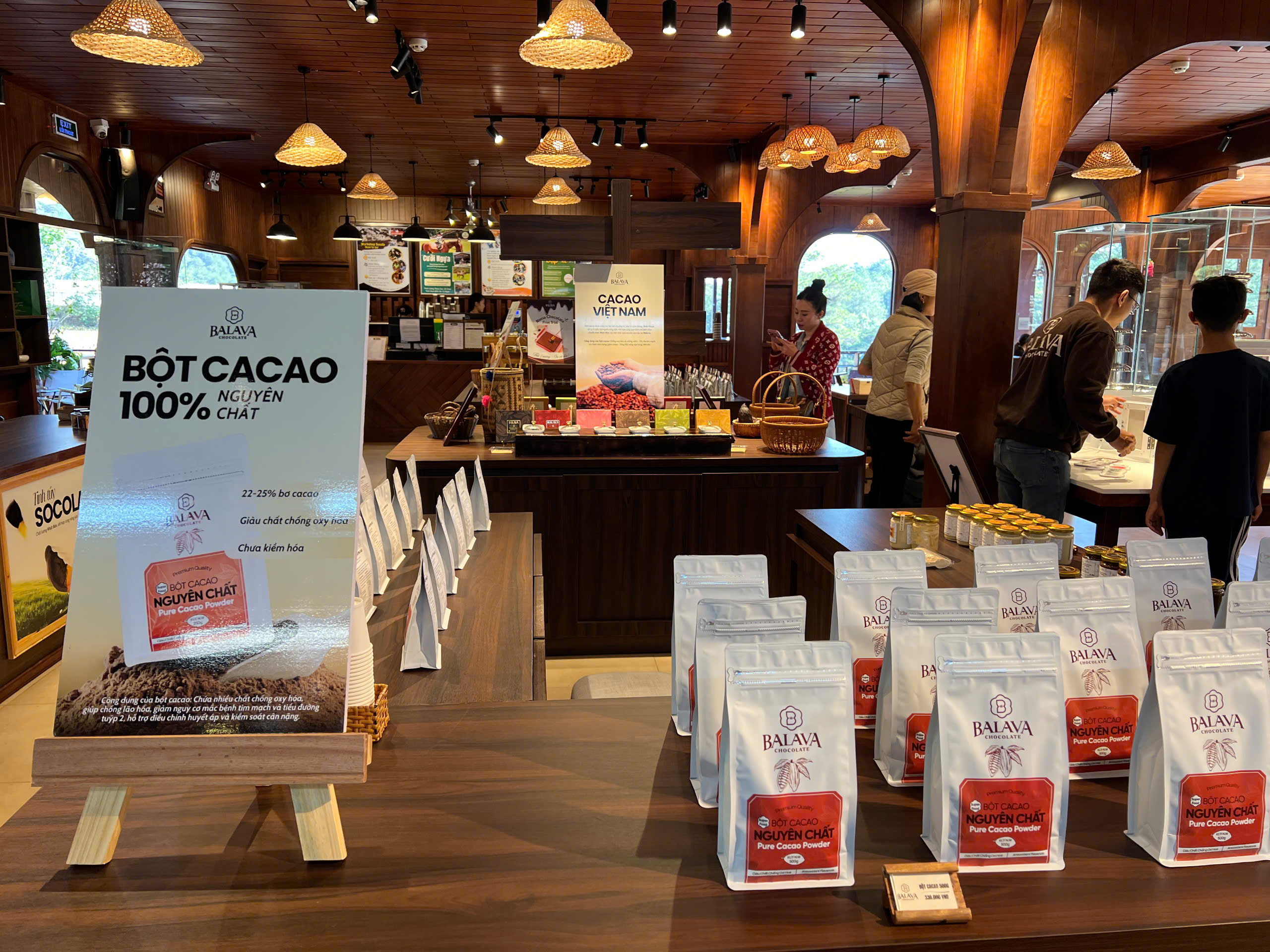
BALAVA cocoa powder is non-alkalized and retains 22–25% cocoa butter. BALAVA makes bean-to-bar chocolate from Lam Dong cacao in Da Lat and is extending control into cultivation, moving towards a farm-to-bar model.
Disclaimer. This article is informational, compiled from the cited sources, and is not medical advice. Health authorities commonly cite around 400 mg of caffeine a day as safe for most healthy adults, but that threshold does not apply to pregnant women, children, or people with cardiovascular conditions or anxiety disorders. Consult a doctor if you fall into any of those groups.
Talk to BALAVA
Wholesale pricing, private label, samples and export documentation — we answer in English.
Sources. Composition of unsweetened cocoa powder (caffeine 230 mg, theobromine 2,057 mg, fibre 37 g, magnesium 499 mg, iron 13.9 mg, 228 kcal per 100 g): USDA FoodData Central. Per-10 g values are proportional. Caffeine in an 8 oz brewed coffee (about 96 mg), 1 oz espresso (63 mg) and the 400 mg daily guidance for healthy adults: Mayo Clinic caffeine reference table. Theobromine serum half-life of roughly 6–10 hours per widely cited pharmacology literature; the caffeine half-life range reflects the spread commonly reported and varies substantially between individuals. Alkalization and flavanol retention: Miller K.B. et al., Journal of Agricultural and Food Chemistry 56(18), 2008. BALAVA product specifications are supplied by BALAVA.
Other review products