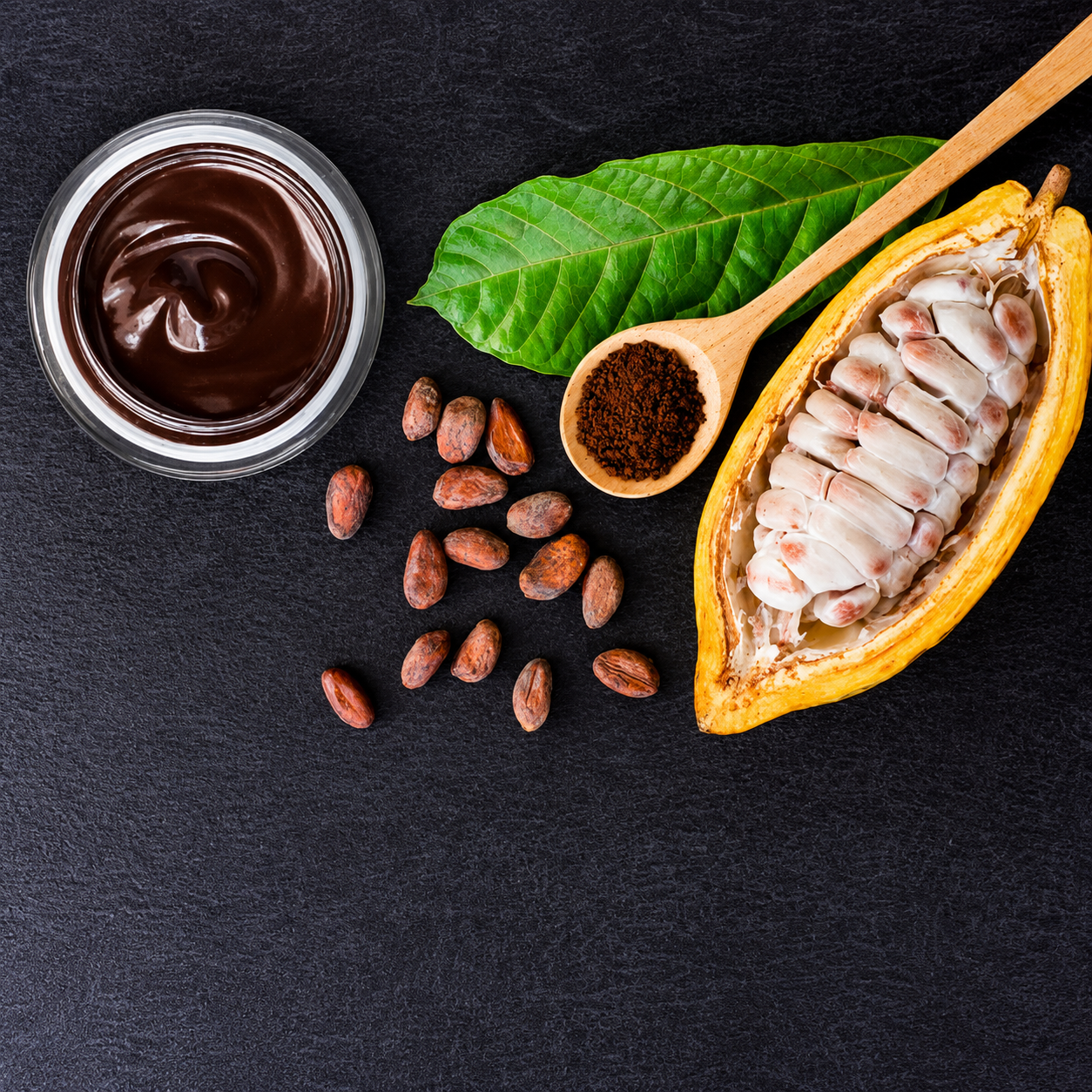
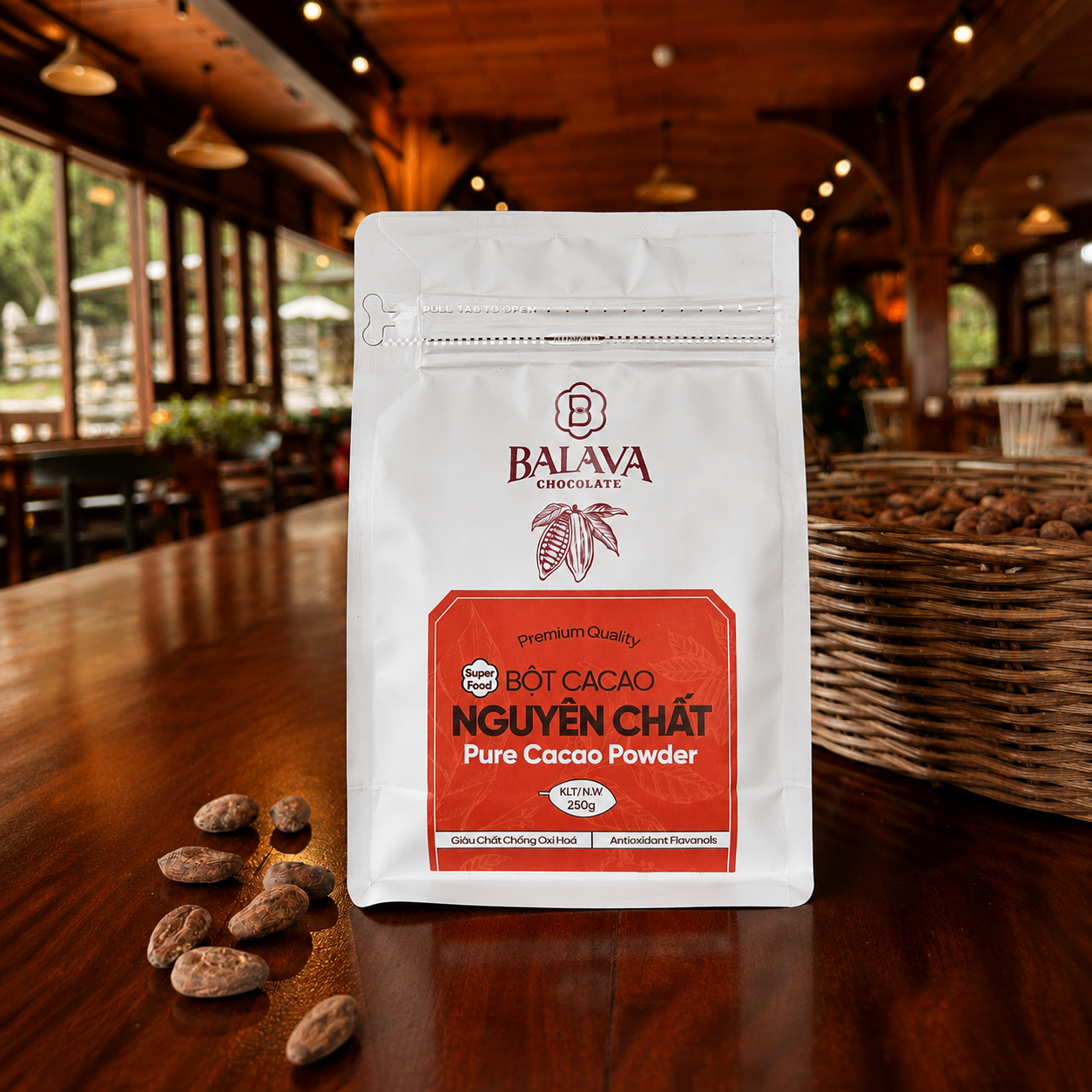
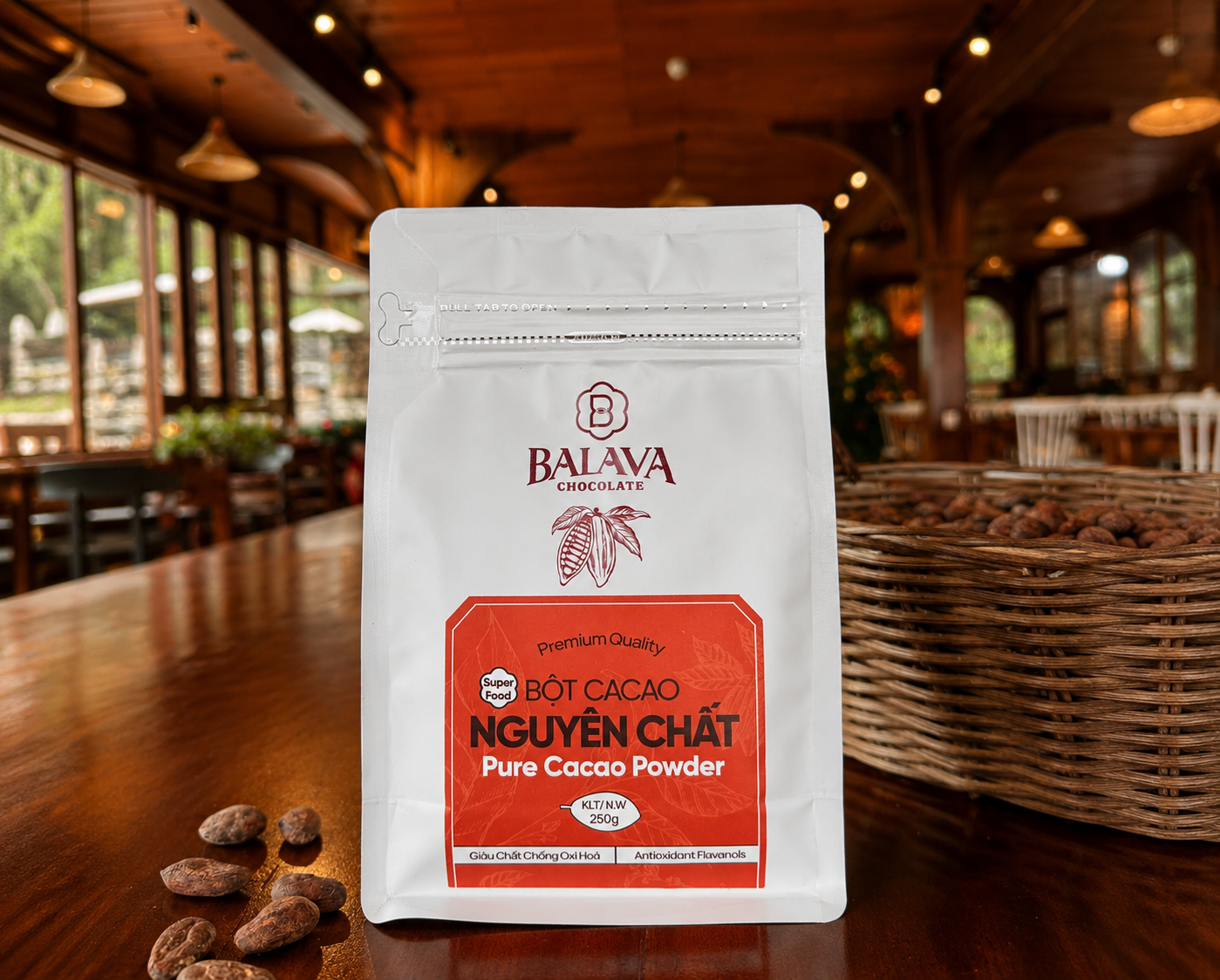
BALAVA produces 100% pure cocoa powder in Da Lat, Vietnam, from cacao grown in the Lam Dong and Binh Phuoc highlands. The powder is non-alkalized and retains 22–25% cocoa butter — a specification that puts it in a different technical class from the low-fat, heavily alkalized commodity powders that dominate industrial supply.
Two numbers that decide everything
Buyers who work with cocoa powder daily read two figures before anything else: fat content and alkalization status. Colour, dispersion, flavour and application all follow from those two.
FAT CONTENT
22–25% cocoa butter. Under the US definition in 21 CFR Part 163, powder at 22% fat or above is classified as breakfast cocoa — the highest-fat commercial grade. Standard cocoa sits at 10–22%, and lowfat cocoa below 10%. Higher residual butter carries flavour further, gives a rounder mouthfeel and disperses more readily in fat-based systems such as ganache, couverture blends and ice cream.
NON-ALKALIZED
No alkali treatment at any stage. Alkalization (Dutch processing) raises pH to darken colour and soften acidity, but it destroys flavanols. Miller et al. (Journal of Agricultural and Food Chemistry, 56(18), 2008) measured natural cocoa at pH 5.39–5.76 with 34.6 ± 6.8 mg/g total flavanols; lightly alkalized powder retained about 40% of that, medium about 22%, heavily alkalized about 11%. BALAVA powder keeps the natural profile: brighter acidity, more fruit, full flavanol content.
Product specification
| Attribute | Detail |
|---|---|
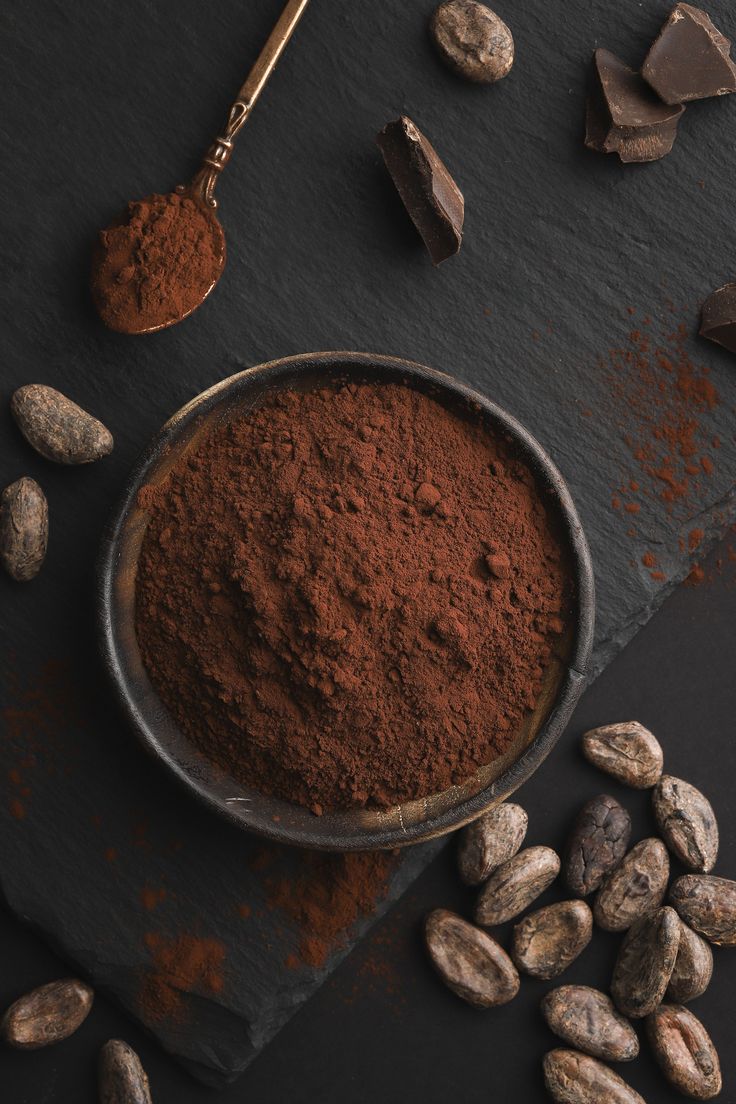
| Composition | 100% pure cocoa powder — no fillers, no preservatives, no added colour |
| Cocoa butter | 22–25% |
| Alkalization | Non-alkalized (natural) |
| Particle fineness | 100–150 mesh |
| Colour | Natural chocolate brown to deep dark brown |
| Shelf life | 12 months from production date |
| Storage | Cool, dry, out of direct sunlight |
| Origin | Cacao from Lam Dong and Binh Phuoc; processed in Da Lat, Vietnam |
From pod to powder
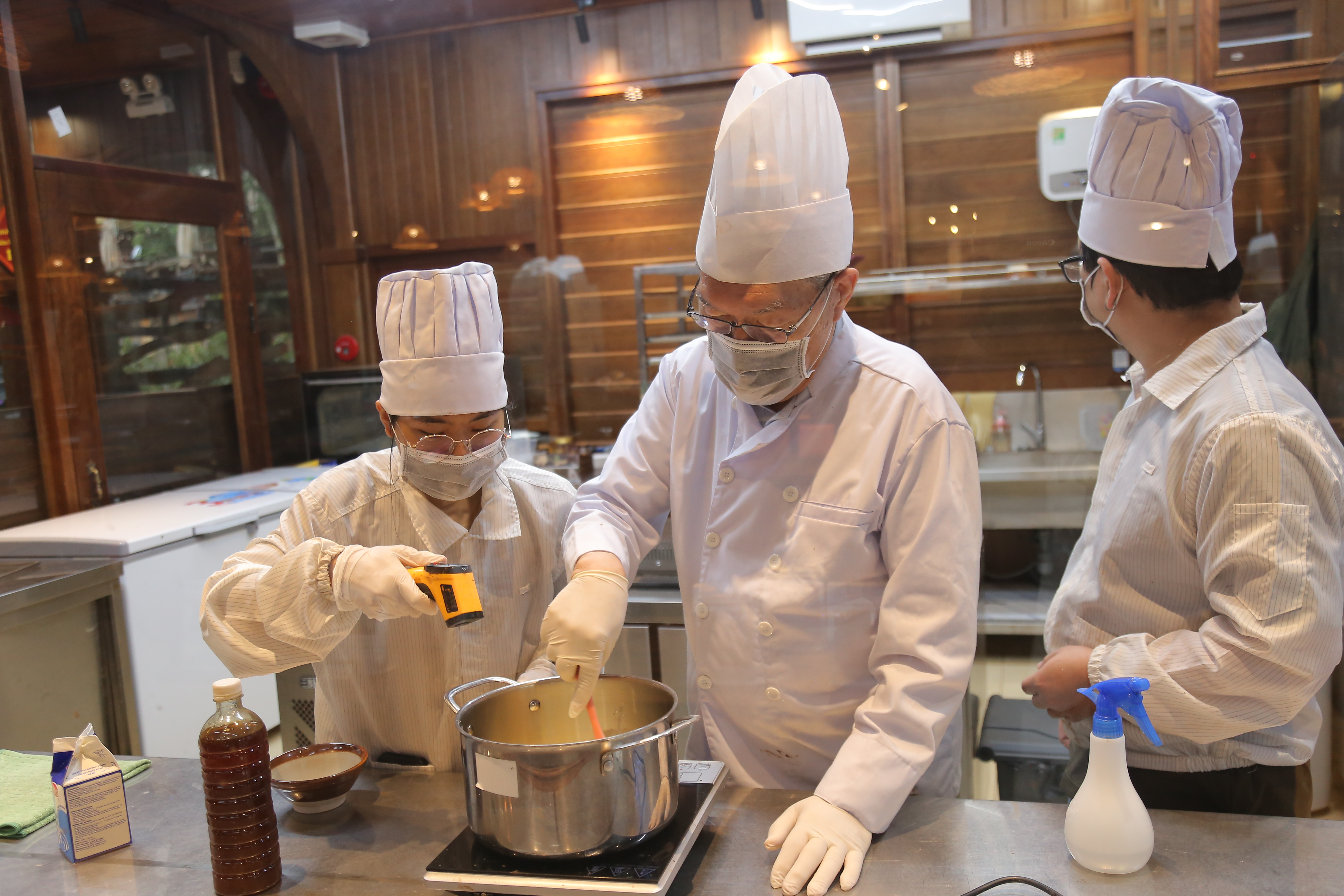
BALAVA controls the chain rather than buying in semi-finished material. Pods are selected at the farm, opened and the beans separated by hand, fermented under controlled time and temperature using the Nakano Mame method, dried to specification, roasted, ground, pressed to separate cocoa butter, then milled and sifted to 100–150 mesh. Every batch is checked before packing.
The fermentation stage matters more than most buyers assume. De Vuyst and colleagues (FEMS Microbiology Reviews 44(4), 2020) described the succession that produces cacao flavour precursors: yeasts and lactic acid bacteria work anaerobically in the first 36 hours, then acetic acid bacteria take over aerobically between 48 and 96 hours, driving pulp temperature above 50°C and dropping cotyledon pH from about 6.5 to 4.8. Get this stage wrong and no amount of downstream processing recovers the flavour.
Packaging and order formats
| Format | Specification |
|---|---|
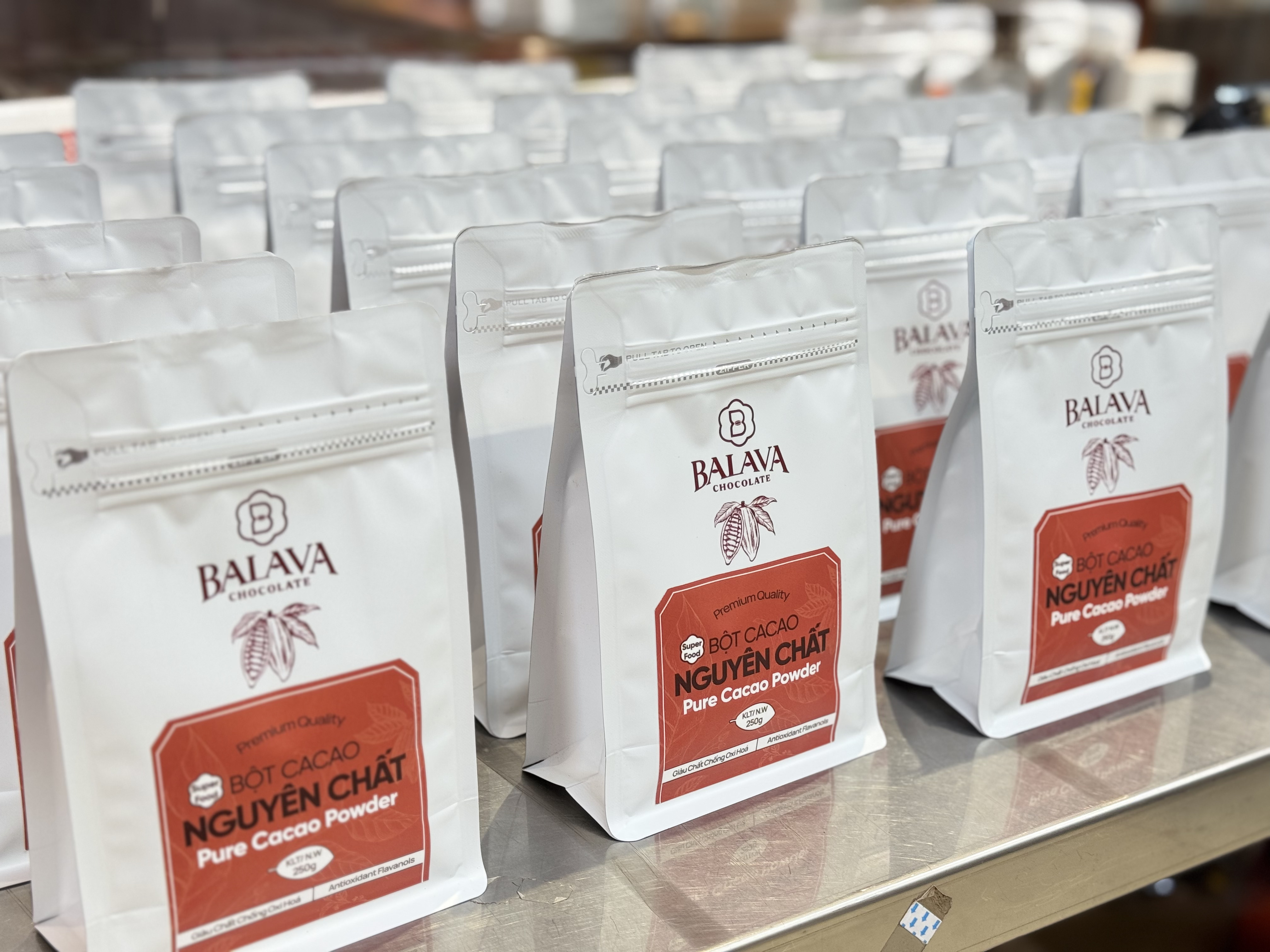
| Retail | 250 g and 500 g pouches |
| Bulk / wholesale | 20–25 kg kraft paper bag with PP/PE liner |
| Private label | Packaging and labelling to buyer specification |
Where it is already used
BALAVA cocoa powder is supplied domestically and exported to Australia, Russia, Korea, Japan, Germany and Denmark. Typical applications are bakery and confectionery production, beverage bases, ice cream and dessert manufacture, and craft chocolate work where a natural, unalkalized flavour profile is the point.
Requesting a sample. Tell us the application and target volume and we will send powder from a current production batch together with the accompanying documentation. Food safety certification and export paperwork are issued per shipment.
Talk to BALAVA
Wholesale pricing, private label, samples and export documentation — we answer in English.
Sources. Fat-content classifications: US 21 CFR Part 163 (Cacao Products). Flavanol retention by alkalization level: Miller K.B. et al., “Impact of Alkalization on the Antioxidant and Flavanol Content of Commercial Cocoa Powders”, Journal of Agricultural and Food Chemistry 56(18), 2008. Fermentation microbiology: De Vuyst L. et al., FEMS Microbiology Reviews 44(4), 2020. Product specifications are supplied by BALAVA; figures not listed above (pH value, moisture, particle size distribution, production volume) have not been published and are not claimed here.
Other review products