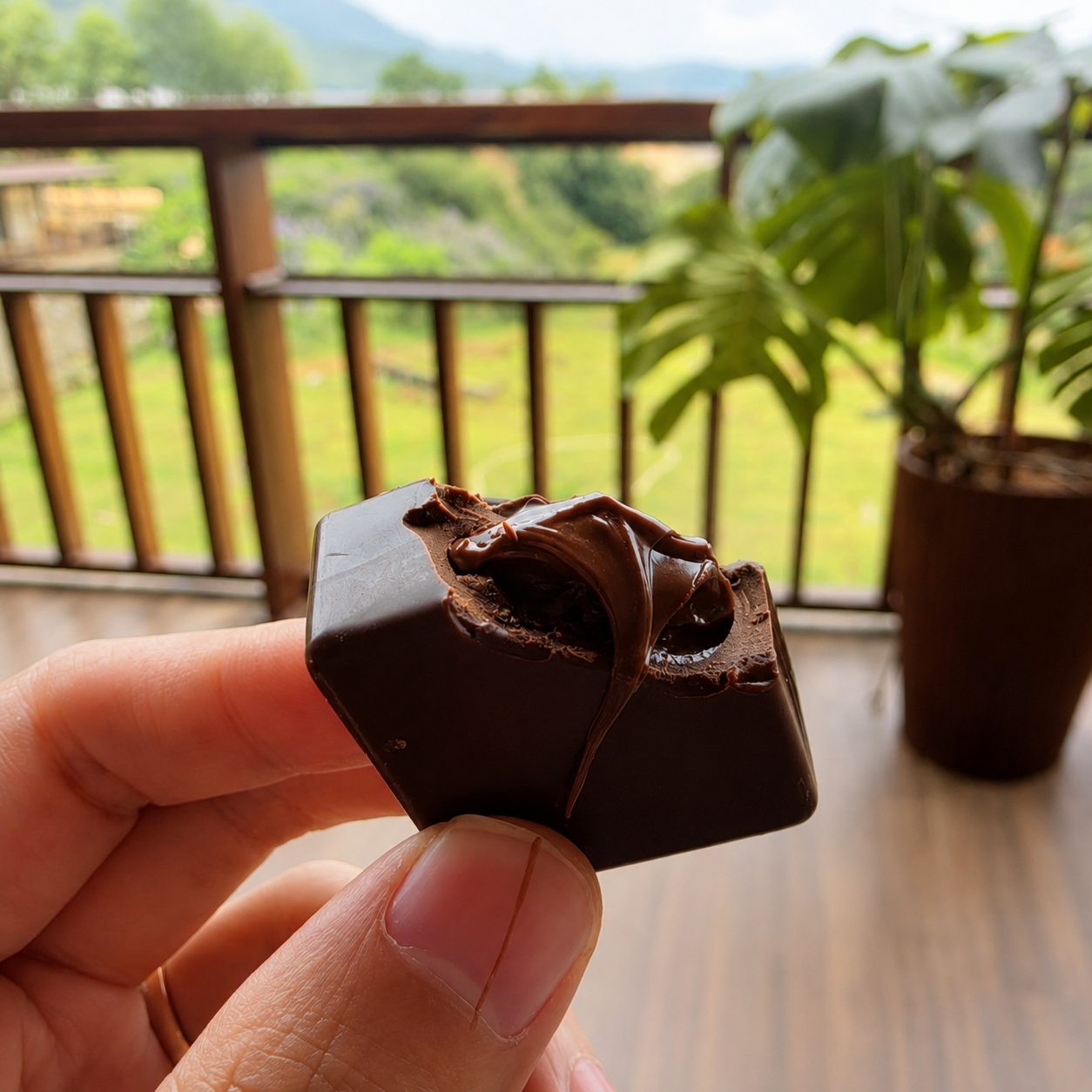
Children love milk chocolate and spit out the dark. Adults go the other way — plenty of people do not find 70% pleasant until their thirties. This is not personal taste or childish fussiness. It is physiology, and it has been measured.
Children genuinely taste differently
Mennella and Bobowski summarised decades of research on this in “The sweetness and bitterness of childhood” (Physiology & Behavior, 152 Pt B, 2015, pp. 502–507). Two core findings:
SWEET
Children prefer higher levels of sweetness than adults do, and that preference only declines to adult levels during middle to late adolescence. Notably, the decline coincides with the cessation of physical growth.
BITTER
Children reject bitterness strongly — a protective mechanism, since in nature bitterness commonly signals toxicity. Genetic variation in bitter receptors (such as TAS2R38) accounts for individual differences. But the crucial finding is this: at the same genotype, children still show heightened bitter sensitivity compared with adults, with the shift occurring in mid-adolescence.
Put those together and the answer appears. When a child screws up their face at 85% dark chocolate, they are not performing. That square really is more bitter to them than it is to you — even with identical genes. And their appetite for sweetness is simultaneously running higher than yours.
Why evolution went that way
The best-supported explanation involves growth. A growing body needs more energy per kilogram than a finished one, and sweetness is the most reliable signal of energy in a natural environment. The heightened preference falls away precisely as growth stops — a coincidence that is difficult to ignore.
The research notes a second function too: in children, sweetness has an analgesic effect. And the attraction to sweetness is what draws an infant towards mother’s milk in the first place.

So why do adults move to dark chocolate
Three mechanisms operate at once, and none of them is “a more refined palate”.
| Mechanism | What happens |
|---|---|
| Bitter sensitivity falls | A biological change beginning in mid-adolescence. The same bar simply registers as less bitter to an adult. |
| Repeated exposure | A liking for bitterness is learned, and the learning mechanism is mostly repetition. It is why long-term black coffee drinkers find dark chocolate comfortable. |
| Attention shifts from taste to aroma | With less sugar in the way, the aromatic side of cacao surfaces: fruit, nuts, smoke, spice. Adults tend to value that range — but only once bitterness stops dominating. |
One physical detail that gets overlooked. Cocoa butter melts between roughly 34 and 36°C, close to mouth temperature. Higher-percentage dark chocolate contains more cocoa butter, so it melts faster and releases aroma more forcefully. The sense that dark chocolate is “more intense” is not purely subjective.
What this means for parents
| Situation | A reasonable response |
|---|---|
| A child refuses dark chocolate | Physiologically normal. Pushing does not help and may build a lasting aversion. |
| You want a child to grow into higher cacao percentages | Move up in steps, and rely on repeated exposure. The mechanism is repetition, not persuasion. |
| Concerned about sugar | The issue is the sugar and milk in the product, not the cacao. Read the ingredients rather than judging by colour. |
| Concerned about stimulants | Chocolate contains theobromine and some caffeine. Theobromine has a serum half-life of roughly 6 to 10 hours, so avoid it late in the day for children. |

One observation from the workshops at BALAVA: children try higher-percentage chocolate far more willingly when they made it themselves. That is consistent with what the research says about exposure — with curiosity added to it.
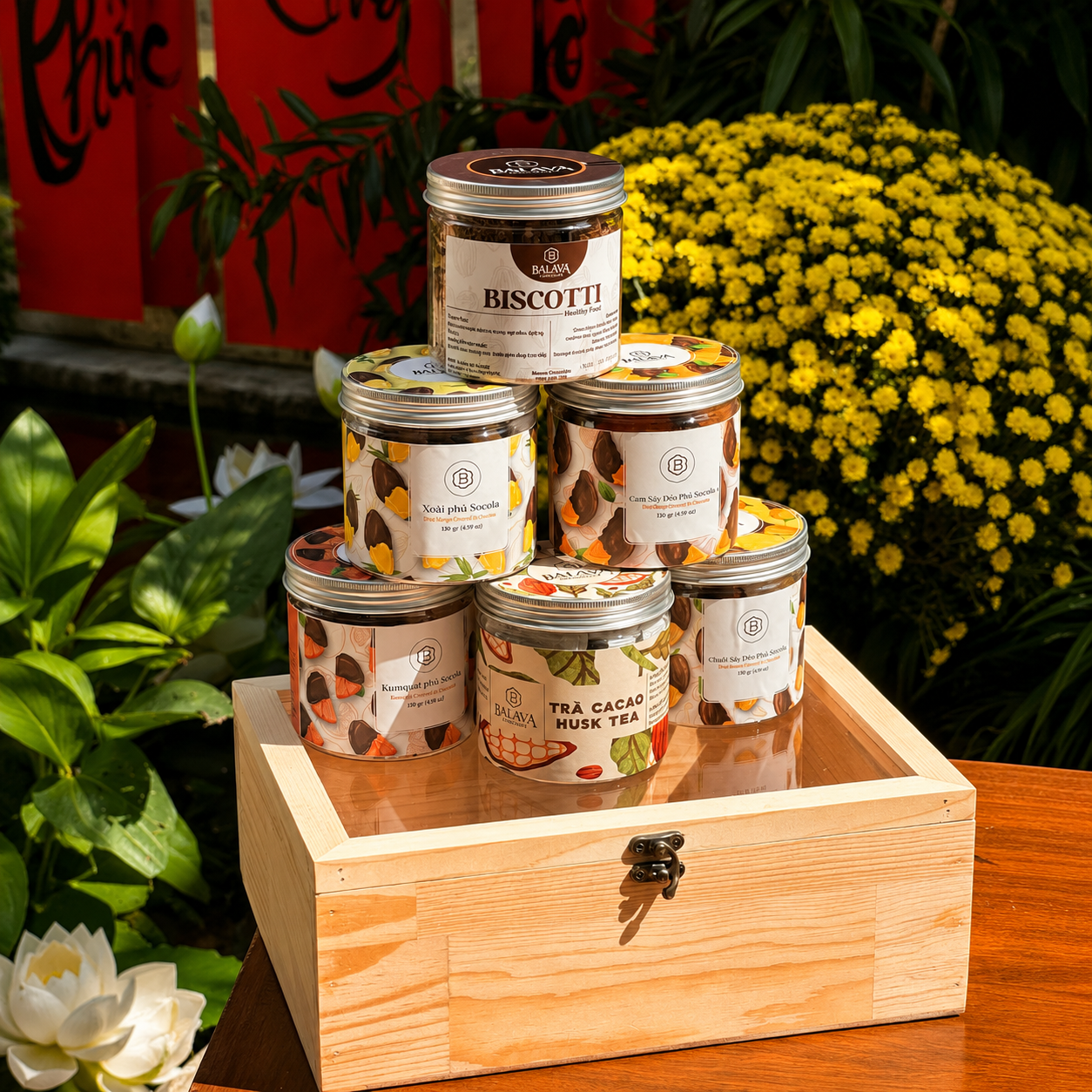
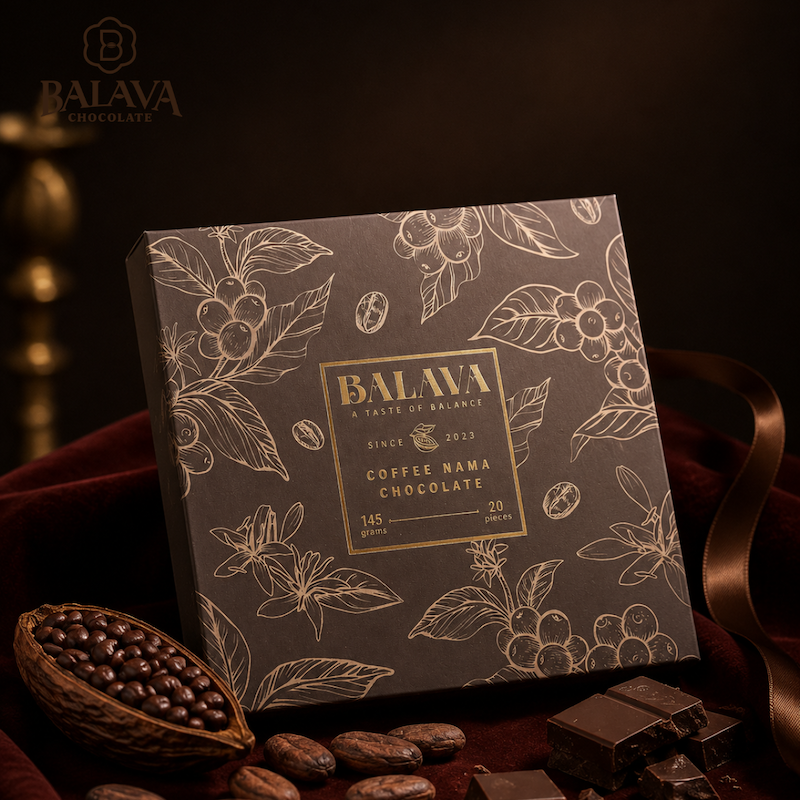
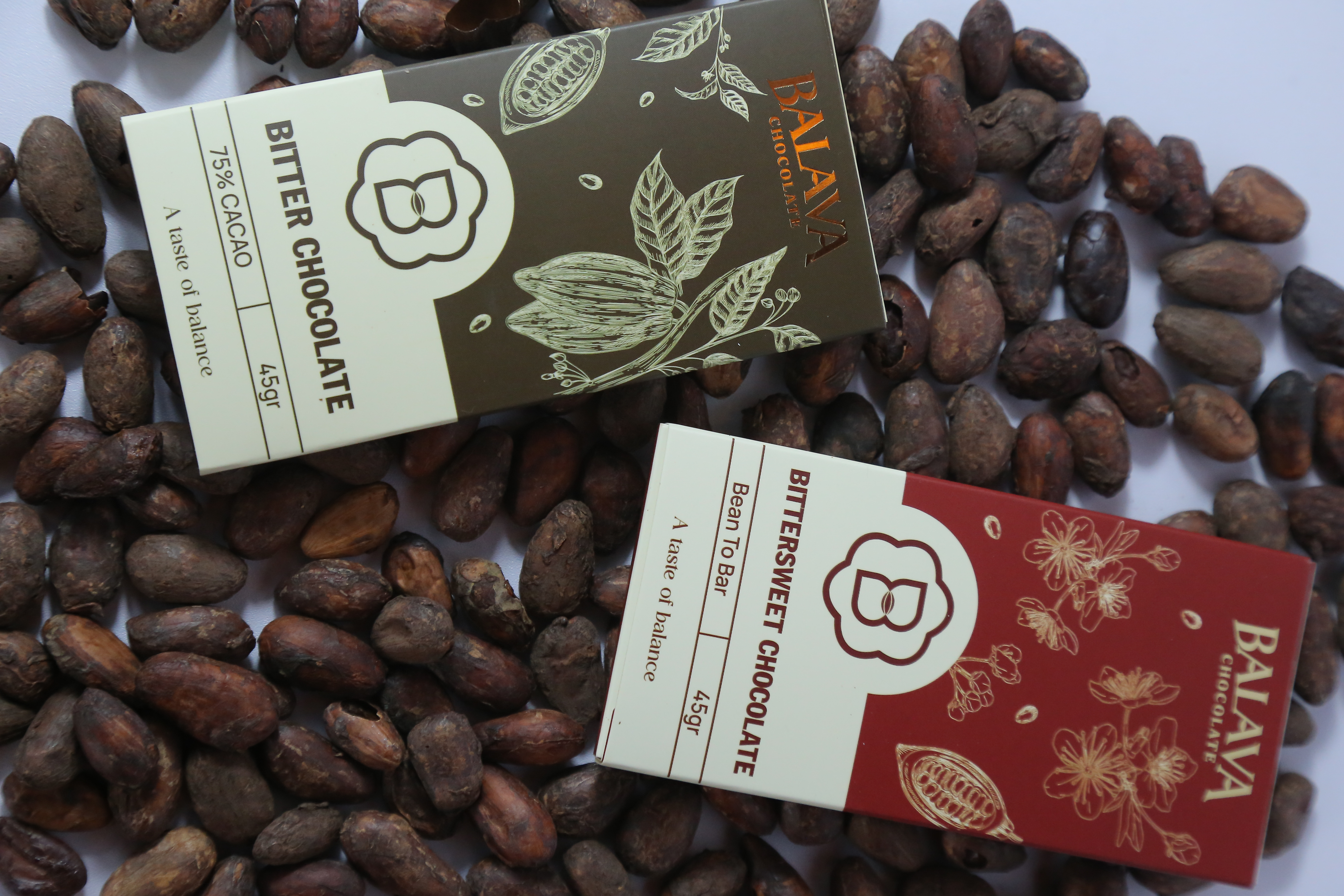
BALAVA makes bean-to-bar chocolate from Lam Dong cacao in Da Lat across a range of cacao percentages, and is extending control into cultivation, moving towards a farm-to-bar model.
Disclaimer. This article is informational, compiled from the cited scientific literature. It is not medical advice or paediatric dietary guidance. For questions about a child’s diet, particularly with an underlying condition or allergy, consult a paediatrician or dietitian.
Talk to BALAVA
Wholesale pricing, private label, samples and export documentation — we answer in English.
Sources. Sweet and bitter preference by age, the shift during middle to late adolescence, TAS2R38 variation and the analgesic effect of sweetness in children: Mennella J.A., Bobowski N.K., “The sweetness and bitterness of childhood: Insights from basic research on taste preferences”, Physiology & Behavior 152(Pt B), 2015, pp. 502–507. Cocoa butter melting range and theobromine half-life follow commonly cited food science and pharmacology literature. The growth-based explanation for heightened sweet preference is a widely supported hypothesis, not a closed question. BALAVA product specifications are supplied by BALAVA.
Other review products