Two bags of cocoa powder both labelled "100% pure" can differ completely in colour, taste, solubility, nutrient content and price. The difference comes down to two processing decisions: whether the powder was alkalized, and how far the fat was pressed out.
5.4 → 7.6+
pH range from natural to heavily alkalized
34.6 → 3.9
mg flavanols/g lost to heavy alkalization
22% / 10%
the two fat thresholds defining three US tiers
First: These Are Two Independent Axes
The most common mistake is treating these as one thing — assuming alkalized powder is richer, or that defatted powder is more acidic. Neither follows. Alkalization and fat removal are separate decisions, made independently.
A powder can be natural and high-fat, natural and defatted, alkalized and high-fat, or alkalized and defatted. Four combinations, four different products, four different applications.
When talking to a supplier, ask about each axis separately: is this alkalized, and at what pH? and what is the residual cocoa butter percentage? A general question gets an unusable answer.
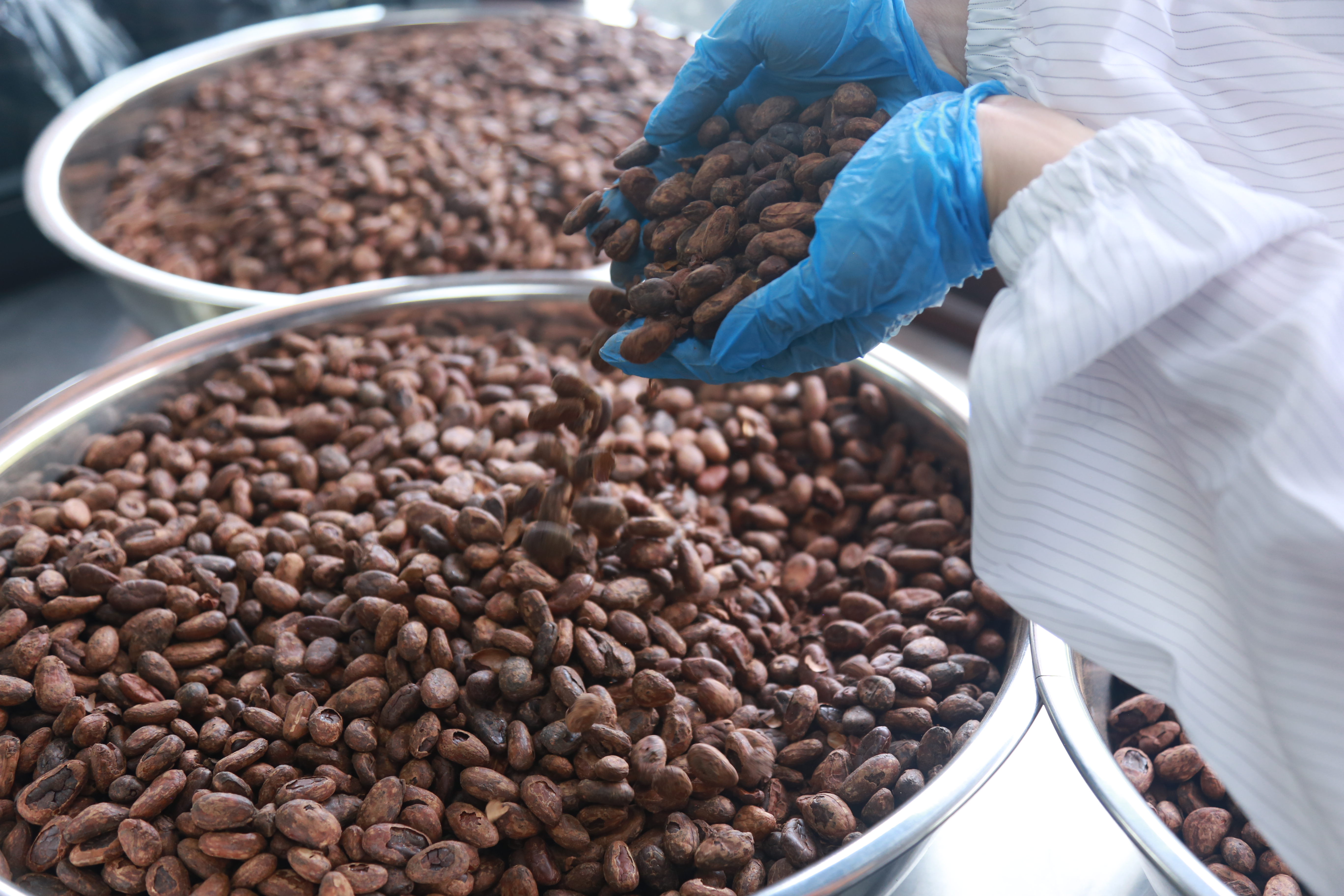
Axis One — Alkalization
The original problem was practical: natural cocoa powder is acidic and refuses to disperse in water, floating and clumping instead. A patent granted in the Netherlands in 1828 for pressing fat out of roasted cacao beans opened the way to industrial-scale powder production. Shortly afterwards, also in the Netherlands, it was found that treating the powder with alkaline salts made it disperse far more readily. That origin is why the process is still called Dutch process.
Permitted alkalizing agents
Under US regulations for cacao products, permitted alkalis include the bicarbonates, carbonates and hydroxides of ammonium, potassium and sodium, plus magnesium carbonate and oxide. There is a defined ceiling: total use may not exceed the neutralizing capacity of 3 parts potassium carbonate per 100 parts cacao nibs. Alkalization is a regulated step with a quantitative limit, not an open-ended treatment.
Four levels by pH
Research by Miller and colleagues, published in the Journal of Agricultural and Food Chemistry in 2008, measured pH and flavanol content across commercial cocoa powders and grouped them as follows:
| Group | pH range | Flavanols (mg/g) | Retained |
|---|---|---|---|
| Natural | 5.39 – 5.76 | 34.6 ± 6.8 | 100% |
| Lightly alkalized | 6.50 – 7.20 | 13.8 ± 7.3 | ~40% |
| Medium alkalized | 7.21 – 7.60 | 7.8 ± 4.0 | ~22% |
| Heavily alkalized | 7.61 and above | 3.9 ± 1.8 | ~11% |
The study found a clear linear relationship between rising pH and falling flavanol content. The heavier the alkalization, the less antioxidant activity remains — and the relationship is predictable rather than random.
GAINED
Better dispersion. The original purpose, and still the main reason to use alkalized powder in instant drinks.
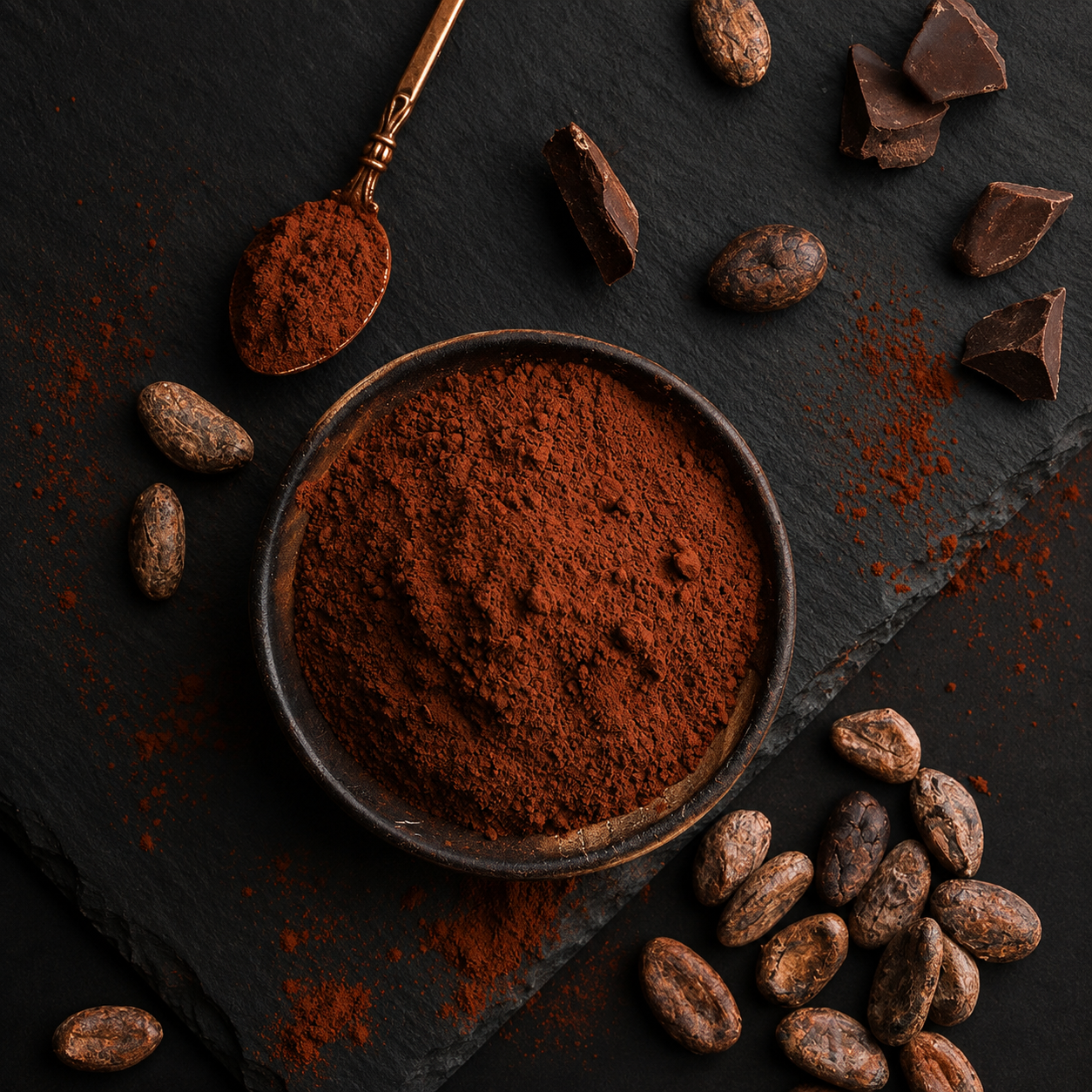
Darker colour. From the light reddish-brown of natural powder to deep brown, and near-black at heavy levels.
Milder taste. Acidity and astringency drop, giving the rounded cocoa flavour most mass-market consumers recognise.
LOST
Flavanols. Heavy alkalization retains only about 11% of natural levels.
Origin character. Fruity, floral and bright acidic notes — the very things that make fine flavour cacao worth paying for — are flattened along with the acidity.
Mandatory labelling. Alkalized product must be labelled "processed with alkali" or name the specific agent, immediately before or after the product name.
The paradox worth noting
Heavily alkalizing a fine flavour lot destroys exactly what you paid a premium for. The complex notes that give high-quality beans their value are the first thing the process flattens. The more distinctive the bean, the lighter the alkalization should be — or none at all. Conversely, for bulk beans with harsh acidity and crude flavour, alkalization is a sensible way to make a drinkable product.
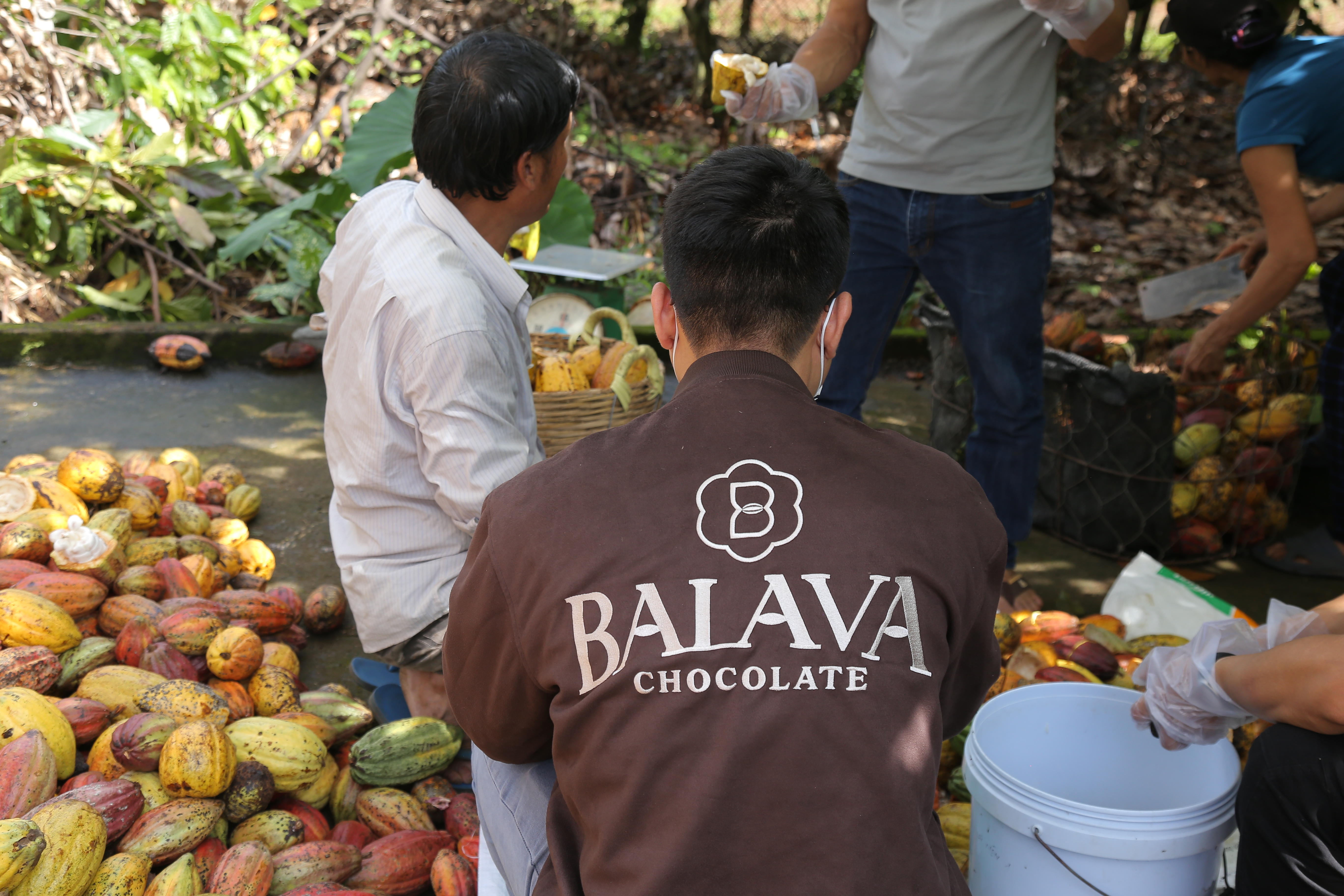
Axis Two — Fat Removal
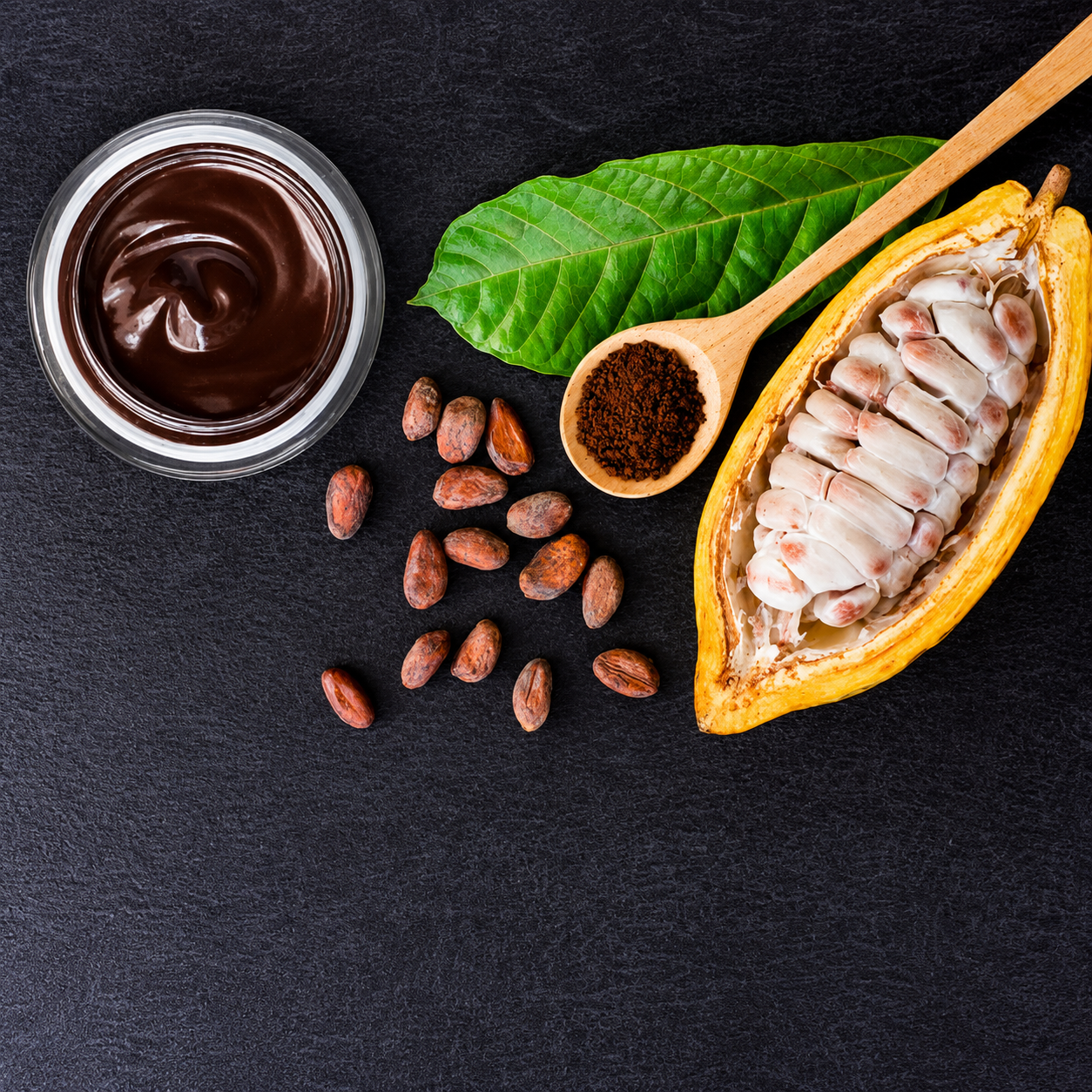
Pure cocoa mass is roughly half fat. To make powder, that mass goes into a hydraulic press. Cocoa butter flows out one way; the solid remainder, the press cake, is milled into cocoa powder.
The technical question is how hard to press. Press harder and the powder is leaner while more cocoa butter is recovered — and cocoa butter has its own market value. This is simultaneously a technical and an economic decision.
22% and above
Breakfast cocoa
High-fat powder. Full flavour, long finish, smooth mouthfeel. For premium drinks and applications needing natural richness.
10% to under 22%
Cocoa
The standard tier and the most common on the market. Balances flavour, cost and shelf stability.
Under 10%
Lowfat cocoa
Defatted. Colour and bitterness dominate but body is thin. Used where the recipe supplies fat elsewhere or calories are controlled.
Why does fat content affect flavour so much? Because fat carries aroma. Many of cacao's aroma compounds are oil-soluble rather than water-soluble. Pressing butter out also removes part of the vehicle that delivers aroma. That is why defatted powder tastes "bitter and flat" even when it comes from the same beans.
Choosing by Application
| Application | Alkalized | Fat | Why |
|---|---|---|---|
| Instant drink mixes | Yes | Medium | Dispersion is the priority; avoid clumping |
| Premium drinking chocolate | No or light | High | Preserve origin character and mouthfeel |
| Dark-coloured baked goods | Medium to heavy | Low to medium | Colour is the requirement; recipe already has butter and eggs |
| Nutrition-positioned products | No | Per calorie target | Retain maximum flavanols |
| Ingredient for chocolate makers | No | High | Unmodified material to formulate with |
Three Common Mistakes
01 — Swapping powder without changing the leavening
Natural powder is acidic and reacts with baking soda to produce gas. Alkalized powder, being near neutral, does not. Substituting alkalized for natural in a baking-soda recipe without switching to baking powder gives a cake that will not rise. That is a technical error, not a bad ingredient.
02 — Reading dark colour as quality
Darker does not mean more cocoa or better cocoa. Colour comes mainly from the degree of alkalization. A jet-black powder is most likely heavily alkalized — the tier with the fewest flavanols and the most flattened origin character.
03 — Comparing across tiers
Calling natural powder "too sour to drink" while comparing it against an alkalized instant-drink powder is comparing different products. To judge fairly, compare within the same alkalization level and the same fat band.
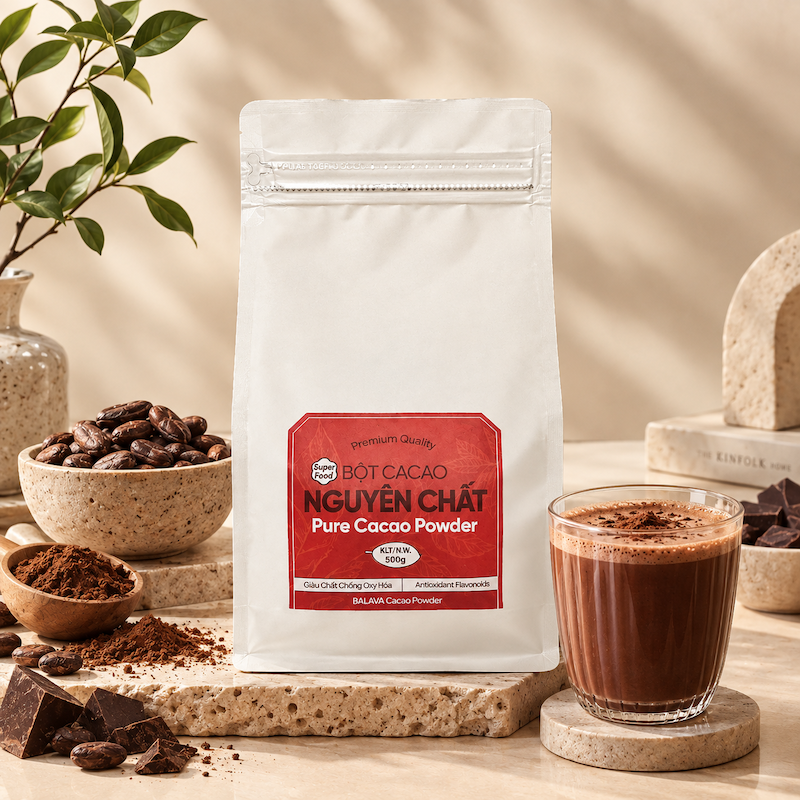
BALAVA Cocoa Powder
Specification
Non-alkalized
No alkali treatment. Natural acidity intact, origin character of Lam Dong beans preserved, flavanols in the natural-cocoa range rather than the reduced levels shown in the table above.
22–25% cocoa butter
Fat retained at 22–25%, placing it in the highest of the three tiers — 22% and above is the breakfast cocoa threshold. High-fat powder with full body and smooth mouthfeel.
In the two-axis framework of this article, BALAVA cocoa powder sits at natural and high-fat — suited to premium drinking chocolate and to chocolate makers who want unmodified material to formulate with.
BALAVA runs its own butter press in Da Lat, which is what allows us to set the residual fat level directly rather than depend on bought-in semi-finished material. For batch-level technical documentation — pH, moisture, particle size — contact TGROUP.
Sources: pH ranges and flavanol figures are from Miller et al., Journal of Agricultural and Food Chemistry, vol. 56 no. 18, 2008. Fat tiers, the permitted alkali list, the 3-parts-per-100 potassium carbonate ceiling and the labelling requirement are from 21 CFR Part 163 (United States); other markets set their own rules and should be checked against the destination market before export. The application table is a general guide and does not replace trials on a specific formulation.
Wholesale, Export & Corporate Gifting
TGROUP is BALAVA's distribution partner. Contact us for pricing, product specifications and export documentation.
Other review products