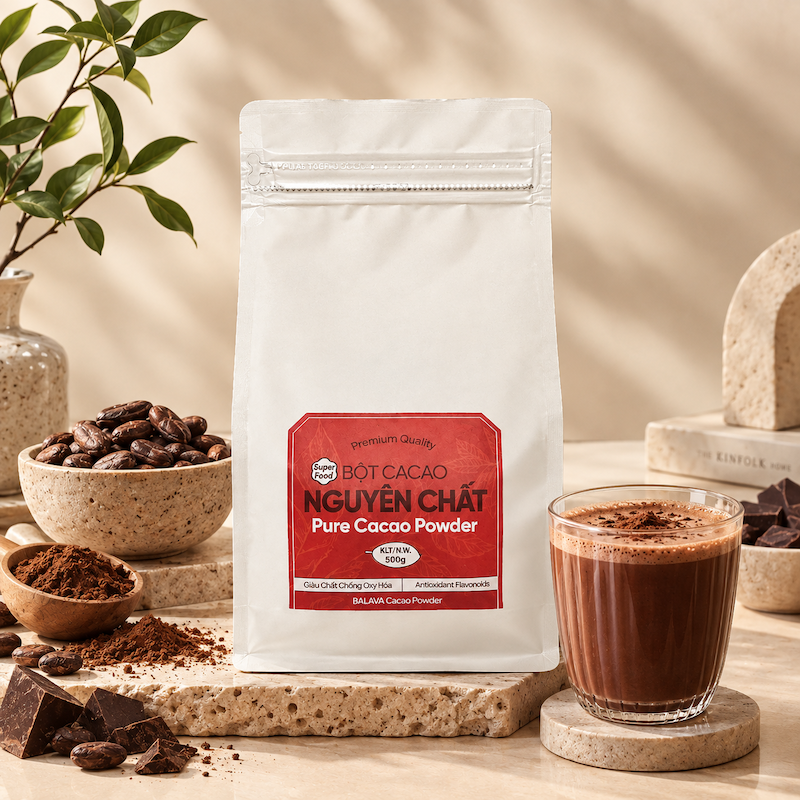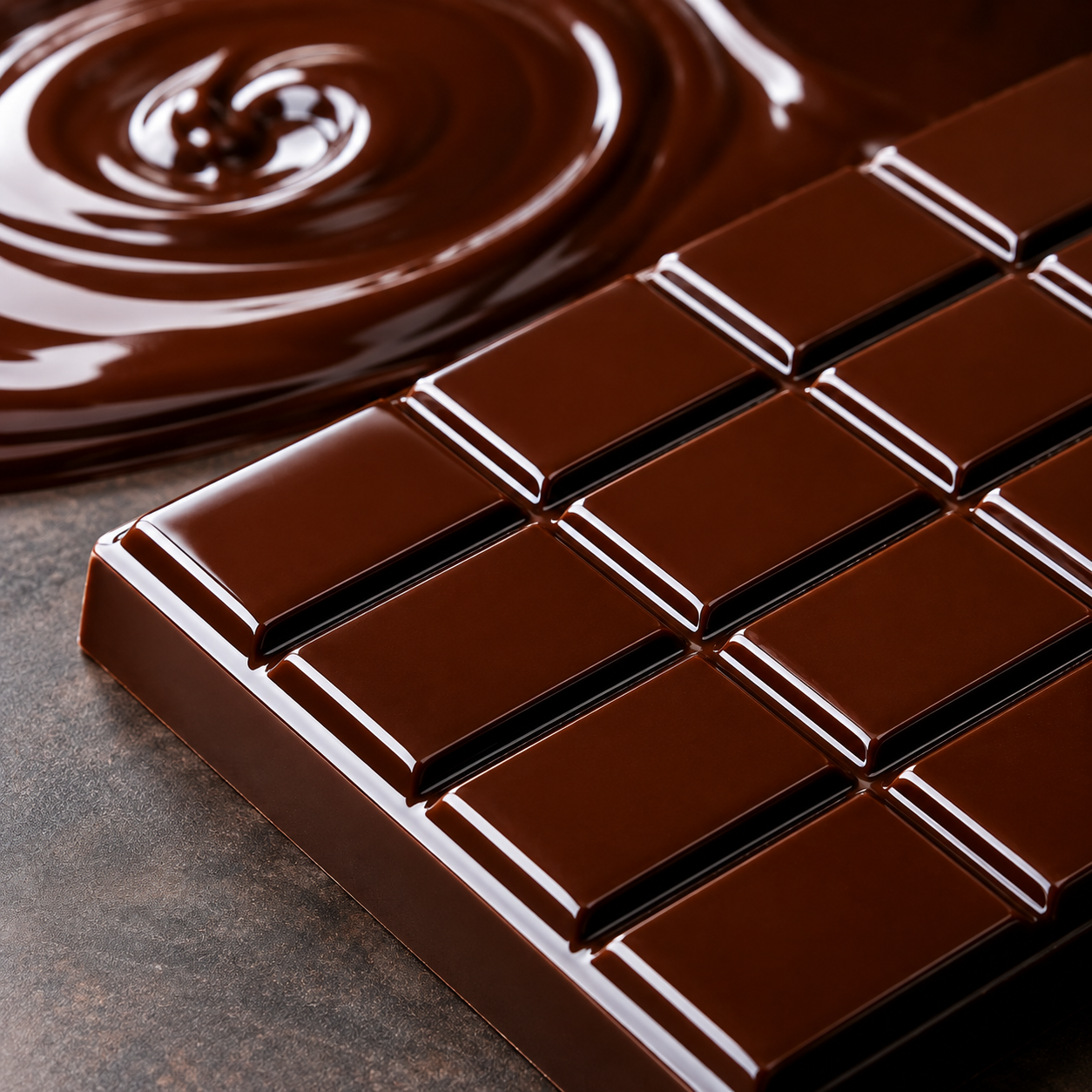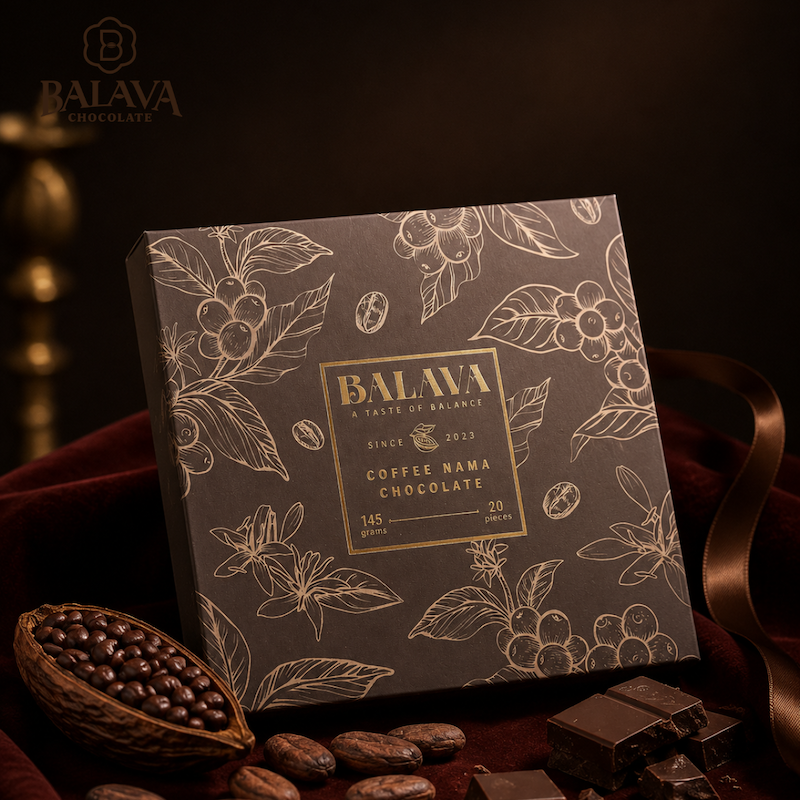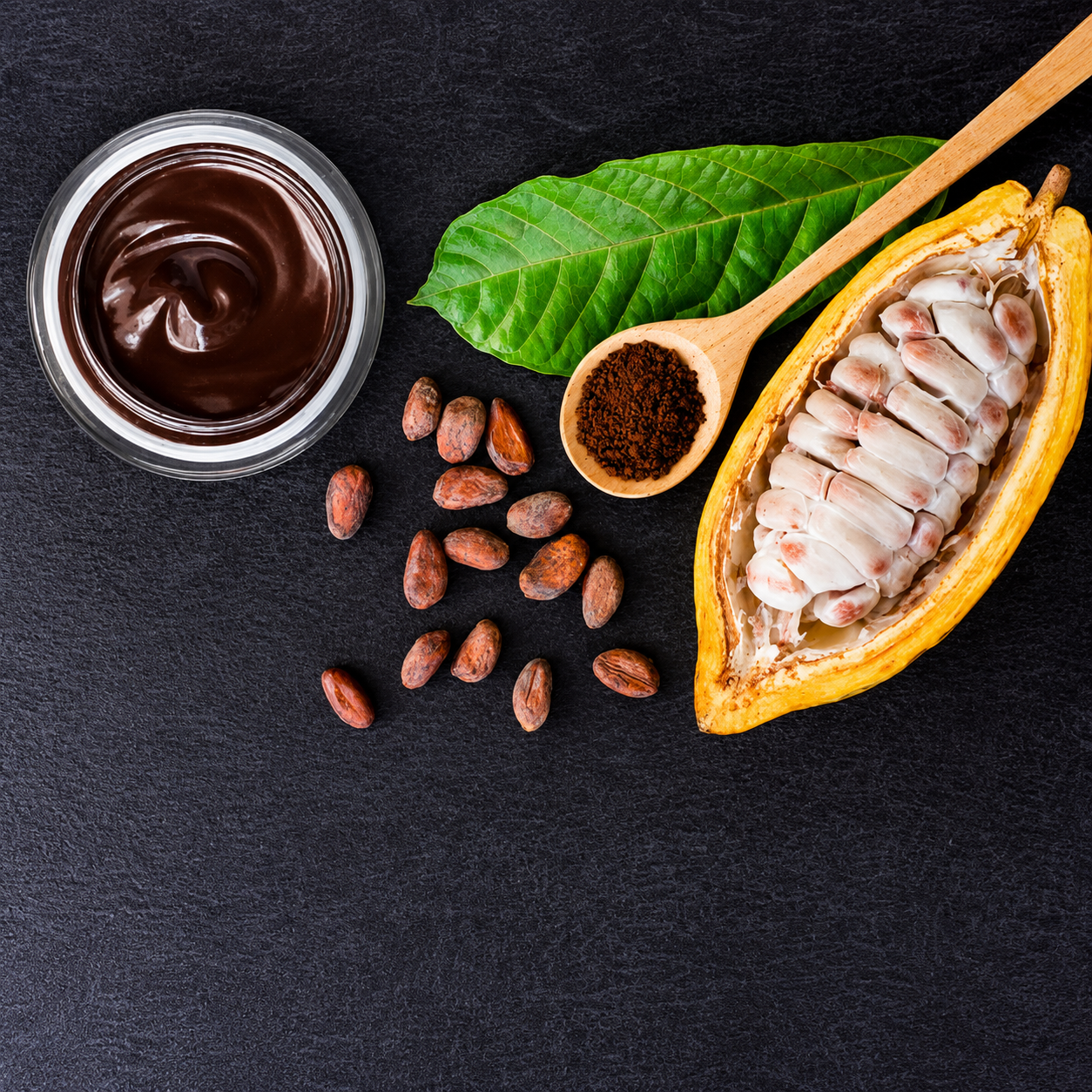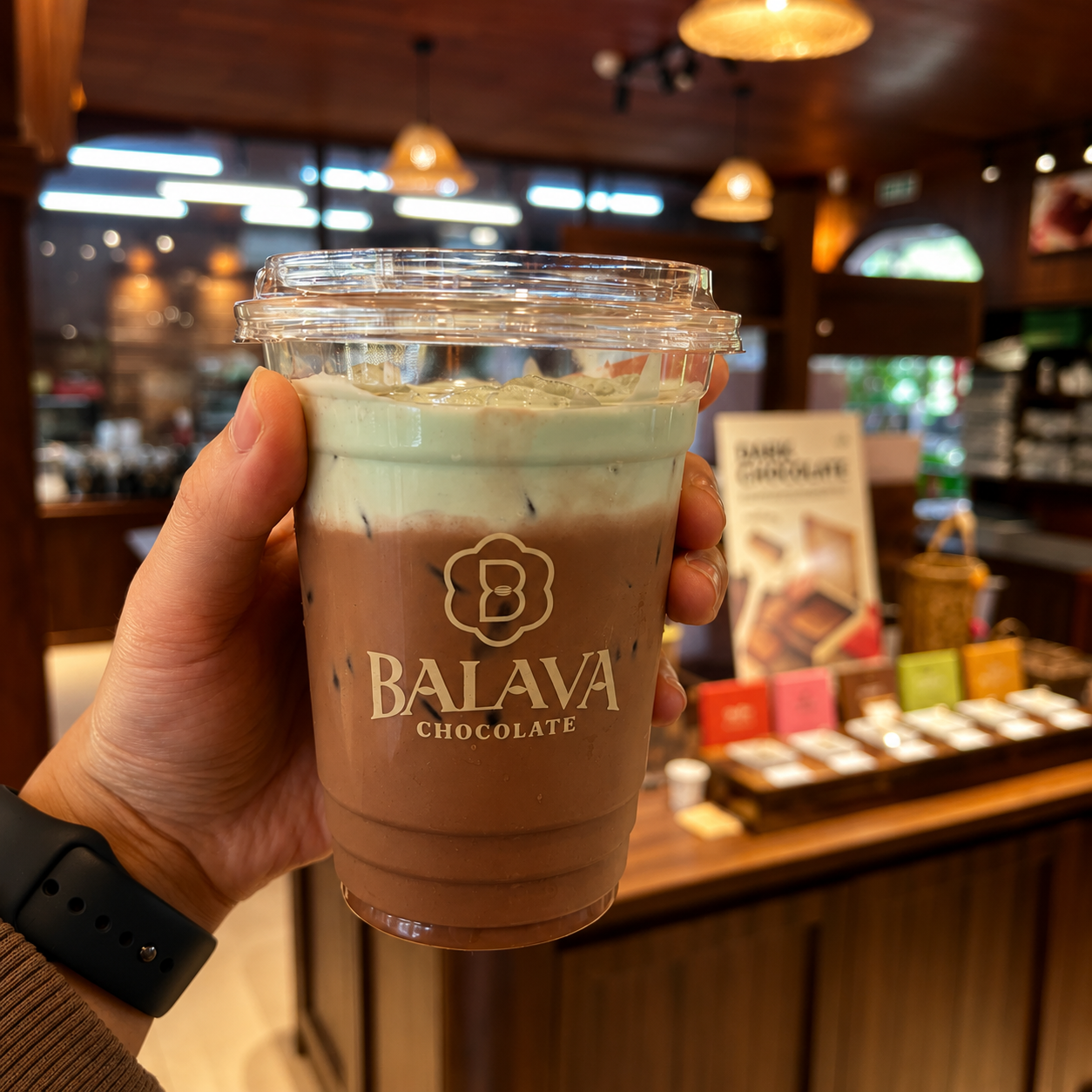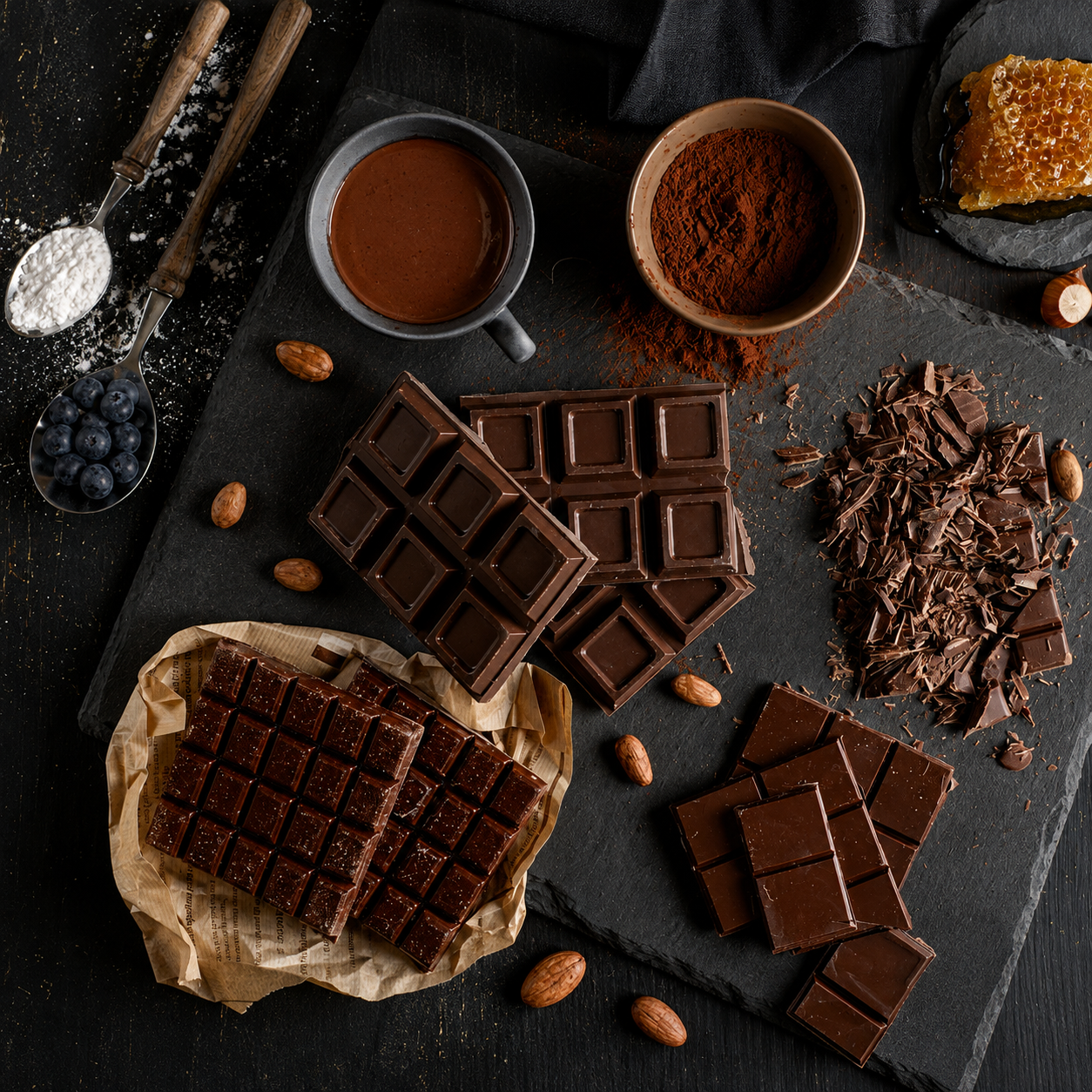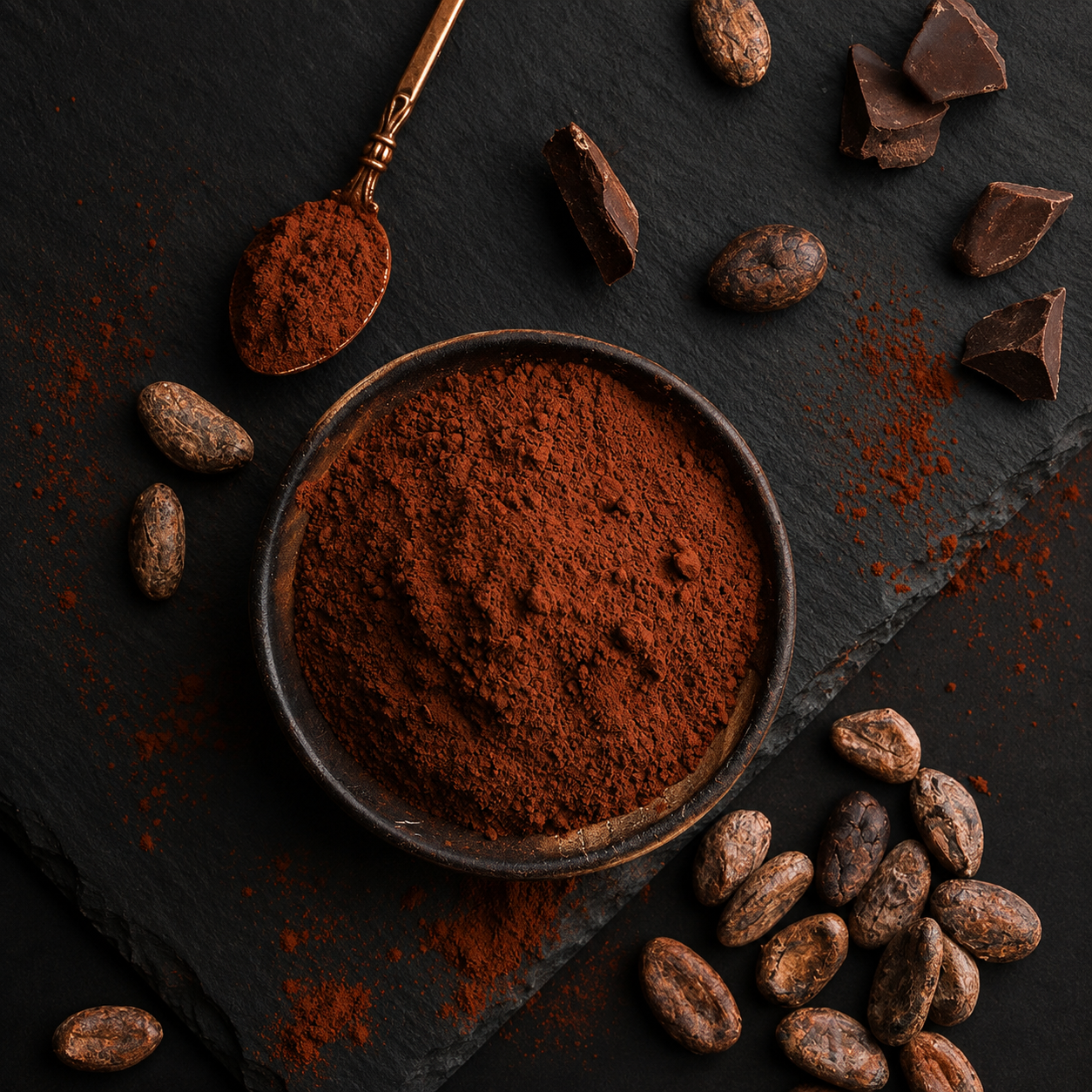
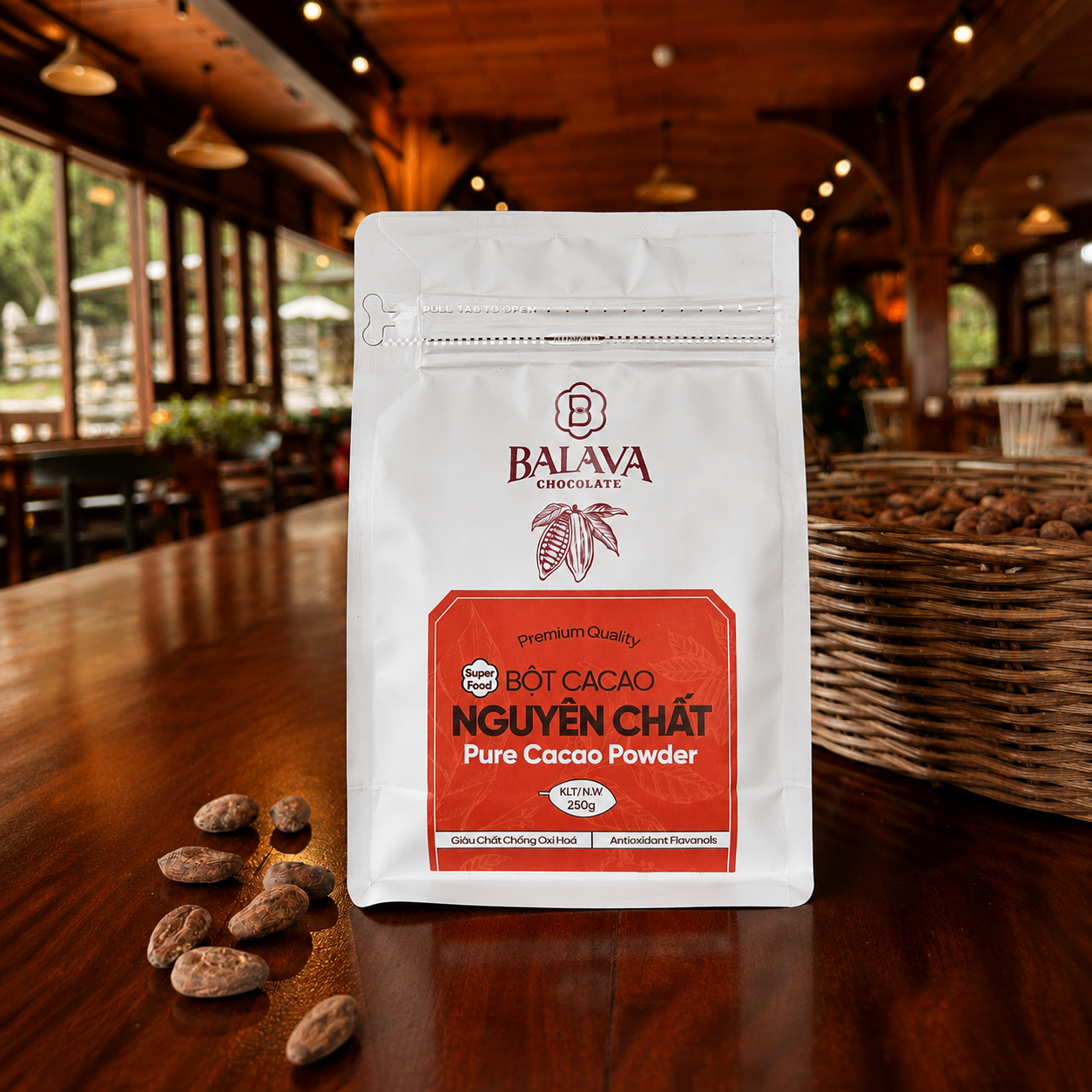
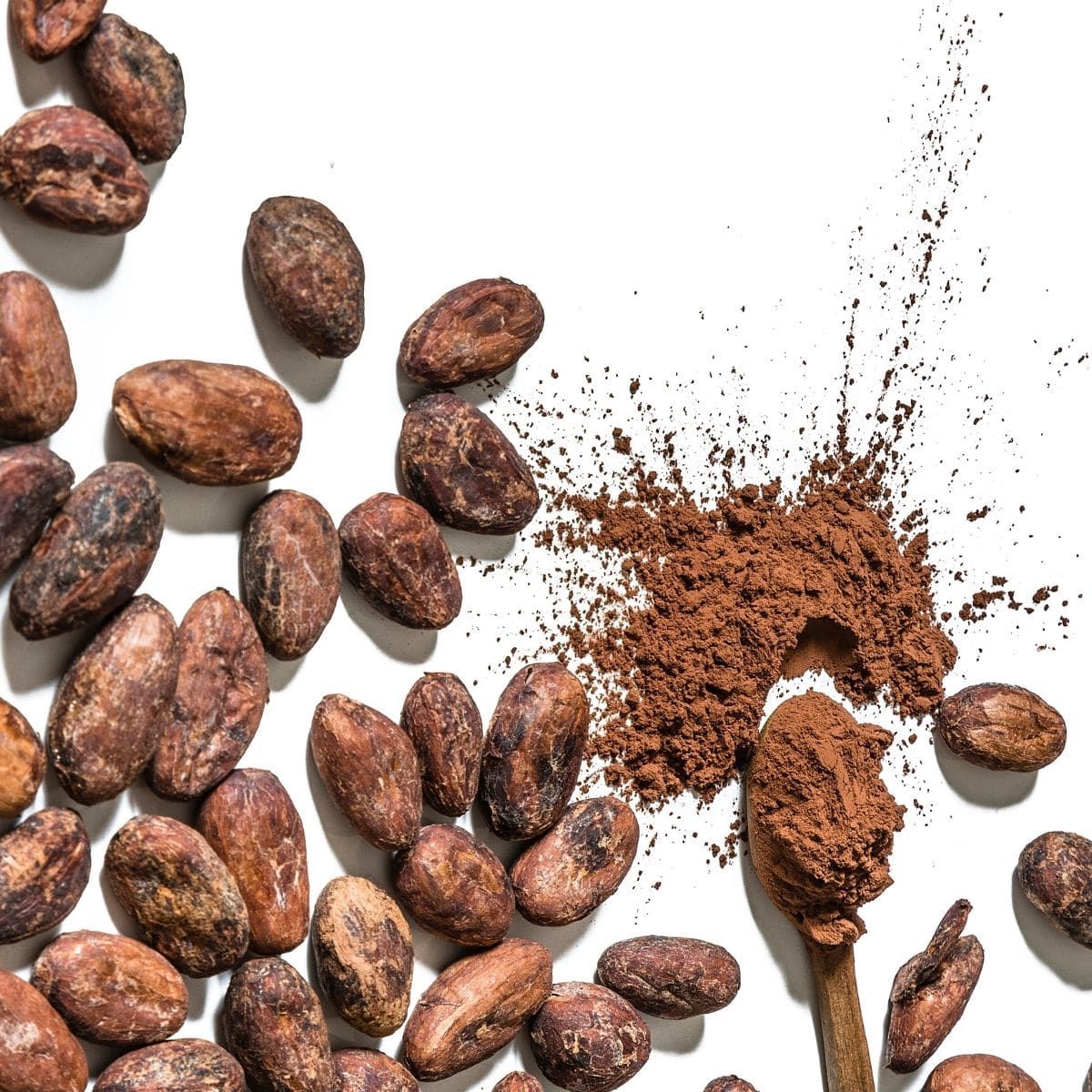
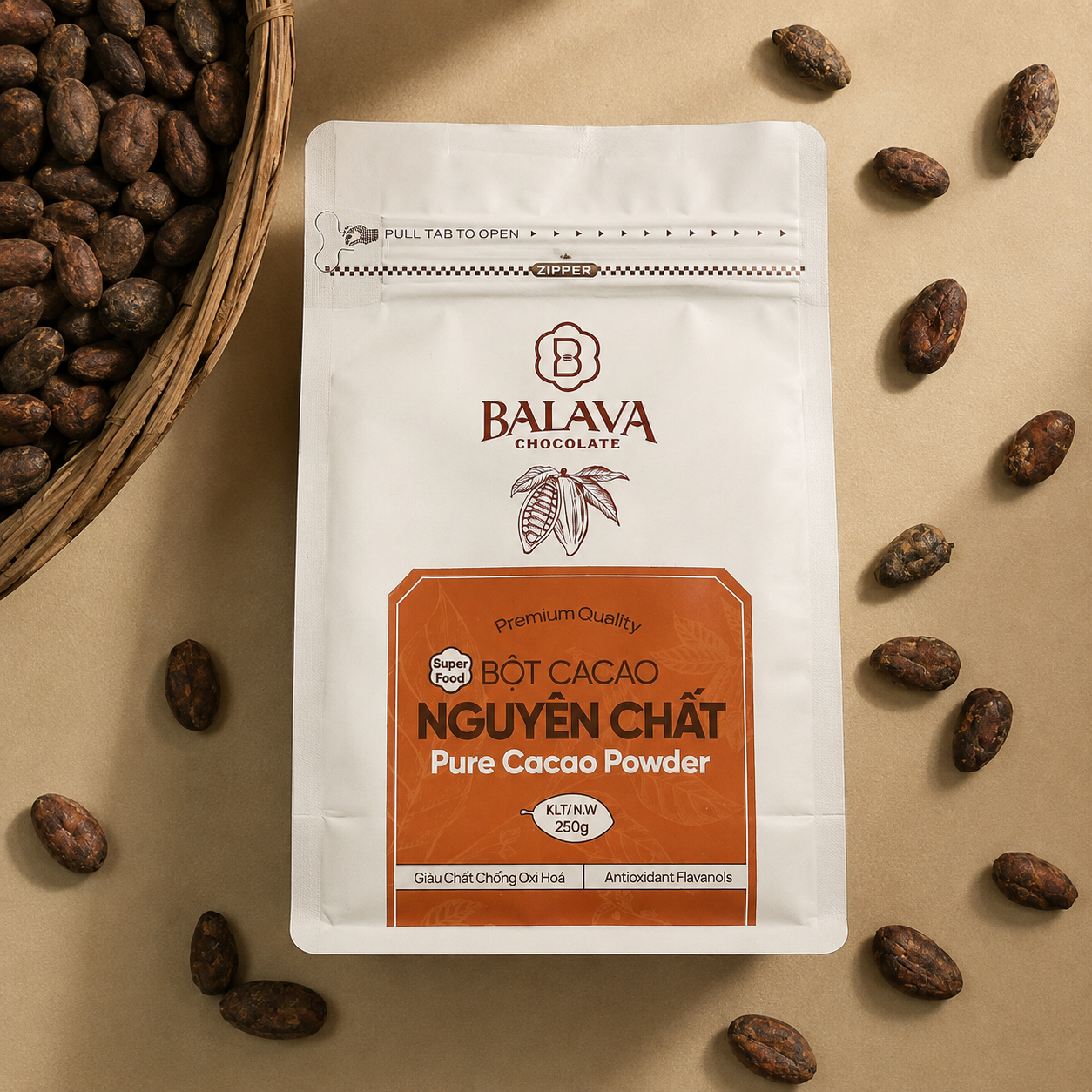
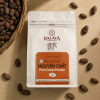
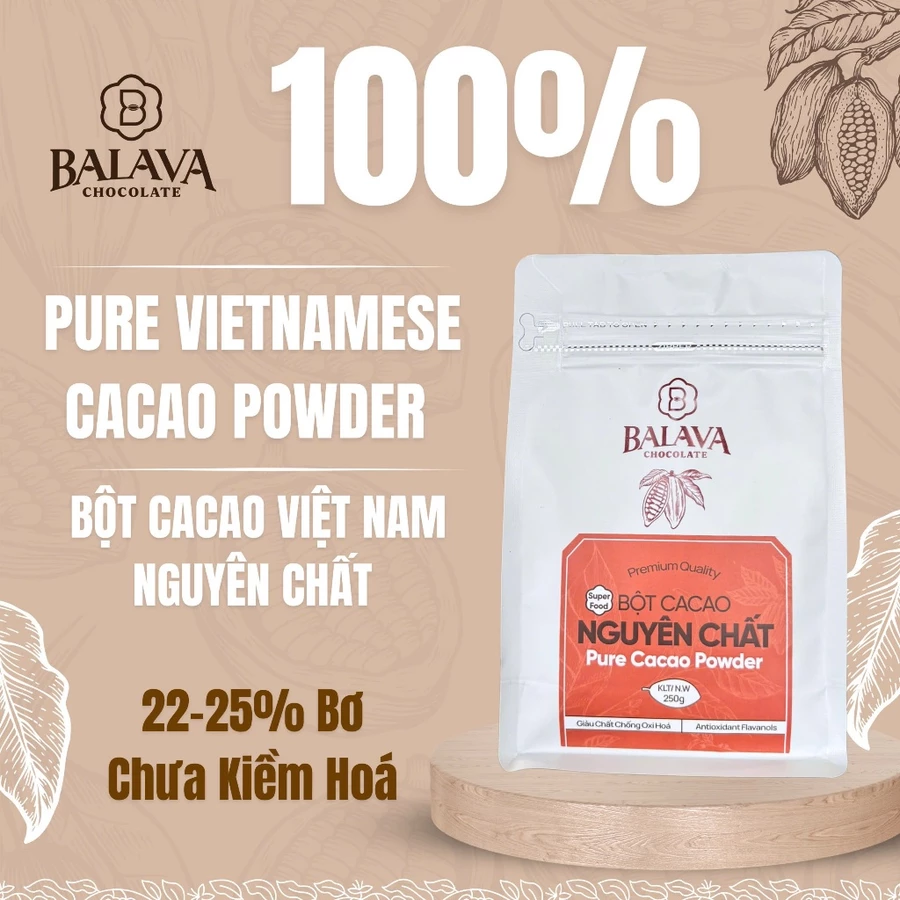
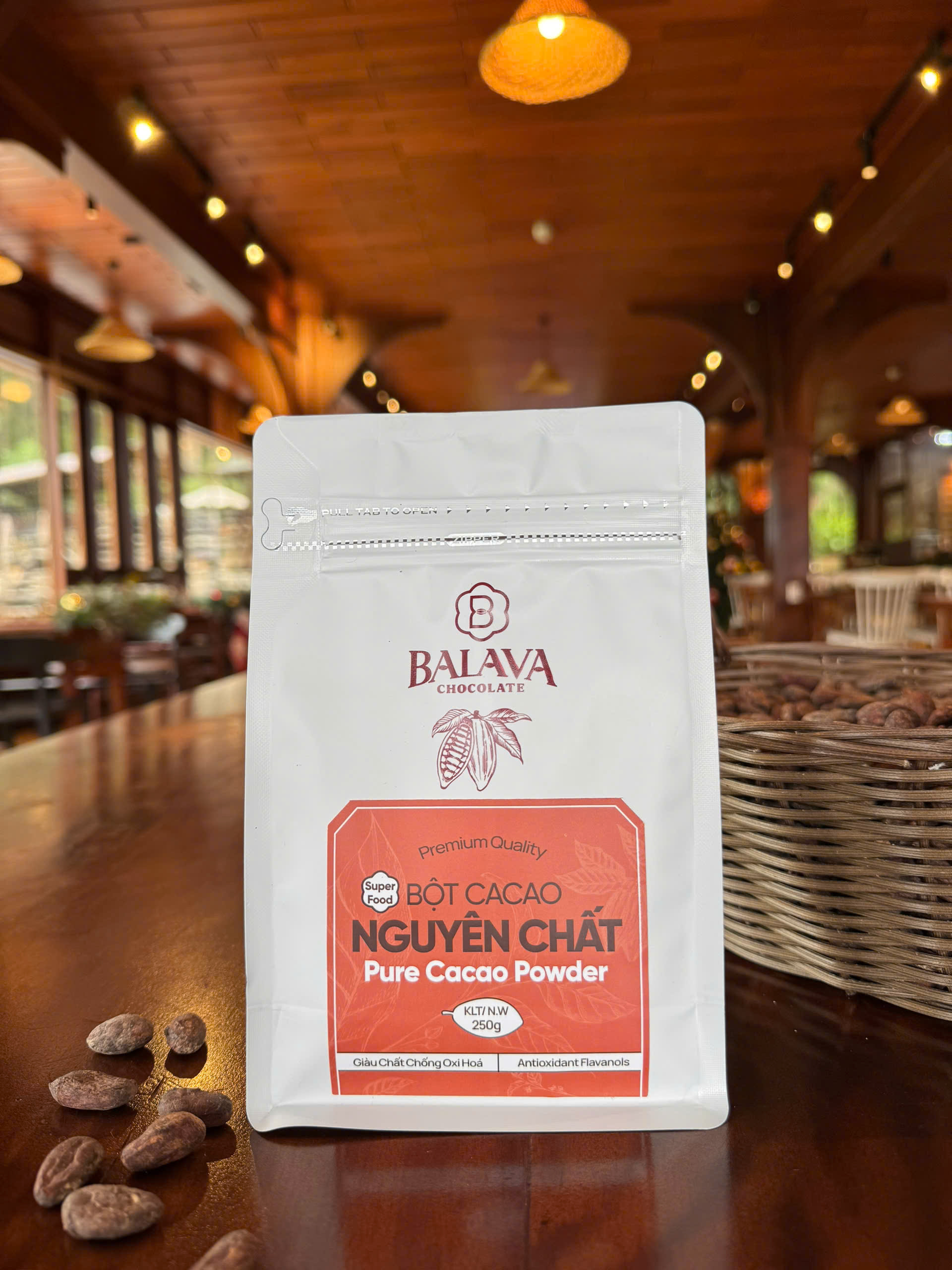
Most cocoa powder on the market has been alkalized and stripped of nearly all its butter. The color looks better, the price is lower, and the flavor falls flat. BALAVA cocoa powder goes the opposite direction: never alkalized, retains 22–25% cocoa butter, made from Lâm Đồng cacao beans that our own workshop ferments and roasts. The 250g bag is the most convenient size for home use — enough for 1–2 months without worrying about it going stale before you finish it.
250g
Net weight per bag
Non-alkalized
Keeps its natural acidity and full flavanol content
22–25%
Cocoa butter content — the highest US classification tier
12 months
Shelf life from date of manufacture
Two specs that decide the quality of a bag of cocoa powder
1. Non-alkalized — keeping what alkalizing destroys
Alkalizing (Dutch process) raises pH to darken the powder and reduce acidity. In exchange, it destroys flavanols — the antioxidant compounds that make up much of cocoa's nutritional value.
Research by Miller et al., published in the Journal of Agricultural and Food Chemistry (Vol. 56, Issue 18, 2008), measured natural cocoa powder at pH 5.39–5.76 with total flavanols of 34.6 ± 6.8 mg/g. Lightly alkalized powder retains only about 40%, medium alkalization about 22%, and heavy alkalization about 11%. BALAVA powder skips alkalization entirely — a clear fruity acidity, a clean finish, and its full natural flavanol content intact.
2. 22–25% cocoa butter — why the cup tastes rich without anything added
Industrial cocoa powder is often pressed nearly dry because cocoa butter sold separately fetches a higher price. The less fat left in the powder, the drier, paler, and thinner it tastes once mixed.
Under US regulation 21 CFR Part 163, cocoa powder with 22% fat or more is classified as breakfast cocoa — the richest of the three commercial tiers. Standard cocoa runs 10–22%, and low-fat cocoa is under 10%. BALAVA keeps 22–25%: the aroma carries further, the mouthfeel is round and smooth, and it blends well into high-fat recipes like ganache, ice cream, and mousse.
Technical specifications
| Specification | Detail |
|---|---|
| Net weight | 250g / bag |
| Ingredients | 100% pure cocoa powder — no additives, no preservatives, no coloring, no blending |
| Cocoa butter content | 22–25% |
| Alkali treatment | None (natural process) |
| Fineness | 100–150 mesh |
| Color | Natural chocolate brown to dark brown |
| Shelf life | 12 months from date of manufacture |
| Storage | Store in a cool, dry place away from direct sunlight. Reseal tightly after opening |
| Bean origin | Lâm Đồng and Bình Phước, Vietnam |
| Made in | Đà Lạt, Lâm Đồng, Vietnam |
| Brand | BALAVA Chocolate |
From cacao orchard to 250g bag — BALAVA controls the whole chain
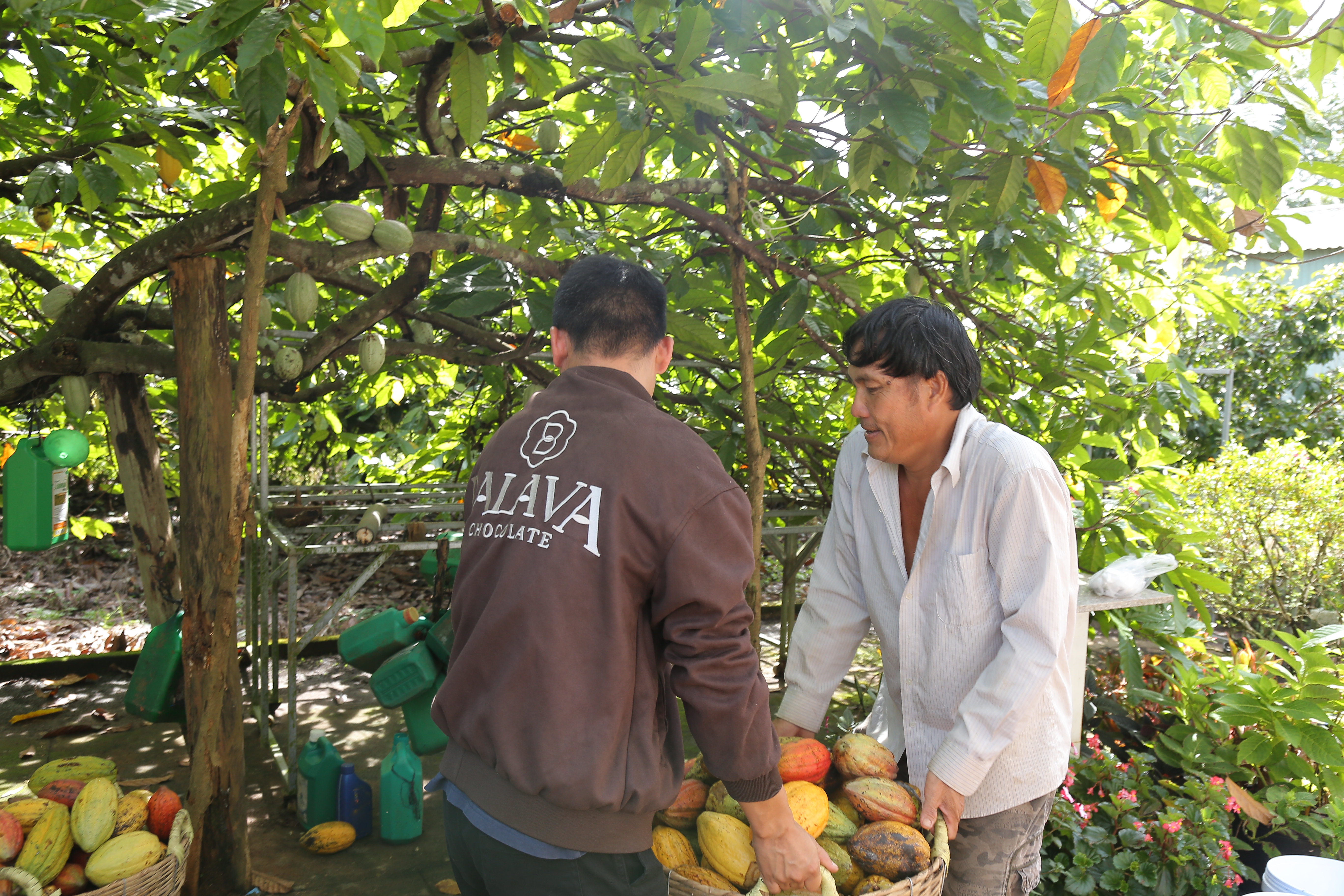
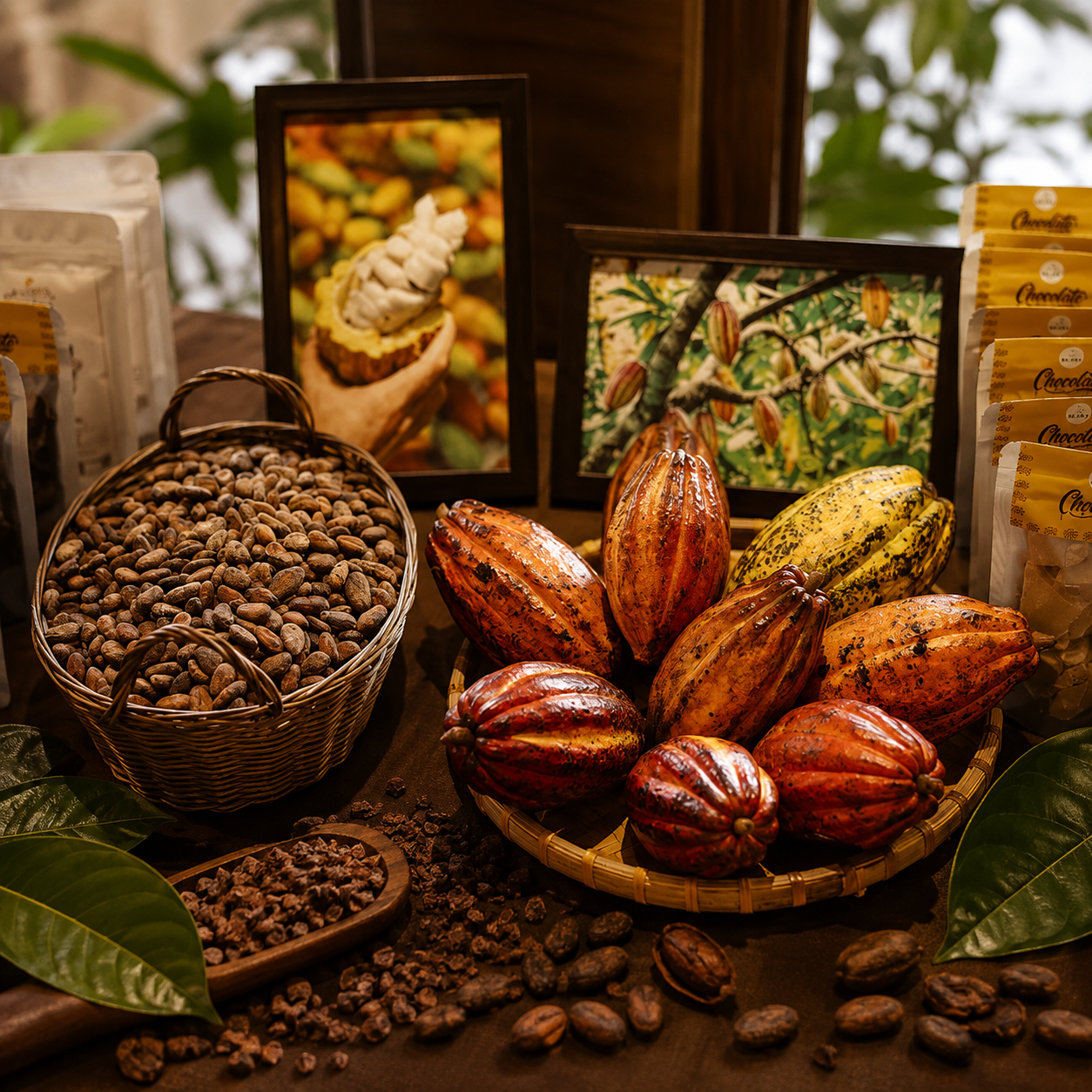
What makes the difference isn't the grinding — it's the fermentation, the step that shapes most of the final flavor. Most producers buy beans that someone else has already fermented. BALAVA does this step itself.
| Step | Detail |
|---|---|
| 01 · Harvest | Ripe pods selected at exactly the right stage in our Lâm Đồng orchards. Unripe pods lack the sugar needed for fermentation, and no later step can compensate for that |
| 02 · Fermentation | Using the Nakano Mame method, with tightly controlled time and temperature so the beans develop natural aroma, lose harsh bitterness, and build a balanced flavor structure |
| 03 · Drying | Dried to technical standard, moisture controlled before roasting |
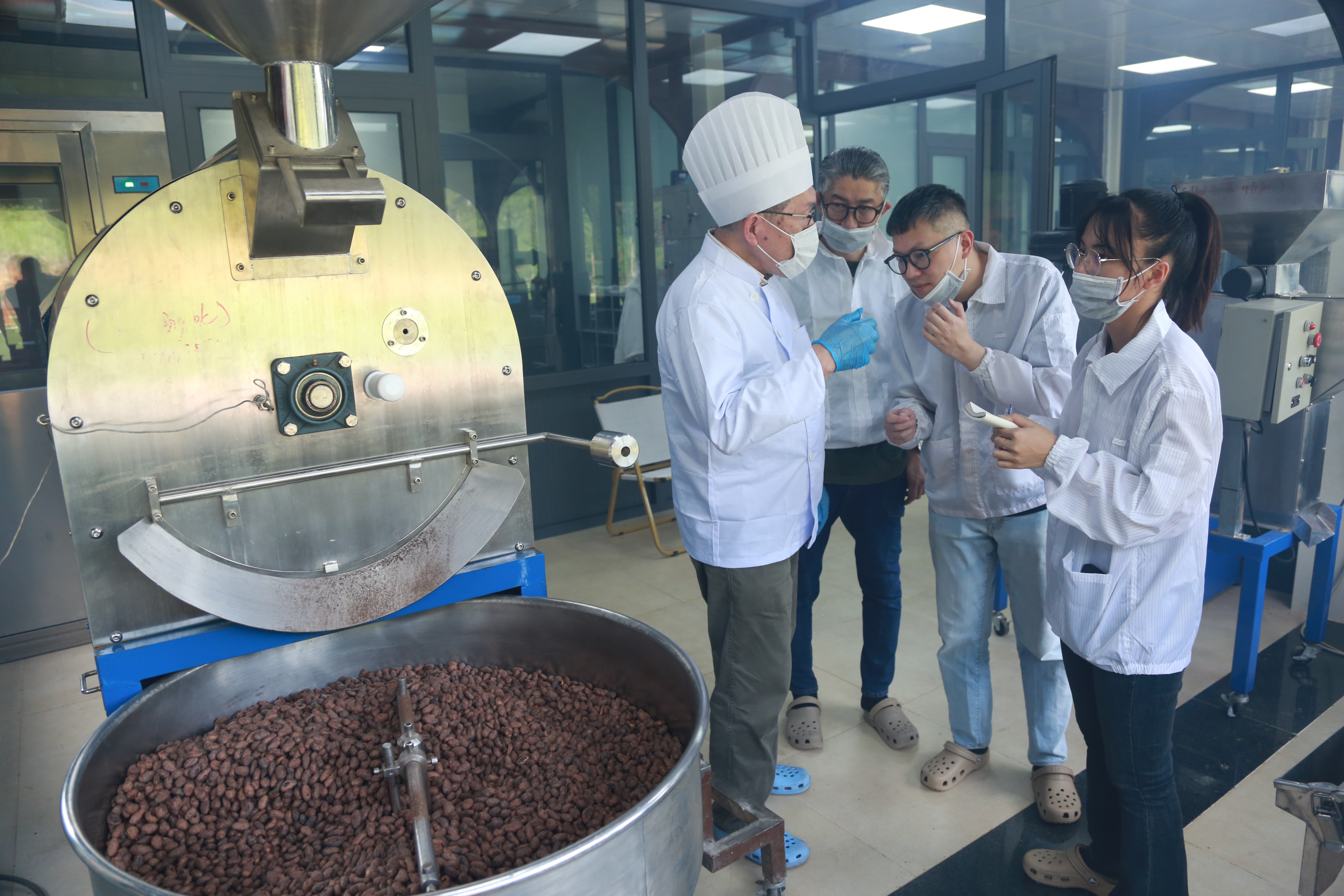
| 04 · Roasting | Roasted at low heat to protect the aroma, without pushing high temperatures that scorch the edges |
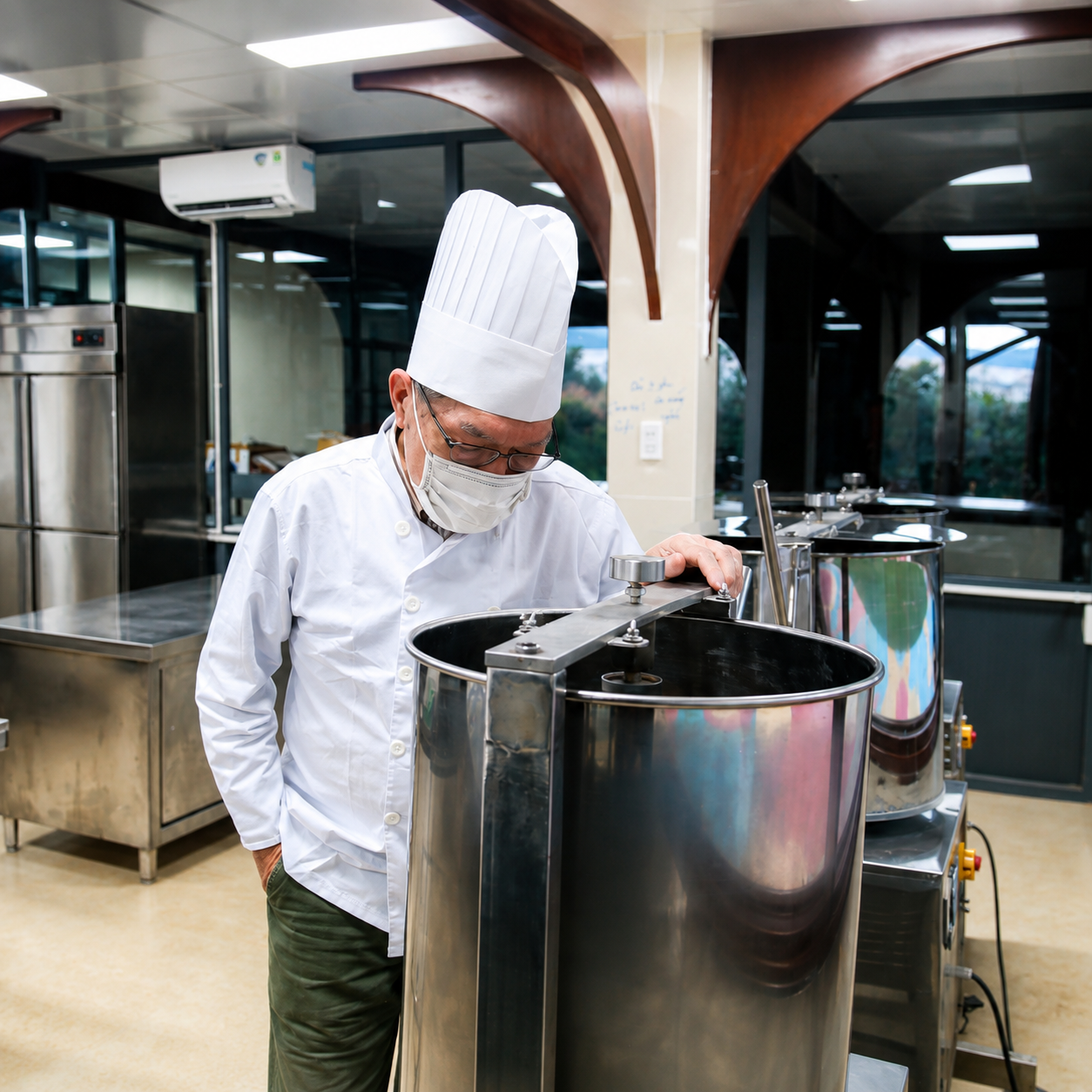
| 05 · Pressing & grinding | Partially pressed to remove some cocoa butter, keeping 22–25%, then ground and sieved to 100–150 mesh |
| 06 · Inspection & packing | Each batch inspected before being packed into 250g bags |

How to use it
Hot cocoa — the workshop's standard recipe (about 4% of a 250g bag per cup)
| Step | Instruction |
|---|---|
| 1 | Add 10g of cocoa powder (about 2 teaspoons) to a cup |
| 2 | Add 30–40g condensed milk, stir into a thick paste before adding water |
| 3 | Pour in 150–180ml of hot water at about 90°C, stir until fully dissolved |
| 4 | Adjust sugar and milk to taste. Add ice if you'd like it cold |
At 10g per cup, one 250g bag makes about 25 cups of hot cocoa.
Tip. Always mix the powder with condensed milk or a little warm water into a paste before pouring in hot water. Pouring boiling water directly onto dry powder is the number one cause of clumping.
Baking and drinks
With its high cocoa butter content and full natural acidity, BALAVA powder suits recipes where cocoa is the lead flavor: brownies, cocoa cupcakes, tiramisu, chocolate mousse, ice cream, and artisan-style drinks. A 250g bag is just the right amount to test a new recipe before committing to a larger order.
Frequently asked questions
How long does a 250g bag last?
At one cup a day (10g), a 250g bag lasts about 25 days. Unopened shelf life is 12 months from the date of manufacture; once opened, we recommend finishing it within 1–2 months for the best aroma.
How is non-alkalized powder different to drink?
A clearer fruity acidity and a cleaner finish, with a slightly lighter color than alkalized powder. If you're used to dark, Dutch-processed powder, the first cup will taste different — most people don't go back after trying it.
Can it be mixed with cold water?
Dissolve it in a little warm water or condensed milk first, then add ice and cold milk. Cocoa powder doesn't dissolve directly in cold water.
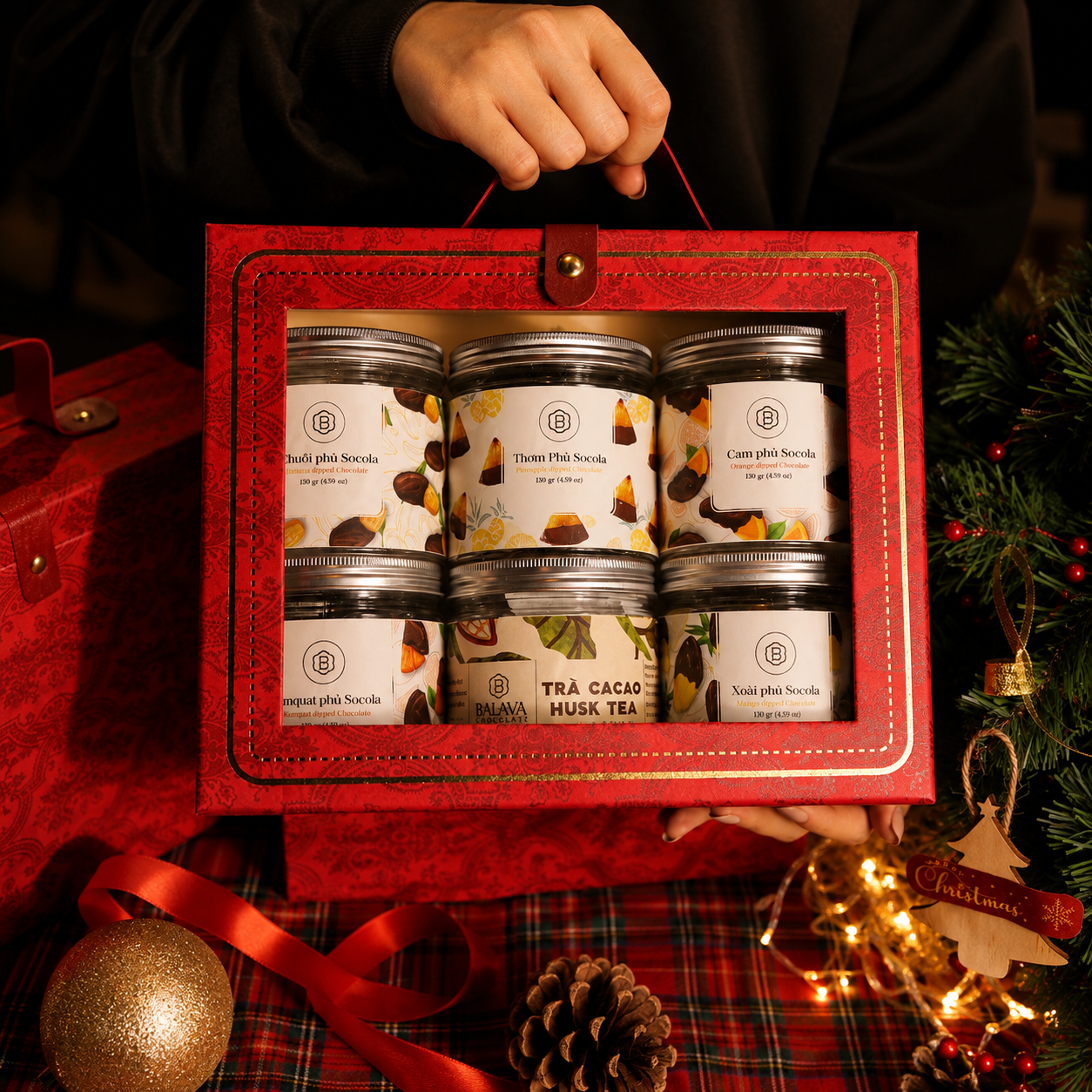
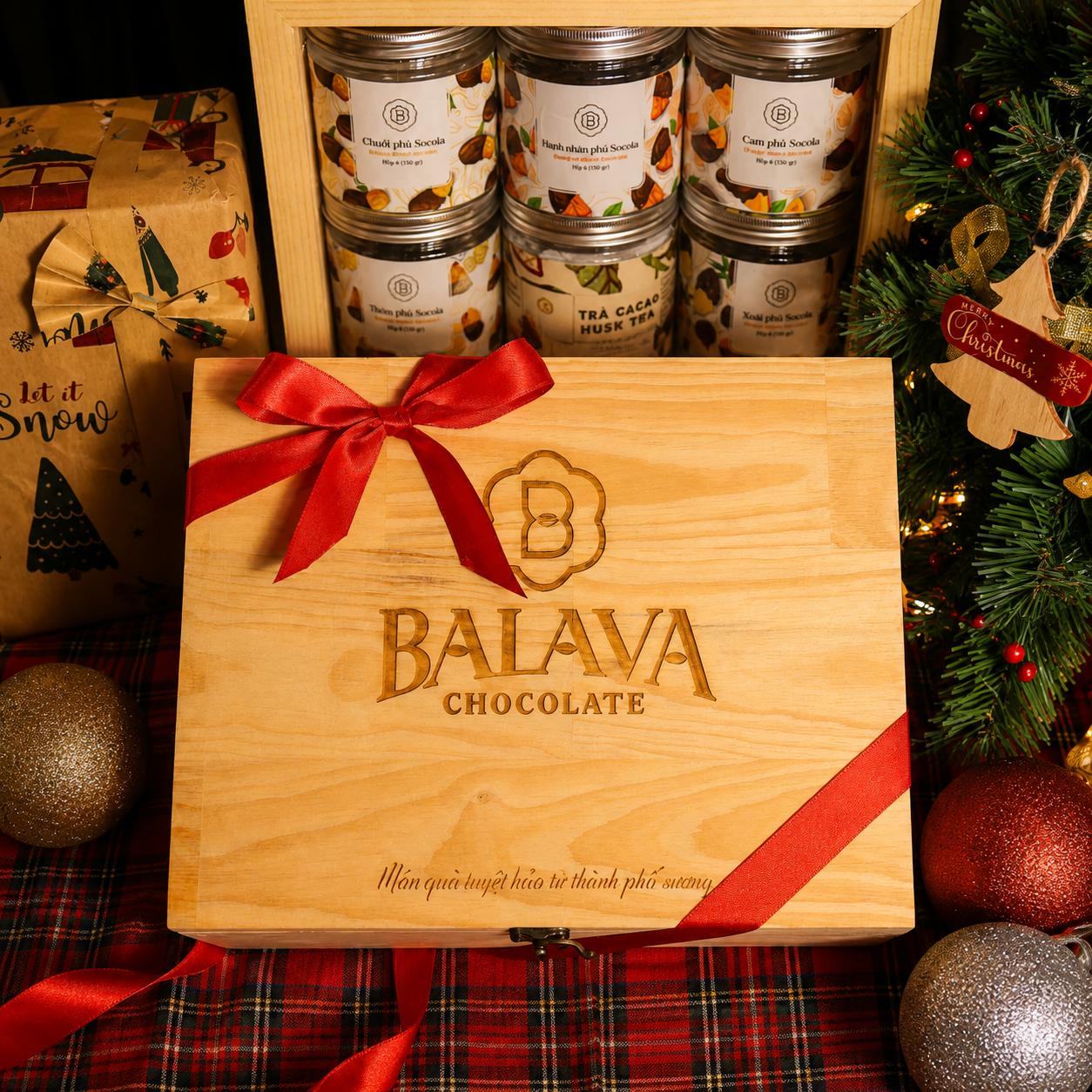
Is the 250g bag suitable as a gift?
Very much so — it's compact, easy to wrap, and just the right amount for someone to fully enjoy the flavor without worrying about leftovers.
How do I inquire about bulk/wholesale orders?
Message us on Zalo or call the hotline below with your intended use and expected volume. BALAVA will send samples from the current production batch along with product documentation.
Lab test results
The product was sent for independent testing at a laboratory accredited under ISO/IEC 17025:2017. Report No. 2510285A/KQKN, sample received 03 October 2025, tested 03–11 October 2025.
Heavy metals and mycotoxins
| Parameter | Result (mg/kg) |
|---|---|
| Lead (Pb) | 0.16 |
| Cadmium (Cd) | 0.35 |
| Mercury (Hg) | 0.0082 (<LOQ 0.02) |
| Arsenic (As) | 0.033 |
| Aflatoxin B1 | Not detected (LOD 0.4) (µg/kg) |
| Total aflatoxin (B1, B2, G1, G2) | Not detected (LOD 0.4) (µg/kg) |
Aflatoxin was not detected in either parameter, and mercury was not detected. These are the two parameter groups of greatest concern for bean- and cacao-based products.
On cadmium in cocoa powder. Cadmium is absorbed by the cacao tree from the soil, making it the parameter importers watch most closely when buying cocoa powder. The European Union sets a maximum of 0.60 mg/kg for cocoa powder sold to end consumers, under Regulation (EU) 2023/915.
This batch tested at 0.35 mg/kg — below that limit. We share the exact figure rather than a general assurance, so wholesale and export buyers can compare it directly against their own market standards.
Test results are valid for the tested sample only. Heavy metal and aflatoxin testing followed AOAC methods. Not detected: below the detection limit. LOD: limit of detection. LOQ: limit of quantification. The full test report is available on request.
Order or request a wholesale quote
Retail, wholesale, corporate gifting, custom packing and private label. Message us — it is the fastest way to reach the team.
Email: mint@tgroup.vn
Workshop: BALAVA Chocolate House, Da Lat, Vietnam
Workshop: BALAVA Chocolate House, Da Lat, Vietnam