
“Chocolate contains happiness chemicals” gets repeated so often that almost nobody checks it. The truth is that all four of the compounds usually named really are present — but what happens to them after you swallow is nothing like the story.

The four usual suspects, and what actually happens
Phenylethylamine (PEA)LARGELY A MYTH
Often called the “love drug”. PEA is present in chocolate, correct. The problem is that when ingested orally it is broken down by the enzyme monoamine oxidase (MAO). Very little reaches the brain. “Eat chocolate to feel like you are in love” has no pharmacological basis at dietary doses.
AnandamideREAL, BUT NOT AS ADVERTISED
In 1996 research published in Nature found that chocolate contains anandamide — an endogenous compound that binds the same receptors as THC. The press turned this into headlines immediately.
The arithmetic tells a different story: to obtain any cannabis-like effect, a person weighing around 59 kg would need to eat roughly 11 kg of chocolate at one sitting. Anandamide is also broken down very quickly in the brain.
The arithmetic tells a different story: to obtain any cannabis-like effect, a person weighing around 59 kg would need to eat roughly 11 kg of chocolate at one sitting. Anandamide is also broken down very quickly in the brain.
The story does not end there, though. In 1998, also in Nature, Beltramo and Piomelli made a more subtle argument. The two main N-acylethanolamines in chocolate — N-oleyl-ethanolamine and N-linoleylethanolamine — do not activate brain cannabinoid receptors, but they do inhibit the degradation of anandamide. In other words they may prolong the action of anandamide already present in the body, rather than producing an effect themselves.
This is a proposed hypothesis, not a fully demonstrated mechanism. But it is why “pure myth” is not an accurate answer either.
TryptophanNOT ENOUGH TO MATTER
Tryptophan is the amino acid precursor to serotonin, and chocolate contains it. But very little remains unmetabolised after ingestion, and tryptophan must also compete with other amino acids to cross the blood-brain barrier. The route from “eat chocolate” to “raise serotonin” is not that direct.
Theobromine and caffeineTHESE ONES ACTUALLY DO SOMETHING
These are the only compounds on the list with well-documented pharmacological effects at dietary doses. Per USDA data, 100 g of unsweetened cocoa powder contains roughly 2,057 mg of theobromine and 230 mg of caffeine.
Theobromine is a mild stimulant with a serum half-life of about 6 to 10 hours — considerably longer than caffeine. But its effect is gentle alertness and vasodilation, not “happiness”.
Theobromine is a mild stimulant with a serum half-life of about 6 to 10 hours — considerably longer than caffeine. But its effect is gentle alertness and vasodilation, not “happiness”.

So why does chocolate genuinely feel good
The feeling is not imaginary. The explanation simply lies elsewhere — and is arguably more interesting.
| Factor | Mechanism |
|---|---|
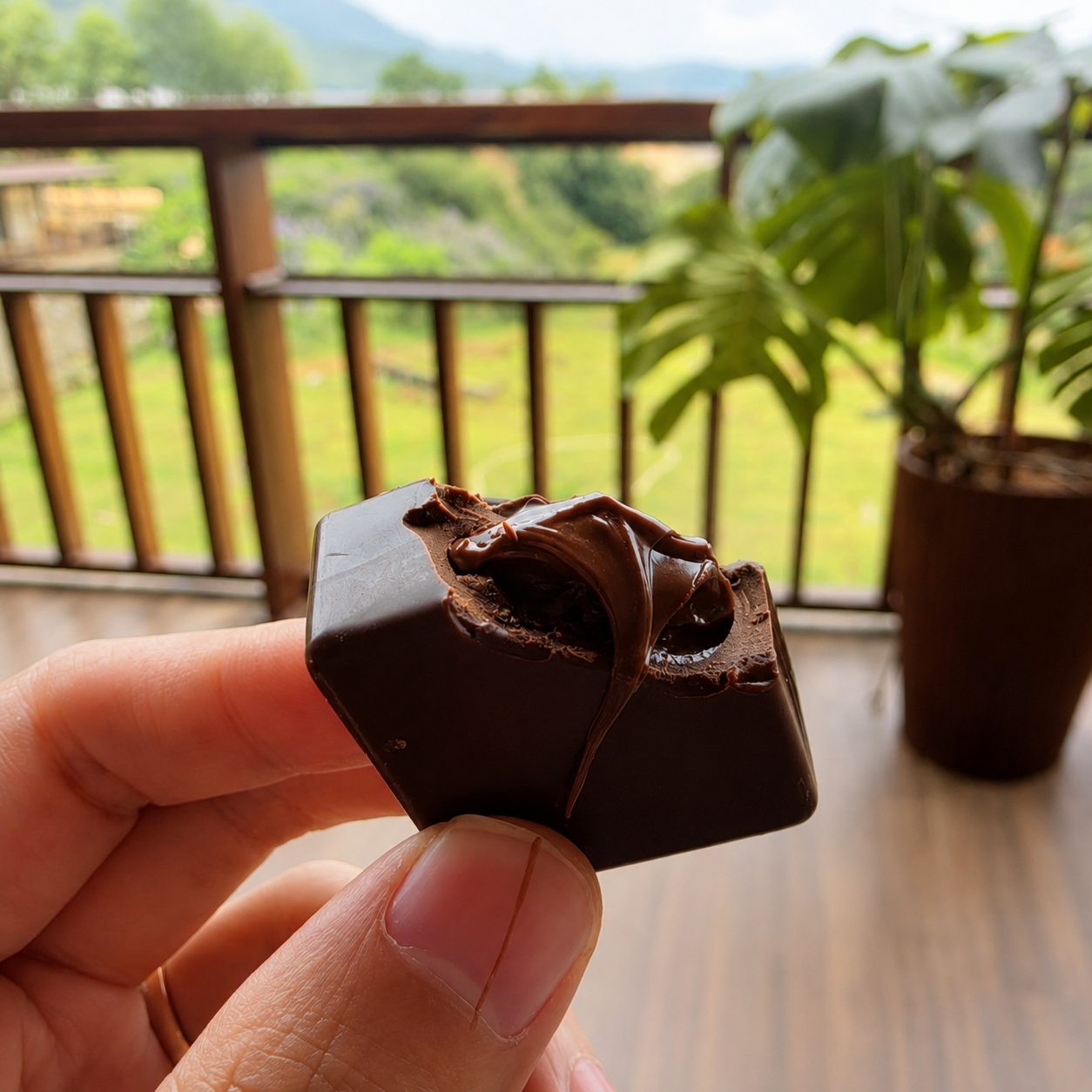
| Cocoa butter melts at mouth temperature | Cocoa butter melts between roughly 34 and 36°C, close to the temperature of the mouth. Chocolate does not need chewing; it collapses. Very few foods do this, and the sensation accounts for a large share of the pleasure. |
| The sugar-fat combination | Sugar together with fat is among the most compelling combinations for the human palate. That is a biological reason requiring no special hormone. |
| Aroma released on cue | As the chocolate melts, hundreds of aroma compounds are released simultaneously in the mouth and travel to the olfactory receptors. This is a multisensory event, not a single chemical action. |
| Learned association | Chocolate is bound up with gifts, holidays, reward and consolation. The brain responds to context, not only to molecules. |
In summary
The honest answer to the question in the title: there are neuroactive compounds in chocolate, but most of them do not reach the brain at ordinary dietary doses. The pleasure is real; its origin is mostly sensory and psychological rather than pharmacological.
That does not make chocolate less interesting. It only relocates the interest — from a chemistry story that sounds compelling but is wrong, to a specific physical fact: cocoa butter melts at human body temperature.

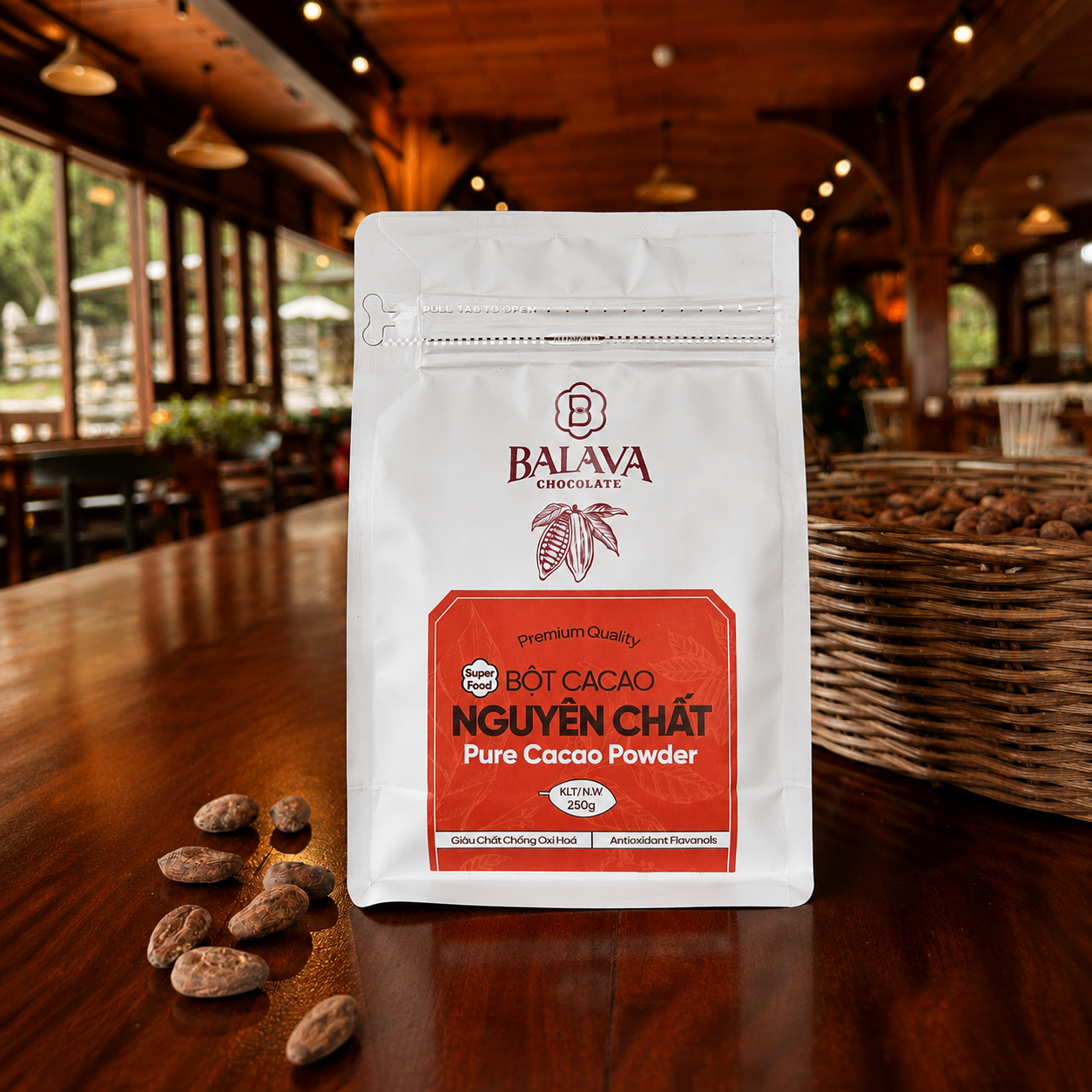
BALAVA cocoa powder retains 22–25% cocoa butter and is non-alkalized. BALAVA makes bean-to-bar chocolate from Lam Dong cacao in Da Lat and is extending control into cultivation, moving towards a farm-to-bar model.
Disclaimer. This article is informational, compiled from the cited research. It is not medical advice and does not replace professional opinion. Chocolate is not a treatment for any psychological condition. Anyone experiencing persistent difficulties with their mental health should seek qualified support.
Talk to BALAVA
Wholesale pricing, private label, samples and export documentation — we answer in English.
Sources. Anandamide in chocolate: research published in Nature, 1996. The argument that N-oleyl-ethanolamine and N-linoleylethanolamine do not activate brain cannabinoid receptors but inhibit anandamide degradation: Beltramo M., Piomelli D., “Trick or treat from food endocannabinoids?”, Nature 396, 17 December 1998, pp. 636–637. Metabolism of phenylethylamine by monoamine oxidase on oral ingestion, and residual tryptophan after metabolism, follow commonly cited food biochemistry literature. The estimate of the quantity of chocolate required for a cannabis-like effect follows the University of Washington neuroscience outreach material. Theobromine and caffeine content: USDA FoodData Central, cocoa, dry powder, unsweetened. Cocoa butter melting range per food science literature. BALAVA product specifications are supplied by BALAVA.
Other review products







.png "Roasted Cacao Beans")