Bite a cacao bean straight from the pod and there is no chocolate flavour in it — only astringency and bitterness. Everything the world recognises as chocolate is created during a few days of fermentation, by three groups of microorganisms working in sequence.
3 groups
yeasts, lactic acid bacteria, acetic acid bacteria
50°C+
peak temperature during the aerobic phase
4–6 days
duration of a well-run fermentation
Why Fermentation Is Not Optional
Fermentation is not a cleaning step or a preservation step. It is the step that creates the raw material of flavour. Skip it or run it badly and no roasting profile will recover the loss.
Four things happen at once, and nothing else in the process substitutes for them.
01 — Pulp breakdown
Fresh beans arrive wrapped in a sugary, pectin-rich white pulp. Yeasts release pectinases that break it down, letting liquid drain away and air reach the mass.
02 — Killing the embryo
This is the precondition for everything else. Only once the embryo dies does the internal cell structure break down and allow flavour reactions to proceed.
03 — Flavour precursors
Proteins and sugars in the bean break down into free amino acids and reducing sugars — the feedstock for the Maillard reactions that generate chocolate aroma during roasting.
04 — Astringency and colour
Polyphenols oxidise and diffuse out. The bean shifts from purple to chocolate brown — exactly what the cut test measures.
The Microbial Sequence
Cacao fermentation uses no inoculated starter culture. The microorganisms arrive from the environment: pod surfaces, harvesters' hands, tools, wooden boxes, the air. What is remarkable is that despite being spontaneous, the sequence is highly consistent.
ANAEROBIC PHASE — 0 TO 36 HOURS
Yeasts and lactic acid bacteria
The mass is effectively oxygen-free, the pulp is sugar-rich and acidic at around pH 3.0 — conditions that suit yeasts and little else.
Yeasts come first: Hanseniaspora opuntiae early, then Saccharomyces cerevisiae and Pichia kudriavzevii. They convert sugars to ethanol and CO₂, produce the pectinases that break down pulp, and generate higher alcohols and esters that contribute fruity and floral notes.
Lactic acid bacteria grow alongside: Fructobacillus, Leuconostoc pseudomesenteroides and Lactiplantibacillus plantarum early, Limosilactobacillus fermentum mid to late. They convert fructose and citric acid into lactic acid, acetic acid and mannitol.
Temperature rises from 25–30°C to 35–40°C. pH moves from about 3.0 to about 4.0.
AEROBIC PHASE — 48 TO 96 HOURS
Acetic acid bacteria
The pulp has drained, air has entered the mass, and the ethanol produced by yeasts becomes food for acetic acid bacteria: Acetobacter ghanensis and Acetobacter senegalensis early, Acetobacter pasteurianus dominant later.
Oxidising ethanol to acetic acid is strongly exothermic. Mass temperature climbs to 50°C or beyond. This is the decisive phase of the whole process.
How the embryo dies
Acetic acid penetrates the shell into the cotyledons, dropping internal pH from 6.5 to 4.8. At that pH the undissociated acetic acid kills the embryo. Ethanol penetrates at the same time and the 35–50°C heat acts synergistically.
Embryo death breaks down subcellular structure, releasing enzymes that meet substrates they were previously separated from. Only then do proteins break into amino acids and flavour precursors form. No embryo death, no chocolate flavour.
Methods and Variables
The biology is the same everywhere; the arrangement of the mass differs by region and scale. Batch sizes range from roughly 25 kg up to 200–250 kg depending on the vessel. Common approaches are heap fermentation under banana leaves, cascading wooden boxes, shallow stacked trays, and small baskets or containers for lot separation.
| Variable | Role | If it goes wrong |
|---|---|---|
| Time | Determines how far the reaction chain completes | Too short and beans stay purple and astringent; too long and off-flavours develop |
| Temperature | Enables embryo death and enzyme activity | Never reaching peak means the embryo survives and the bean stays astringent |
| Turning | Introduces oxygen for acetic acid bacteria, evens out heat | Without it, core and edge ferment differently and the lot is not uniform |
Turning is the most underrated of the three. An unturned mass has an oxygen-starved core and cooler edges, producing well-fermented and under-fermented beans within the same batch. For a buyer, a non-uniform lot is harder to work with than a uniformly mediocre one — you cannot choose a single roast profile that suits both.
Duration by Variety Group
2 – 3 days
Criollo group. Pale beans, lower polyphenol content, so less time is needed. Over-fermenting destroys the delicate notes that give the group its value.
5 – 7 days
Forastero and Trinitario groups. Purple beans with higher polyphenol content need longer to lose astringency and change colour fully.
Under- and Over-Fermentation
Under-fermented
Cut surfaces remain purple or solid grey. Grey beans are slaty — essentially unfermented. The result is harsh astringency, crude bitterness, and no flavour precursors, so roasting cannot produce chocolate aroma. International quality assessment typically caps slaty beans at around 3%.
Over-fermented
The mass sits too long, unwanted organisms take hold and mould appears. The result is hammy, putrid or mouldy off-notes that roasting does not remove. Internal mould is typically capped around 4%.
Fermentation at BALAVA
Our method
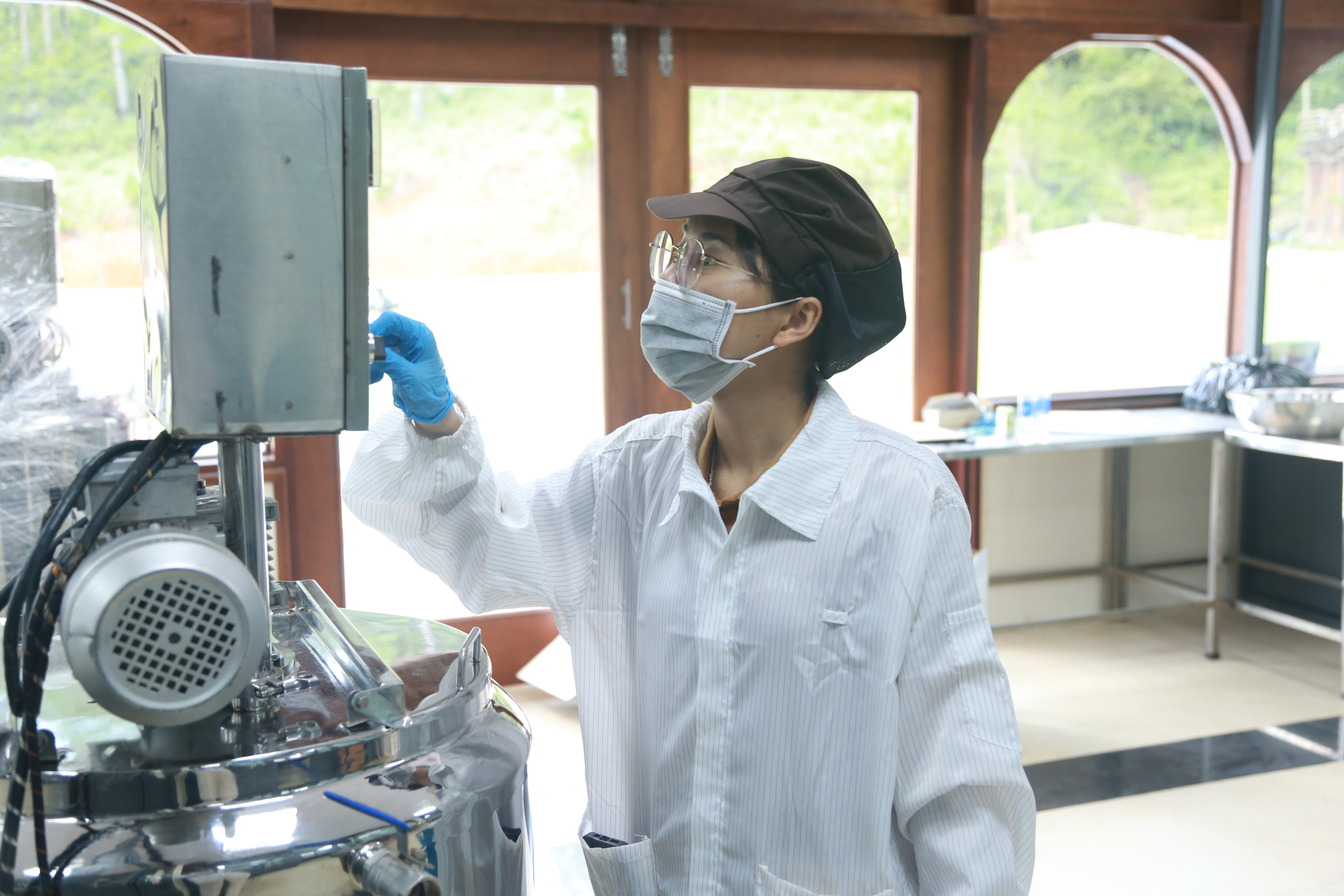
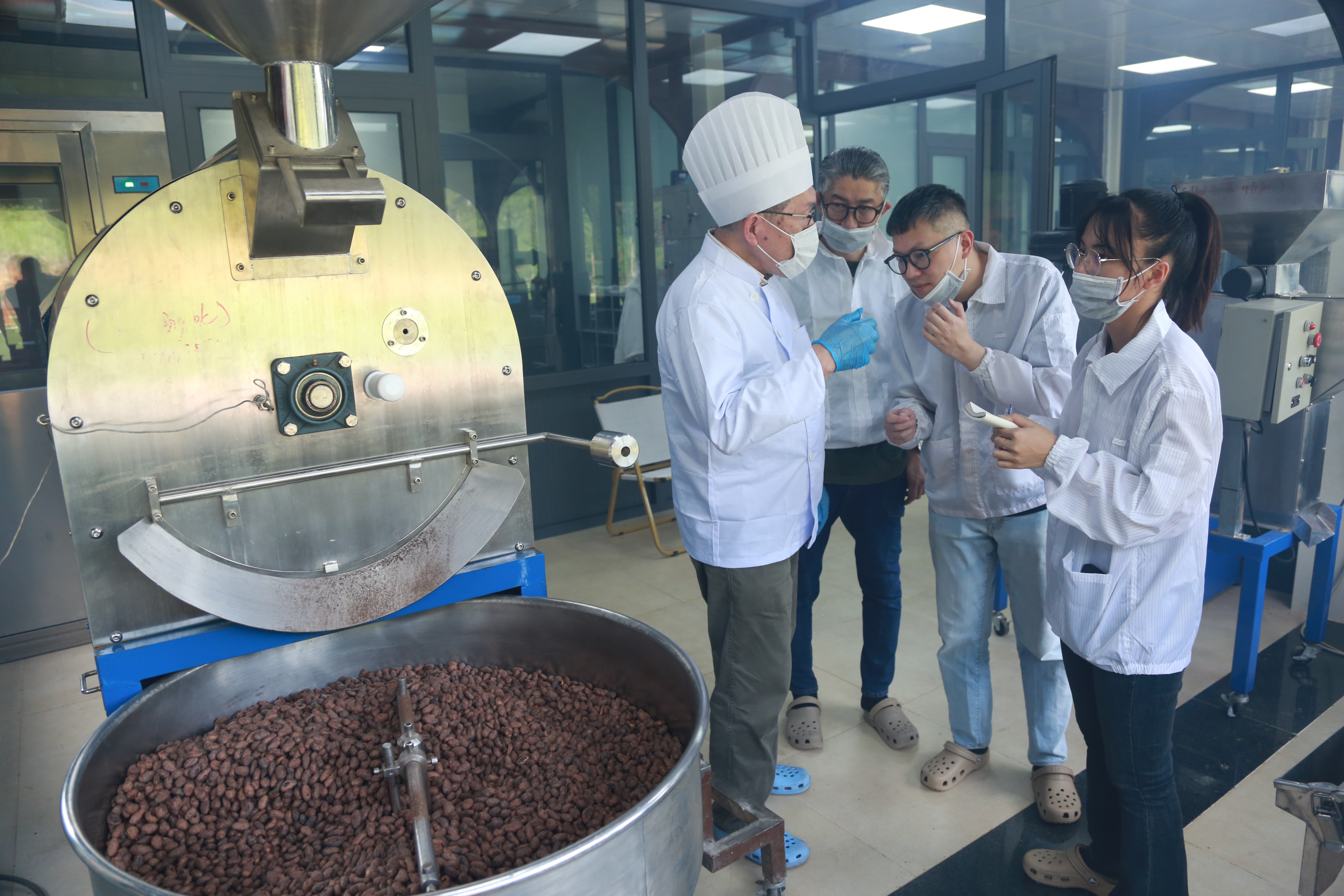
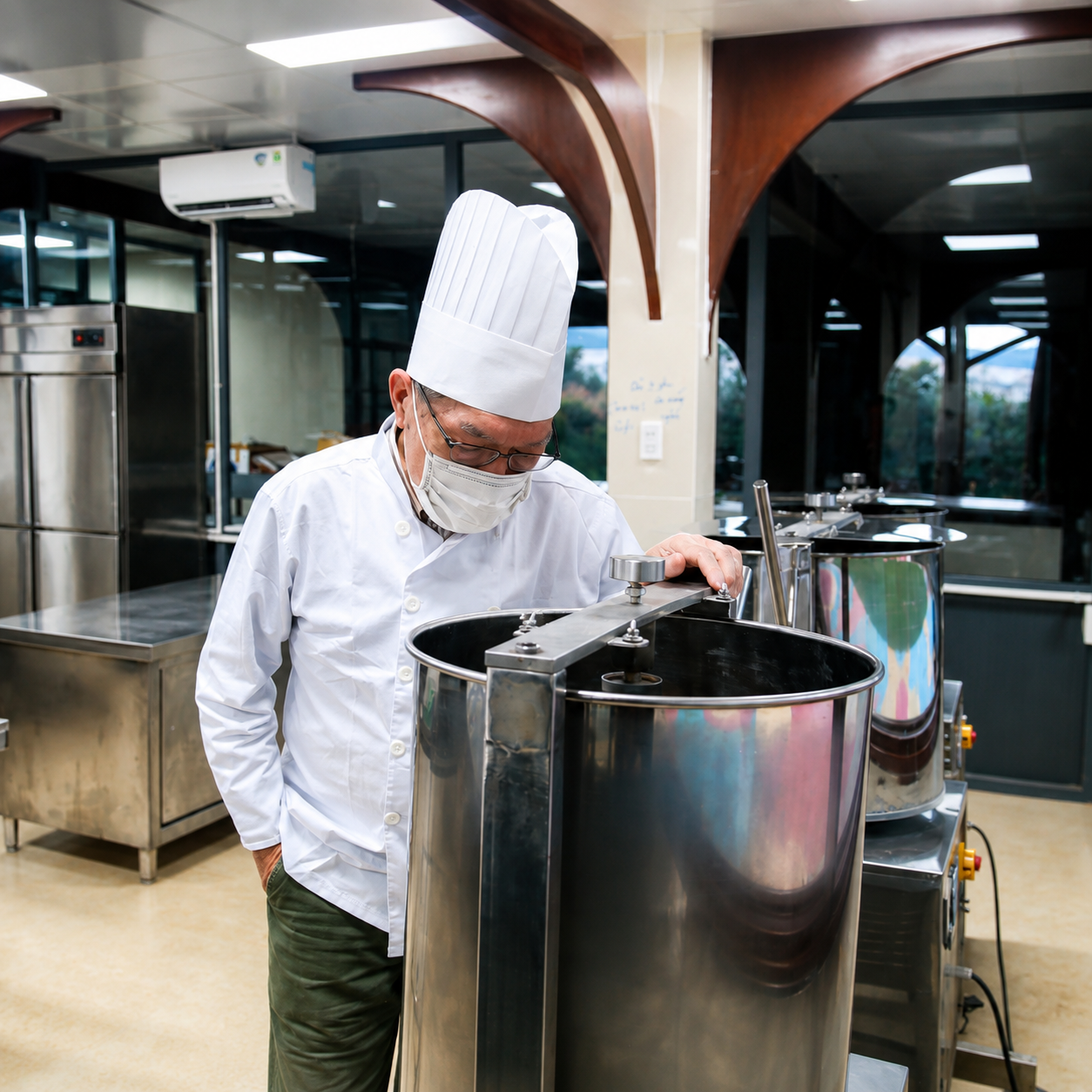
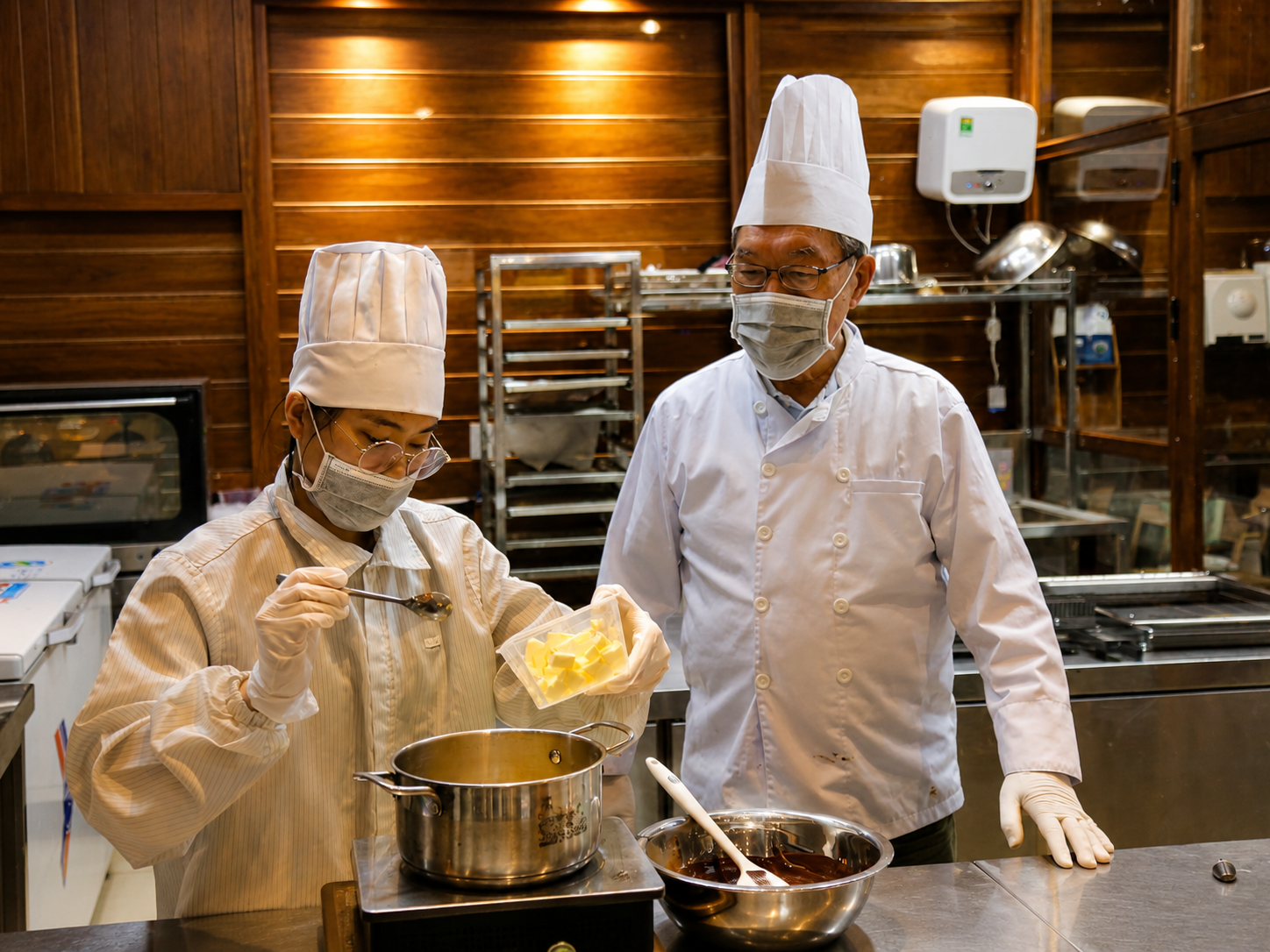
BALAVA ferments its cacao using the Nakano Mame method — a process researched and passed on by Mr Nakano.
Time and temperature are closely controlled so the beans develop their natural aroma, lose astringency, and build a balanced flavour structure.
Placed in the framework above, controlling time and temperature closely means controlling two of the three variables that determine the outcome. It is also the precondition for batch-to-batch uniformity — which professional buyers care about more than the peak quality of any single lot.
BALAVA uses cacao from Lam Dong, Vietnam, with roasting, stone grinding, butter pressing, sifting and moulding all carried out in our own workshop in Da Lat. Our cocoa powder is non-alkalized with 22–25% cocoa butter.
Sources: microbial sequence, genus and species names, phase timings, temperature and pH profiles, and the acetic acid mechanism of embryo death are drawn from De Vuyst et al., FEMS Microbiology Reviews, vol. 44 no. 4, 2020. Fermentation duration by variety group and batch size ranges are drawn from a reference chapter on cocoa bean fermentation published by IntechOpen. Slaty and internal mould thresholds reference international cacao quality assessment criteria. Information on the Nakano Mame method as applied at BALAVA is supplied by BALAVA; it is not a publicly published protocol, and is presented here as provided without further technical interpretation.
Wholesale, Export & Corporate Gifting
TGROUP is BALAVA's distribution partner. Contact us for pricing, product specifications and export documentation.
Other review products


.png "Roasted Cacao Beans")