Two questions that sound unrelated are in fact one: how much chocolate should you eat, and why is a chocolate bar divided into squares. The second is an answer to the first, built into the product in the middle of the nineteenth century.
The number: about 30 g, up to six times a week
The largest meta-analysis on the question is Yuan and colleagues (Nutrients, 9(7), 2017, article 688), pooling 14 prospective cohort studies covering 508,705 participants, with follow-up from 5 to 16 years.
0.90relative risk of coronary heart disease, highest vs lowest intake (95% CI 0.82–0.97)
0.84relative risk of stroke (95% CI 0.78–0.90)
0.82relative risk of diabetes (95% CI 0.70–0.96)
More important than those figures is the shape of the association. It is non-linear — more is not better.
| Outcome | Observed threshold |
|---|---|
| Coronary heart disease and stroke | Little additional risk reduction beyond 3 servings per week |
| Diabetes | Peak effect at 2 servings per week (RR 0.75); no benefit above 6 servings per week |
A serving in this analysis is defined as 30 g. The authors’ conclusion: consuming chocolate in moderation, no more than six servings a week, may be optimal for preventing these disorders. That works out at roughly 180 g a week, or under 26 g a day.
Read the evidence type correctly. These are observational cohorts, not intervention trials. They show association, not causation. People who eat chocolate in moderation may differ from those who eat none in many other ways. The table above is not a prescription.
How many squares is that?
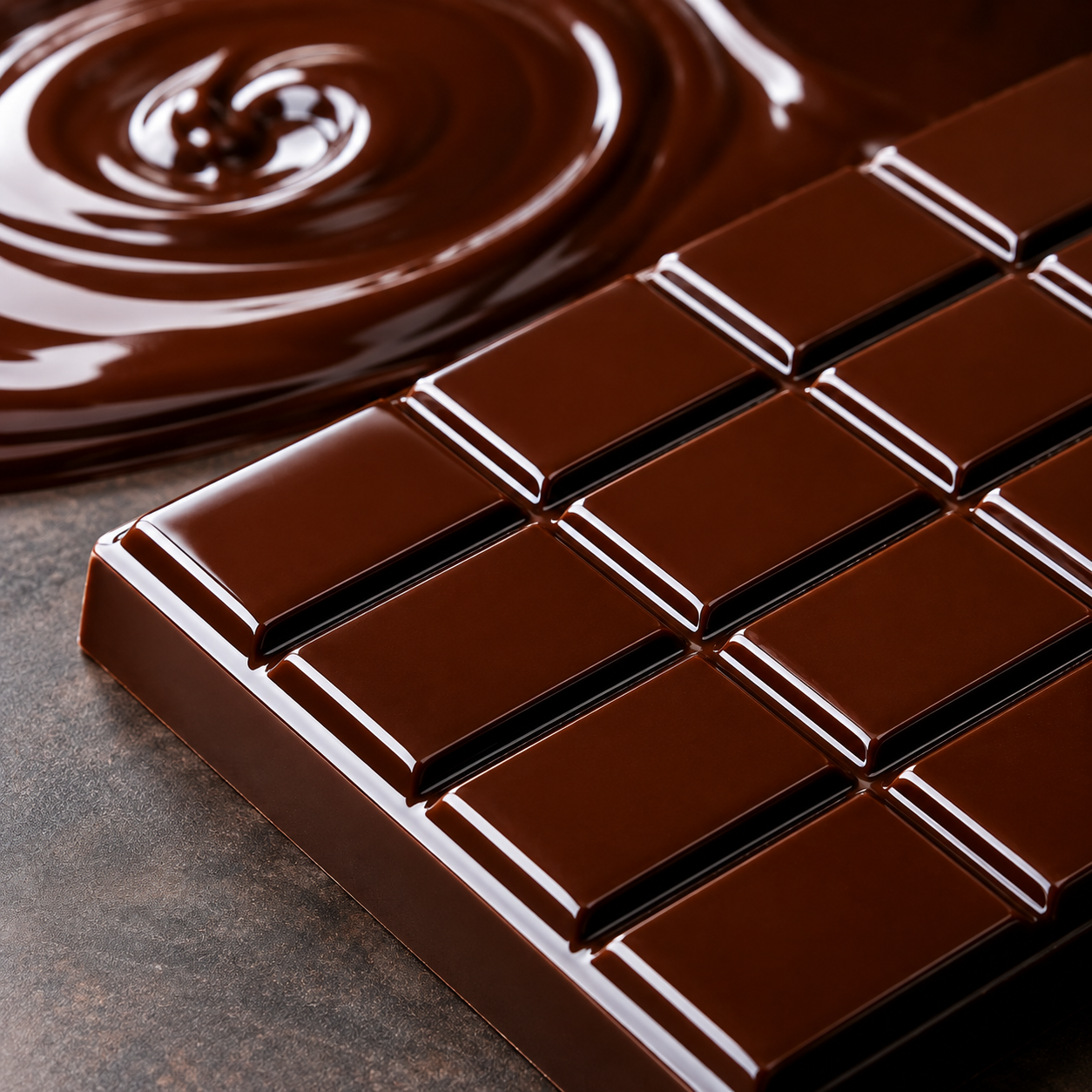
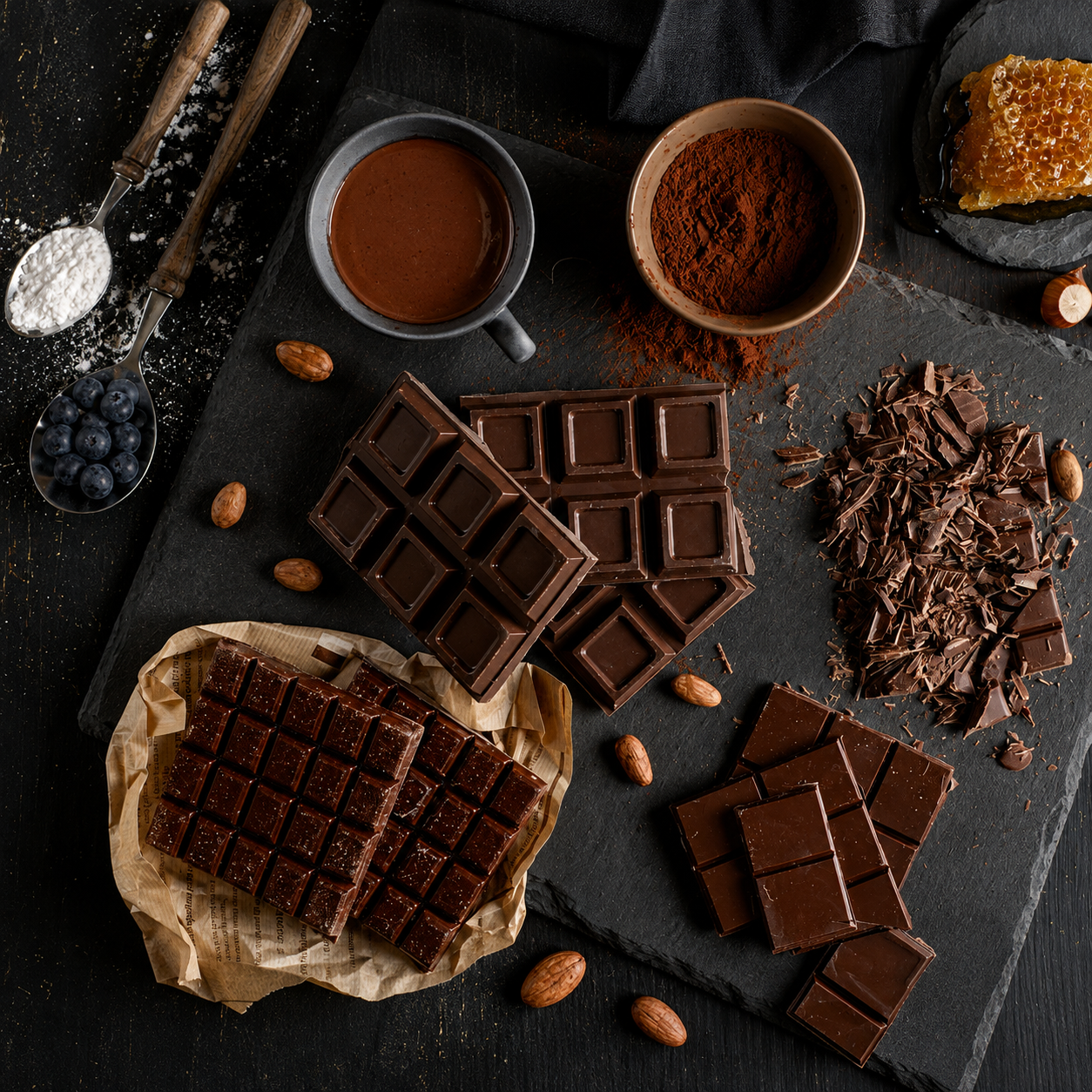
A 100 g bar is usually divided into 20 to 24 squares, which puts 30 g at roughly six or seven squares. It varies by mould, so the reliable method is to take the stated weight and divide by the number of squares.
What about the sugar
This is the most frequently ignored variable. Thirty grams of chocolate is not a single unit — it depends entirely on cacao percentage.
| Type | Estimated sugar in 30 g |
|---|---|
| 85% dark chocolate | roughly 4–5 g |
| 70% dark chocolate | roughly 8–9 g |
| Standard milk chocolate | roughly 14–16 g |
These are estimates calculated from typical formulations, not measurements of any specific product. Always read the label.
The World Health Organization recommends free sugars below 10% of total energy intake, and notes further benefit below 5%. For an adult on roughly 2,000 kcal a day, 5% is about 25 g of sugar. Set that against the table above and it becomes clear why cacao percentage is not simply a matter of taste.
Now the history: why a bar at all
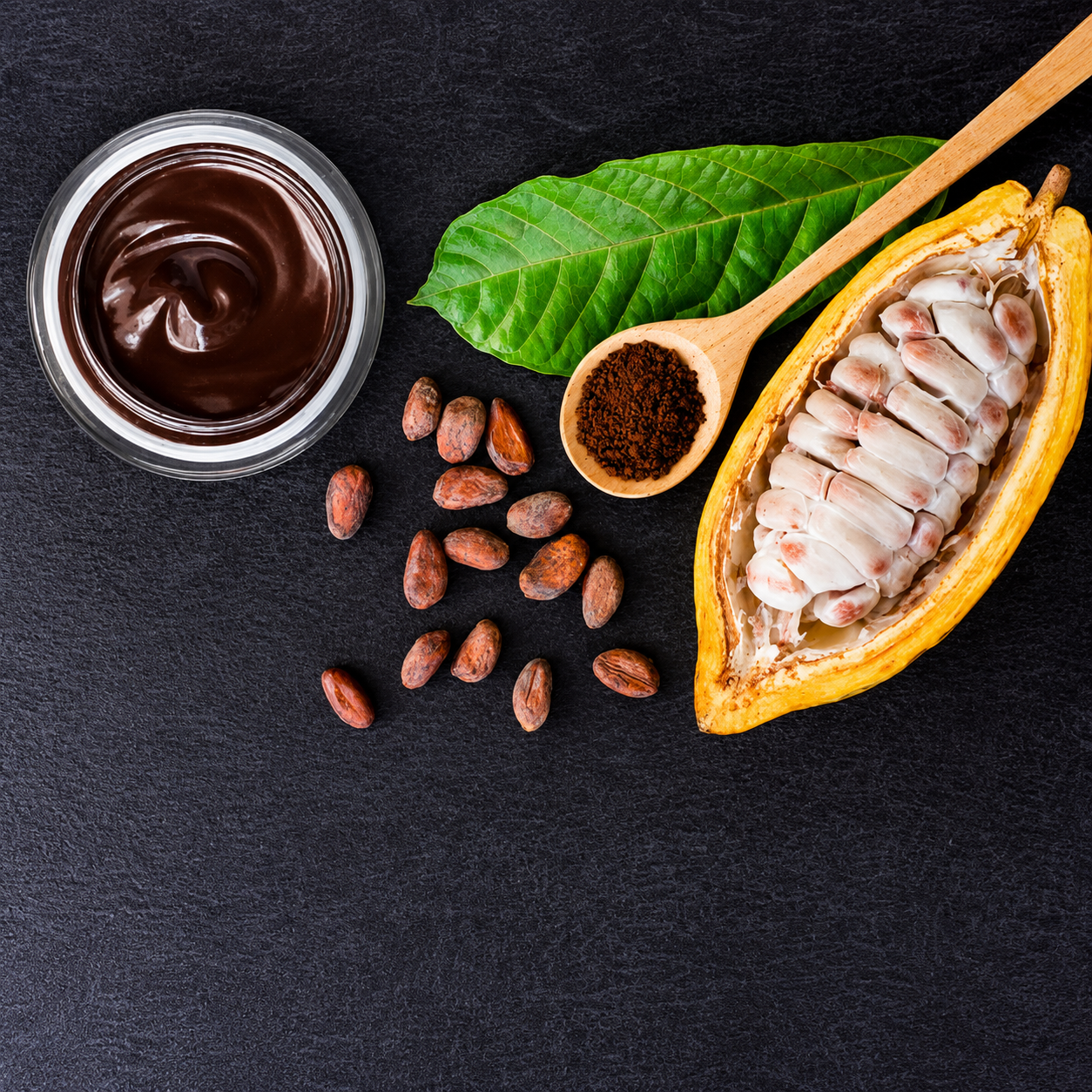
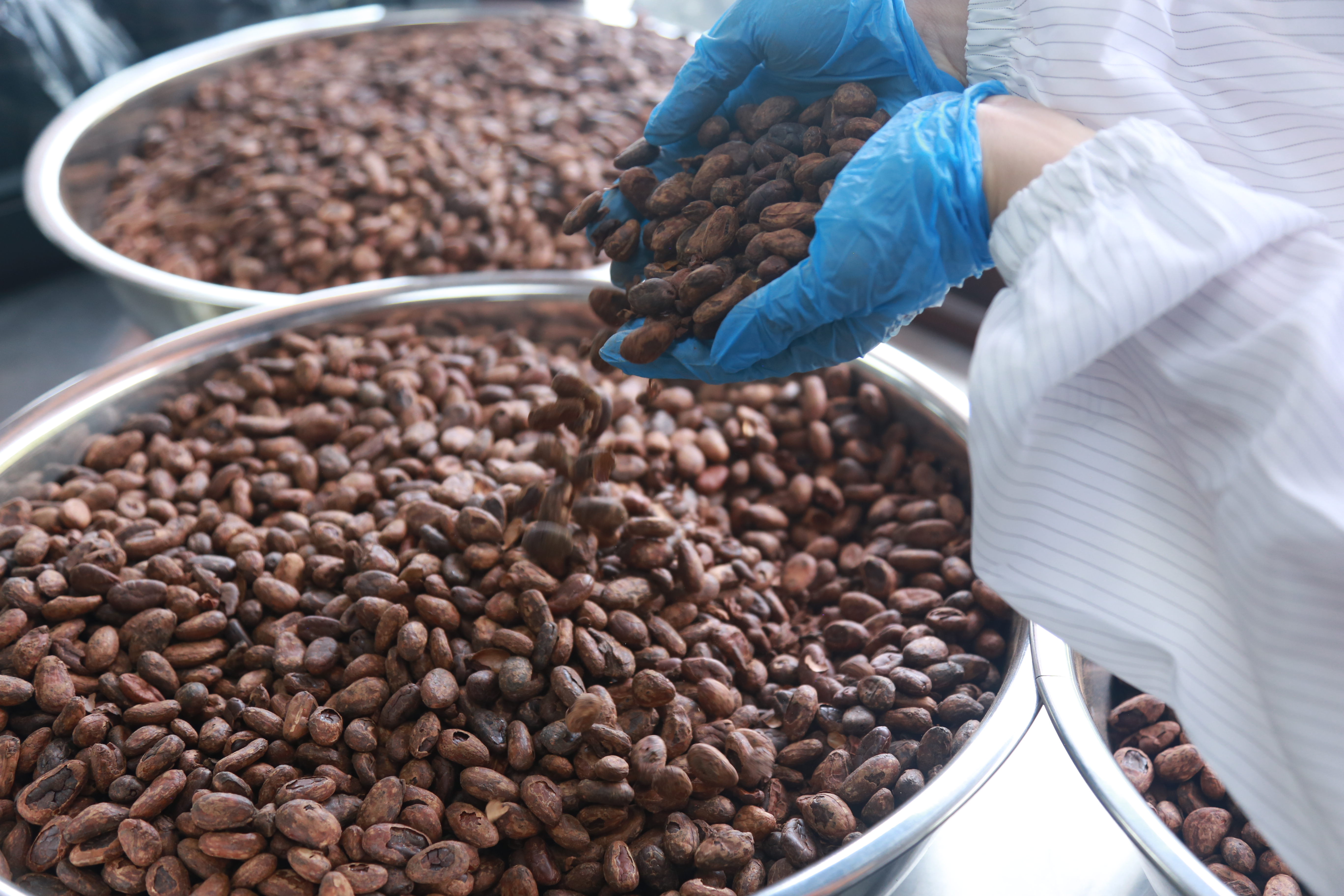
For roughly its first three thousand years, cacao was a drink. Its transformation into a solid object you could carry was the result of two technical steps less than twenty years apart.
1828
Van Houten’s press
Coenraad van Houten invented the hydraulic press that separates cocoa butter from cocoa mass. The intention was to make cocoa powder easier to dissolve. But the by-product — cocoa butter in pure form — is what opened everything up.
1847
The first solid bar
J.S. Fry & Sons in England produced Chocolat Délicieux à Manger. The principle: press out the excess cocoa butter, then add it back to the melted chocolate. The additional fat made the mass fluid enough to pour into a mould and firm enough on cooling.
1868
Fry installs a Van Houten press
The firm’s eating chocolate output rose from about ten tonnes in 1852 to more than 1,100 tonnes by 1880. The bar went from invention to commodity.
A detail worth noting: Fry was founded in 1761 and became J.S. Fry & Sons in 1822 — nearly a century of working with cacao before the bar was arrived at. This was accumulation, not a flash of insight.
Why squares?
Here honesty is required: no single documented decision explains the segmented format. It settled in as an industry convention. But three things can be said with confidence about its technical and practical function.
| Reason | Explanation |
|---|---|
| Moulding | A grooved mould cools more evenly and releases more readily than a flat slab. This is a production reason, not a marketing one. |
| Controlled breaking | The grooves create designed fracture points. Without them the bar shatters unpredictably — awkward to eat and awkward to share. |
| Portioning and sharing | A square is a ready-made unit of measure. “Two squares” is a concept everyone understands without a scale. |
The third is the most interesting, because it closes the loop with the opening question. The segmented bar is a portioning tool built into the product. Whether it actually makes people eat less is debatable — plenty of us work along a whole row without pausing. But the design intent is unmistakable.
How BALAVA thinks about a portion
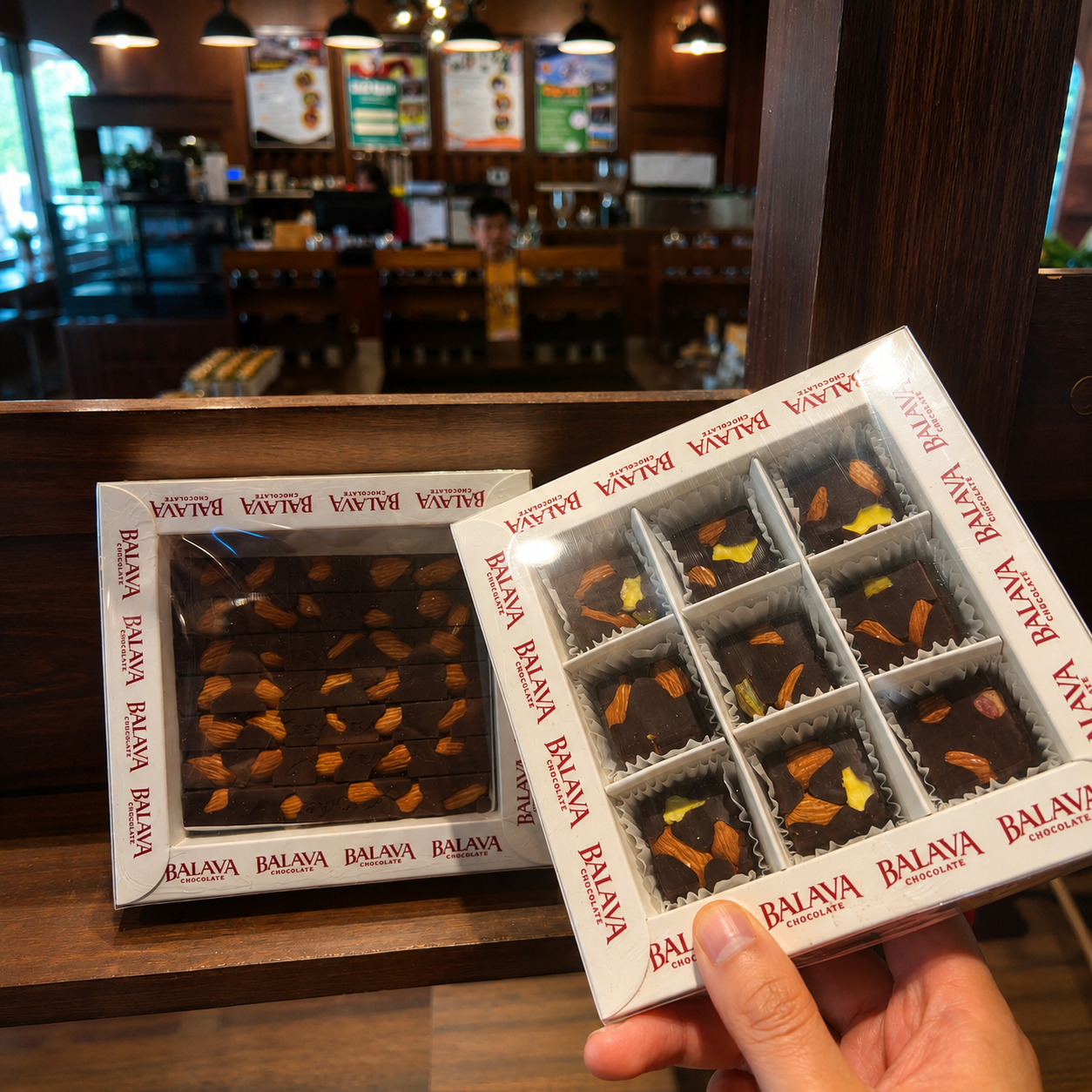
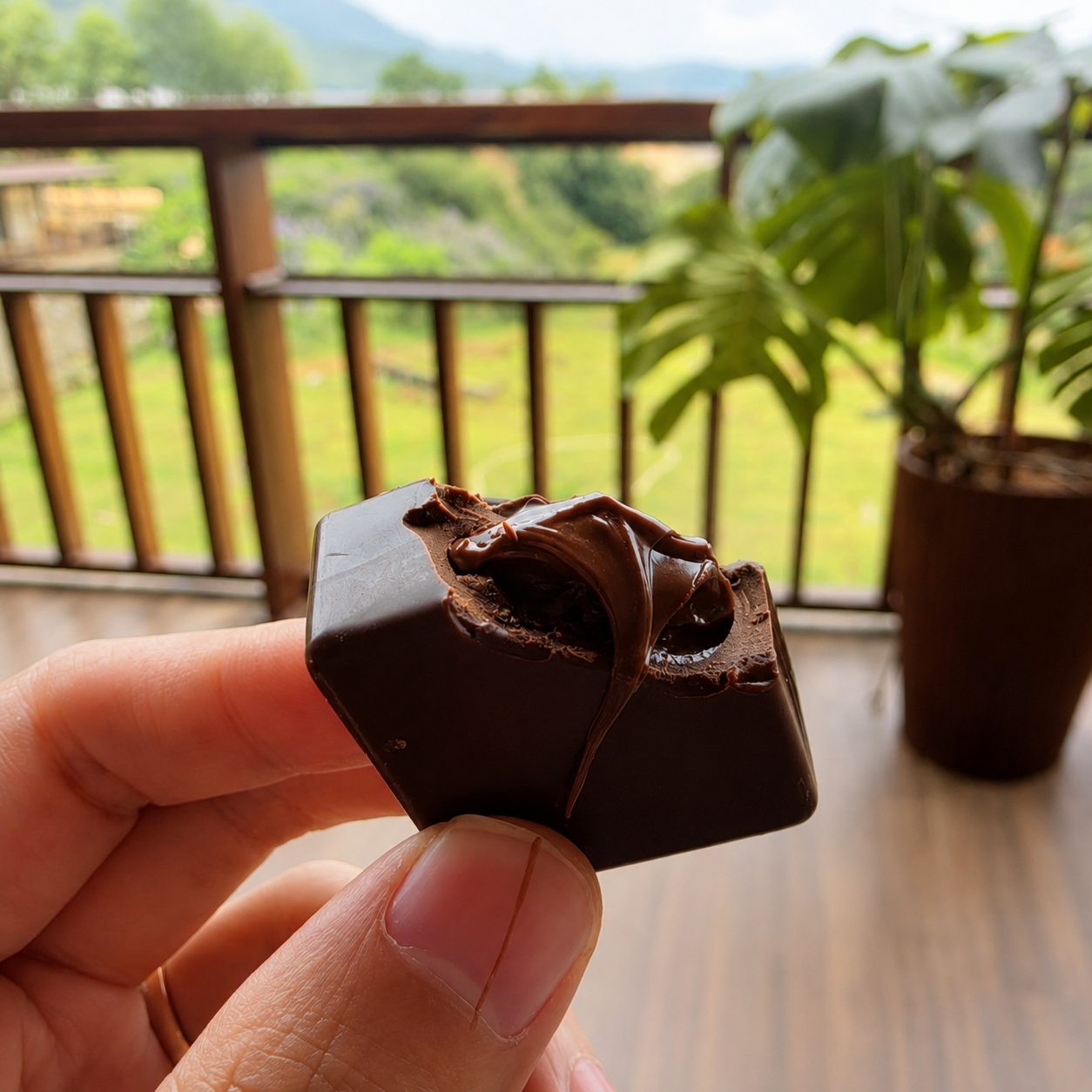
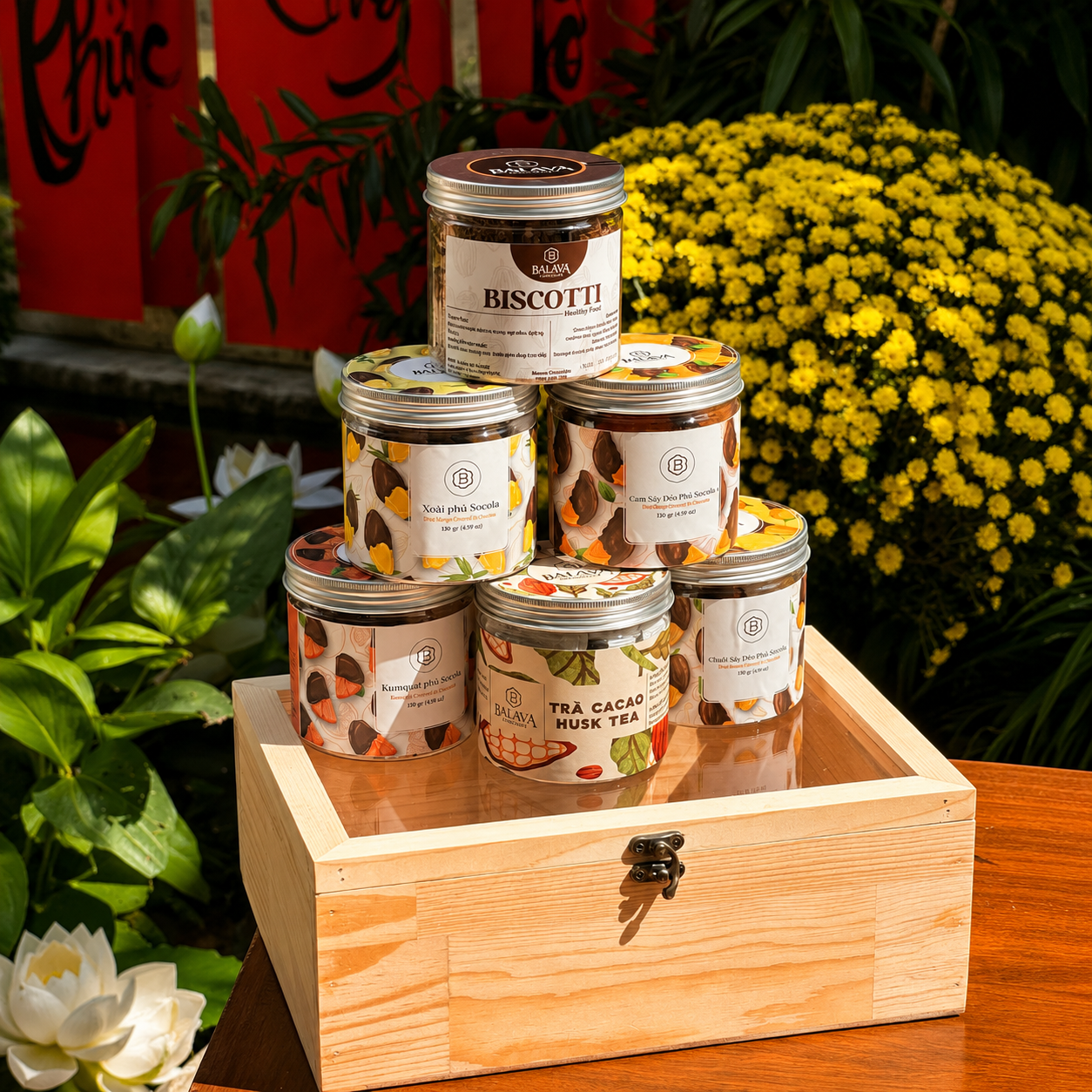
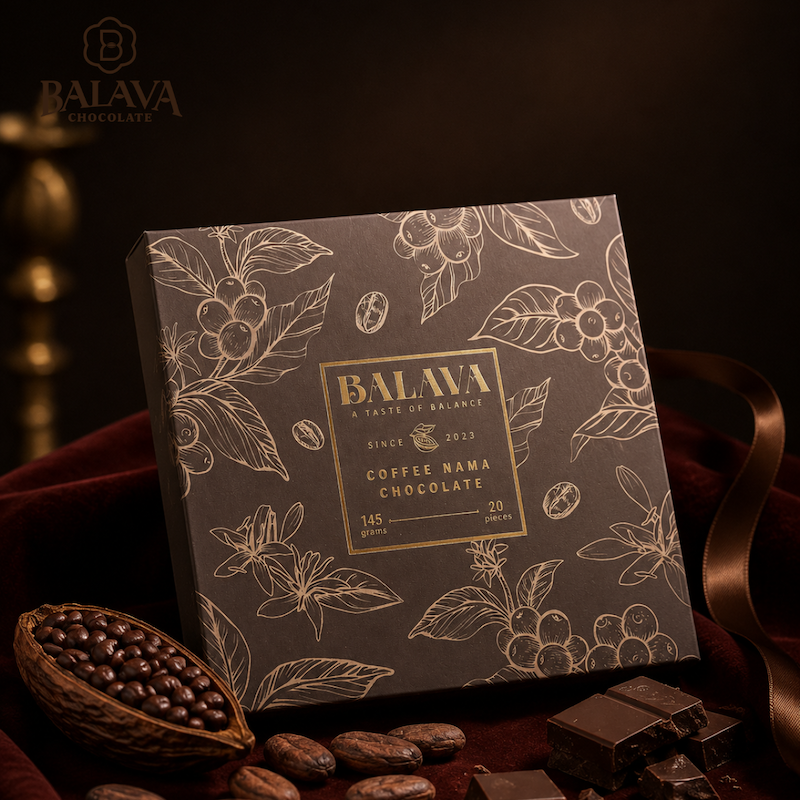
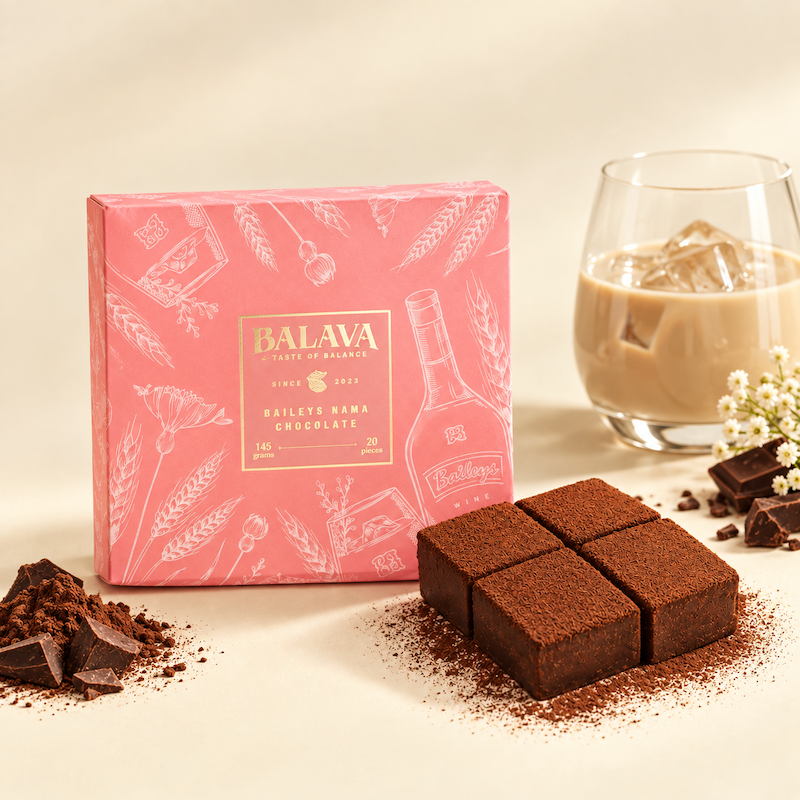
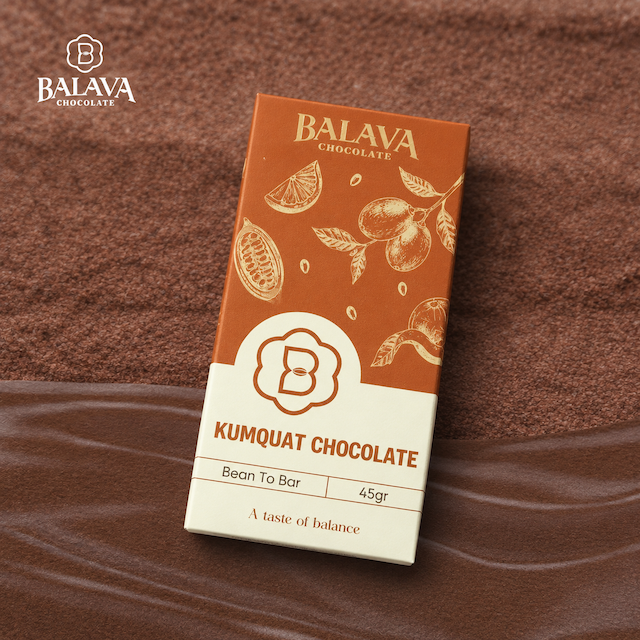
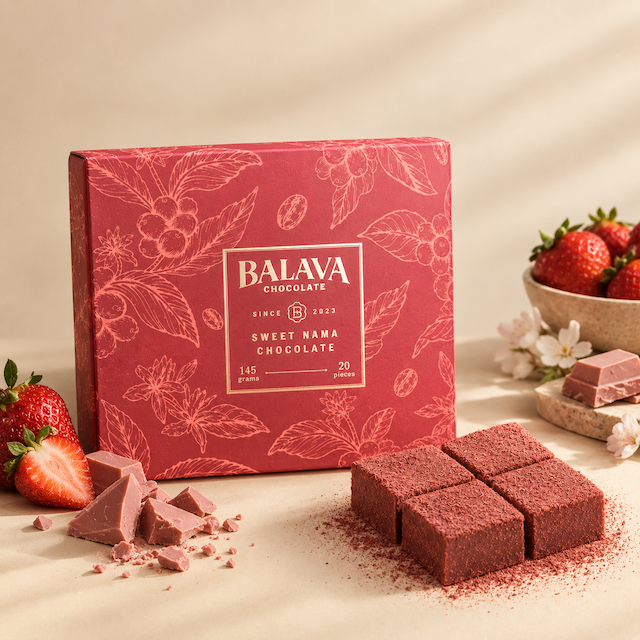
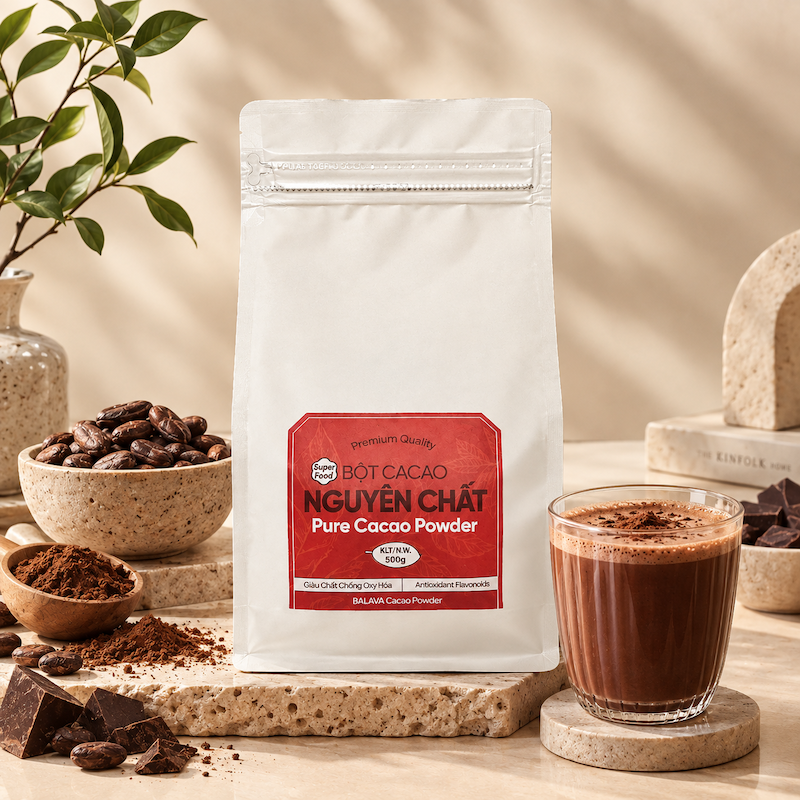
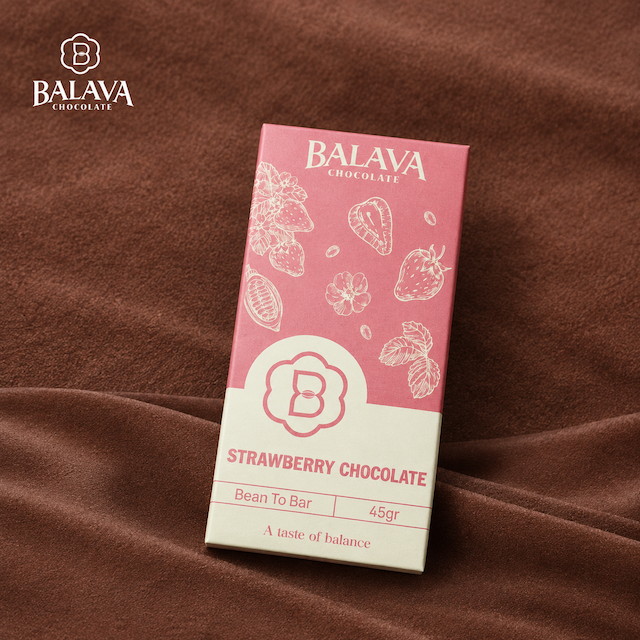
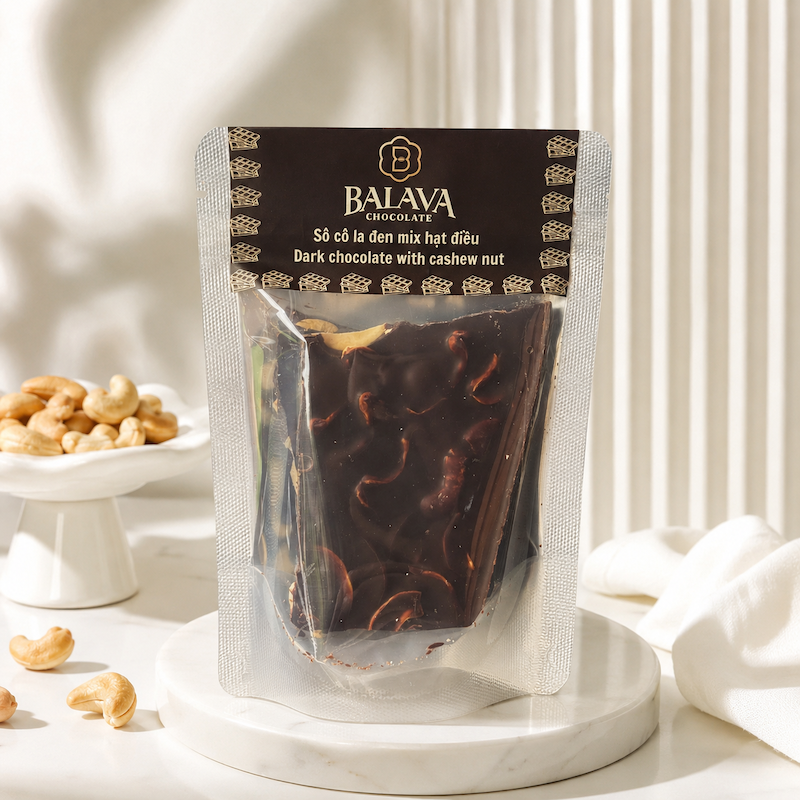
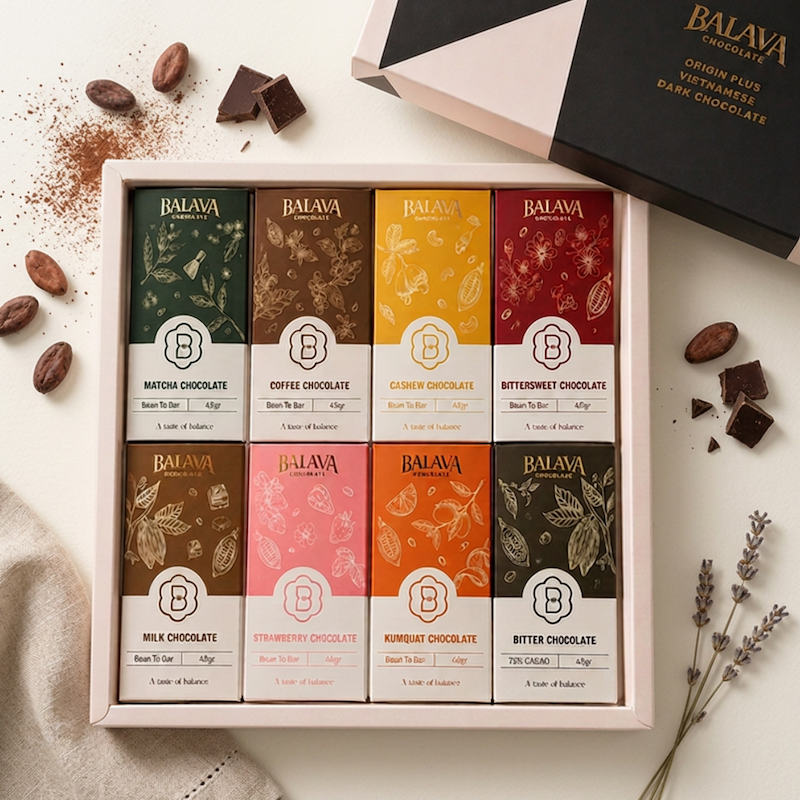
BALAVA makes bean-to-bar chocolate from Lam Dong cacao in Da Lat, controlling everything from Nakano Mame fermentation to moulding, and is extending that control into cultivation, moving towards a farm-to-bar model.
One practical suggestion: if sugar is the concern, take a higher cacao percentage and eat fewer squares, rather than a lower percentage and more of them. High-percentage dark chocolate tends to slow people down on its own — the bitterness and aromatic intensity do that job better than any advice does.
Disclaimer. This article is informational, compiled from the cited studies and recommendations. It is not medical advice or individualised dietary guidance. Anyone with an underlying condition — diabetes in particular — should consult a doctor or dietitian before changing their diet.
Talk to BALAVA
Wholesale pricing, private label, samples and export documentation — we answer in English.
Sources. Meta-analysis: Yuan S., Li X., Jin Y., Lu J., “Chocolate Consumption and Risk of Coronary Heart Disease, Stroke, and Diabetes: A Meta-Analysis of Prospective Studies”, Nutrients 9(7), 2017, article 688. Free sugar recommendation: World Health Organization guideline on sugars intake for adults and children. J.S. Fry & Sons history (founded 1761, renamed 1822, solid bar 1847, Van Houten press installed 1868, output figures for 1852 and 1880) follows the public historical record on the firm. The 1828 date for the Van Houten press follows standard industry history. Sugar estimates by chocolate type are calculated from typical formulations, not laboratory measurements. BALAVA product specifications are supplied by BALAVA.
Other review products