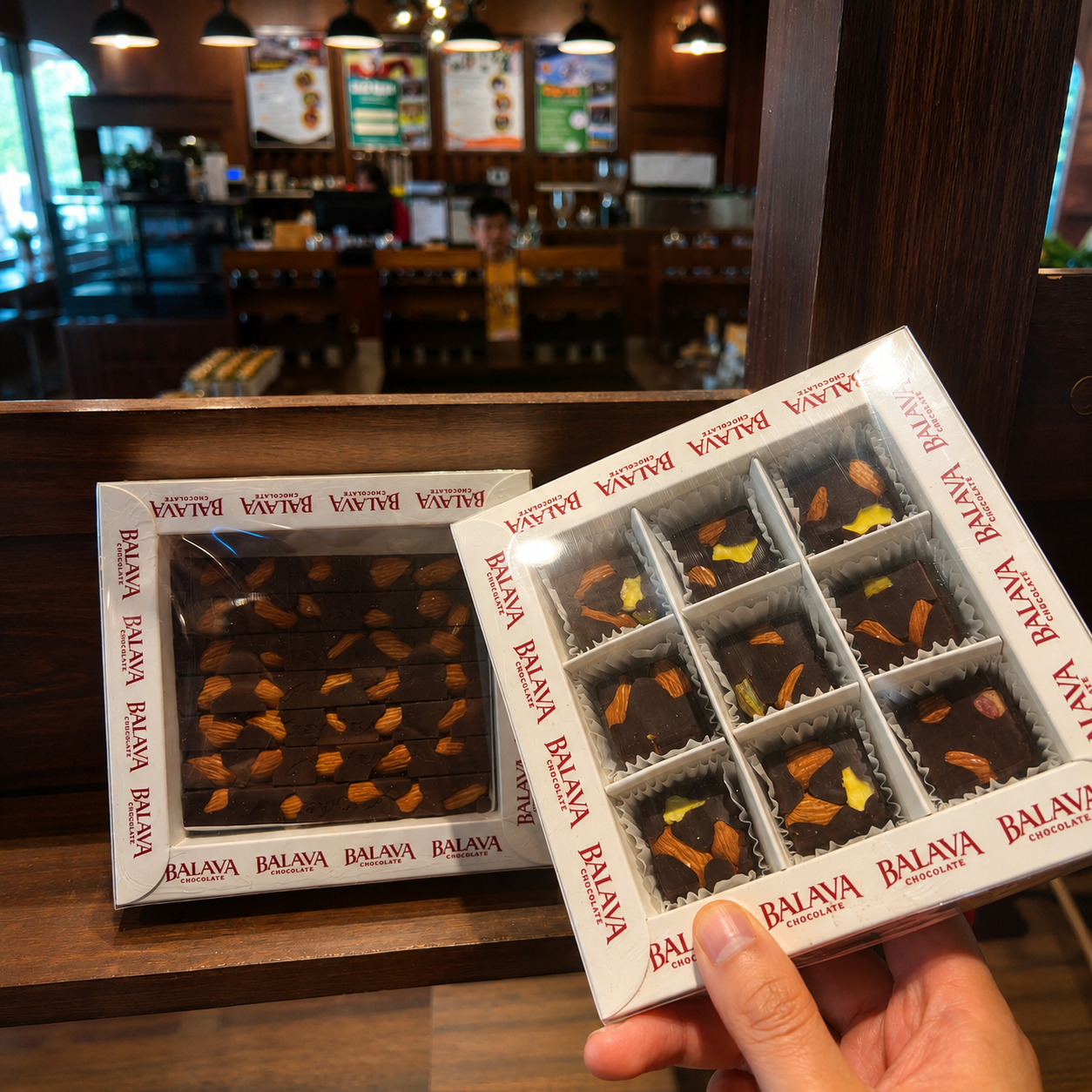
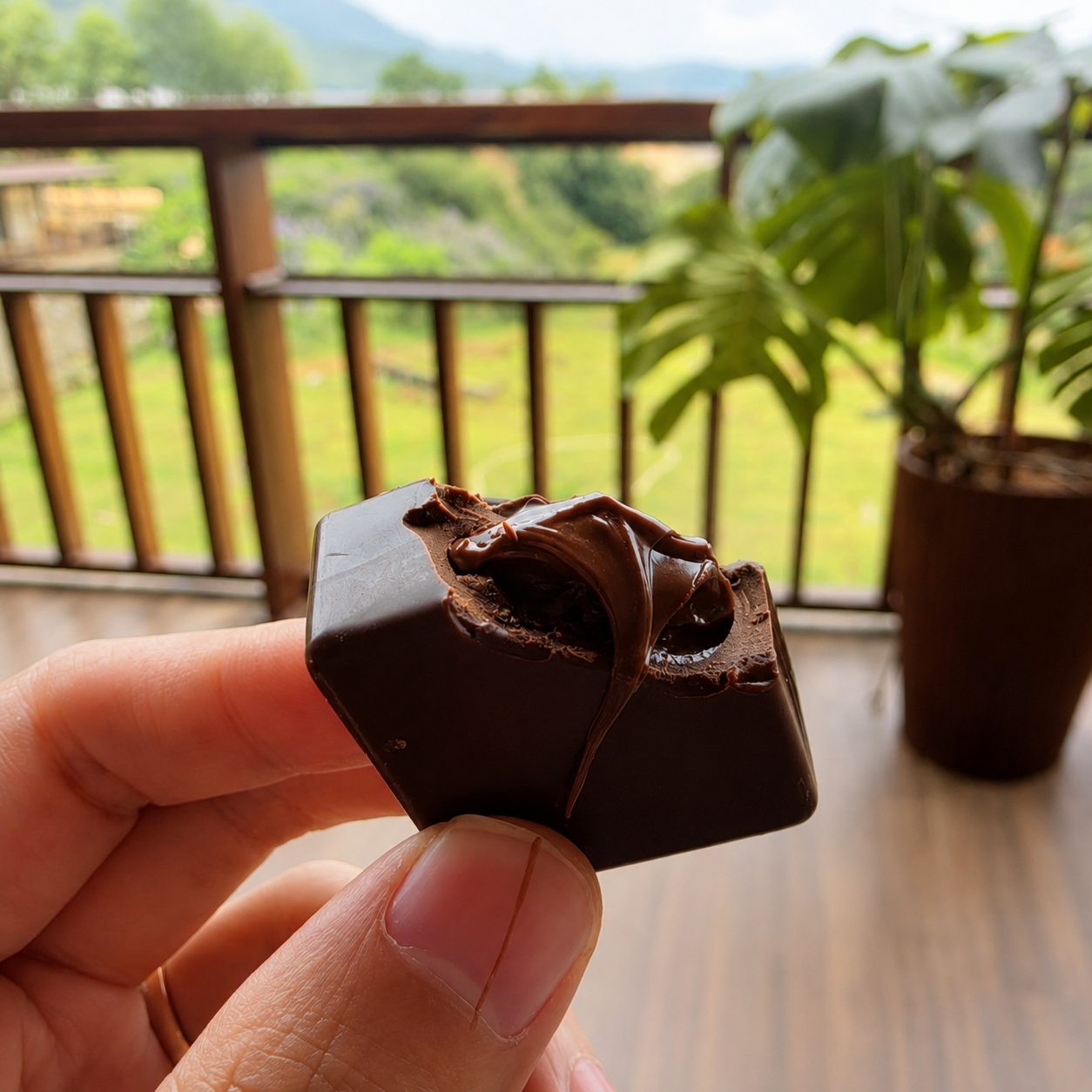
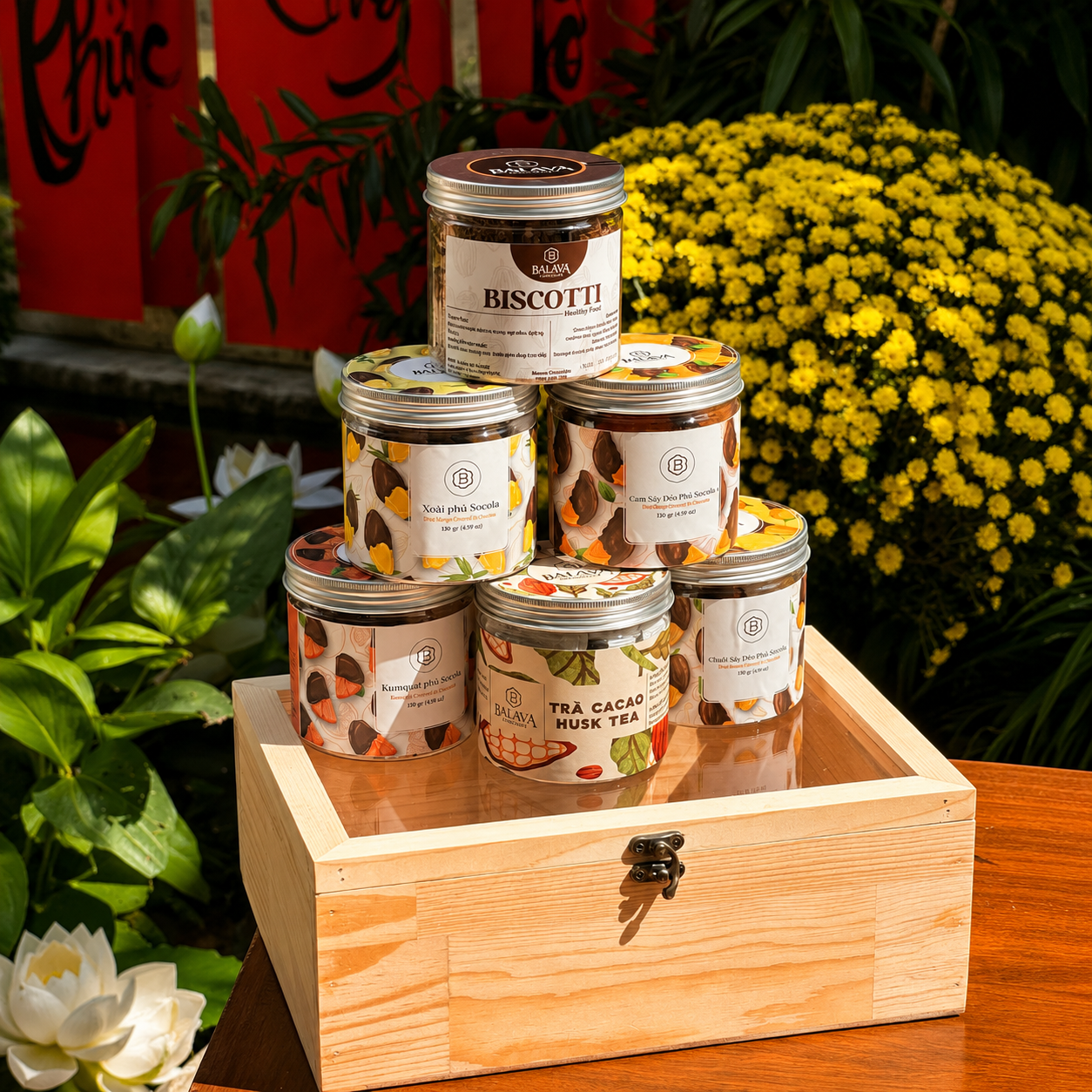
Over 50 industry terms across four languages, grouped by agronomy, post-harvest, manufacturing, products and sensory vocabulary — plus the six pairs most often confused.
Cocoa butter has six crystal forms. Form V melts at 33.8°C — below body temperature. Slow melting can mean conversion, bad temper or substitute fat. But it is not always a fault.
"Never refrigerate chocolate" was written for European room temperatures. In tropical conditions the correct rule is different — and some products must be refrigerated regardless.
The white film is bloom — two kinds, told apart with a fingertip, both edible. Chocolate does not spoil microbially; it degrades through lipid oxidation and odour absorption.
"Fresh" is a technical instruction, not a flourish. Japan has a legal definition with three thresholds — and the moisture threshold is what drives every other difference.
The pod is a real barrier, so residue was never the main issue. What organic certification actually covers, what it cannot fix — cadmium — and what to ask a supplier instead.
Caffeine, theobromine, the response curve, the effect on sleep and what each drink actually delivers. A direct comparison, and the thing that breaks it in real life.
All four compounds usually named are genuinely present. Most never reach the brain at dietary doses. What the evidence supports, what it does not, and what actually makes chocolate feel good.
Children prefer more sweetness and are more sensitive to bitterness than adults, even at the same genotype. The preference only shifts in middle to late adolescence — and it tracks growth.
From the Wonka trilogy to Chocolat and its five Oscar nominations, and the documentary on the other end of the supply chain. Plus the true story behind Roald Dahl's novel.
A meta-analysis of 508,705 people gives a number: about 30 g, up to six times a week. Plus the history of how chocolate became a segmented bar in 1847, and what the squares are for.
What controlled trials actually found on cocoa and acne, what EFSA and the FDA have approved, why alkalization destroys most of the flavanols, and the USDA nutritional picture.