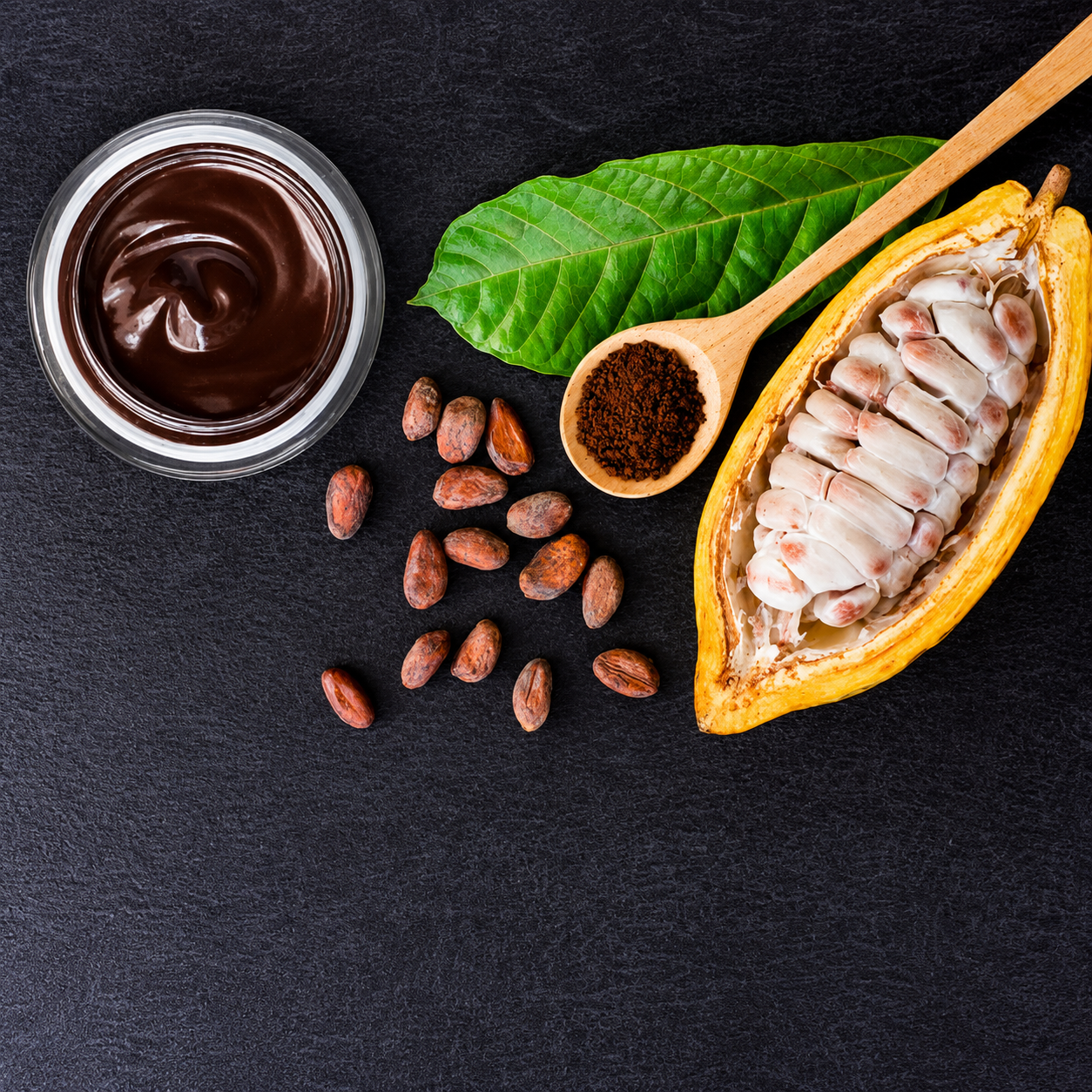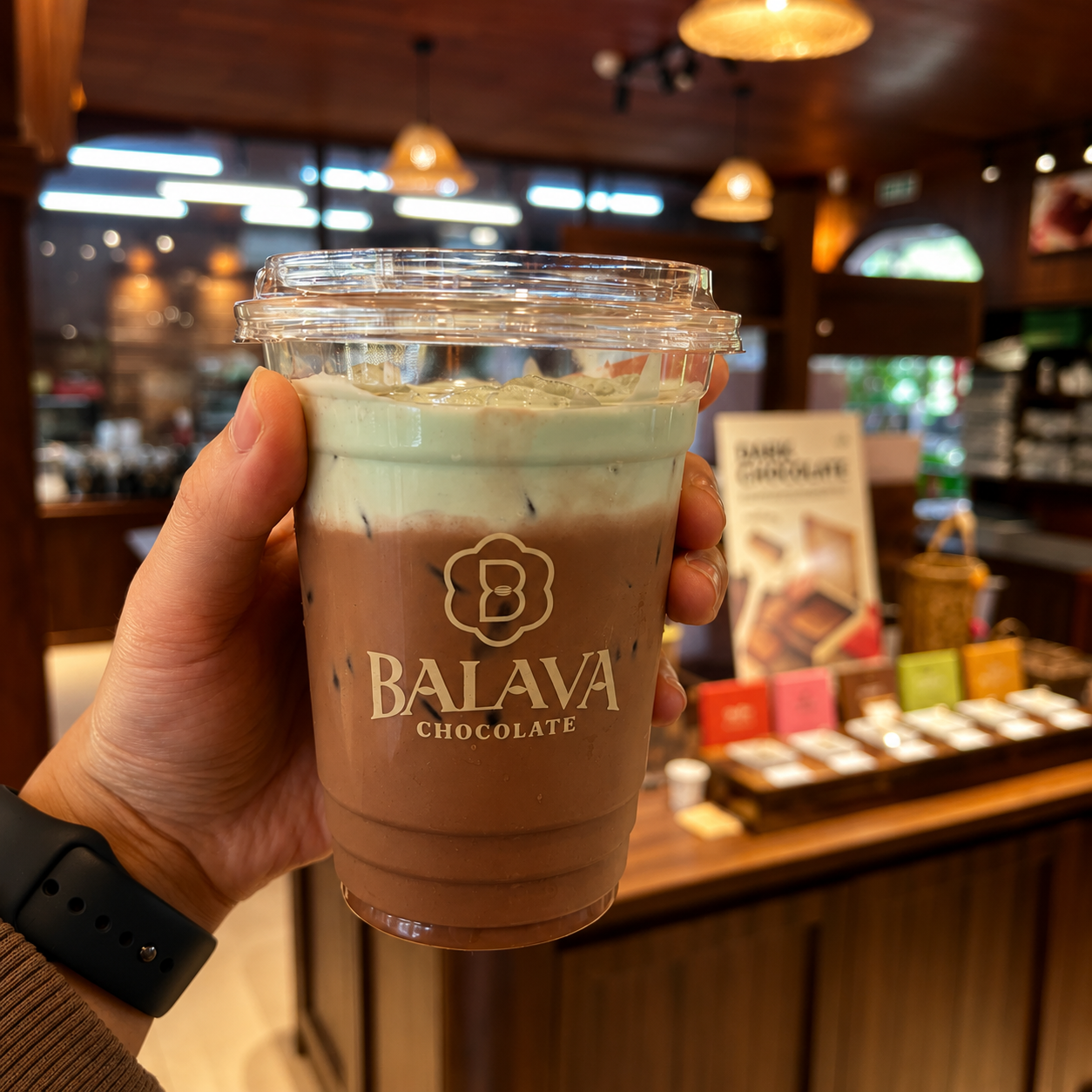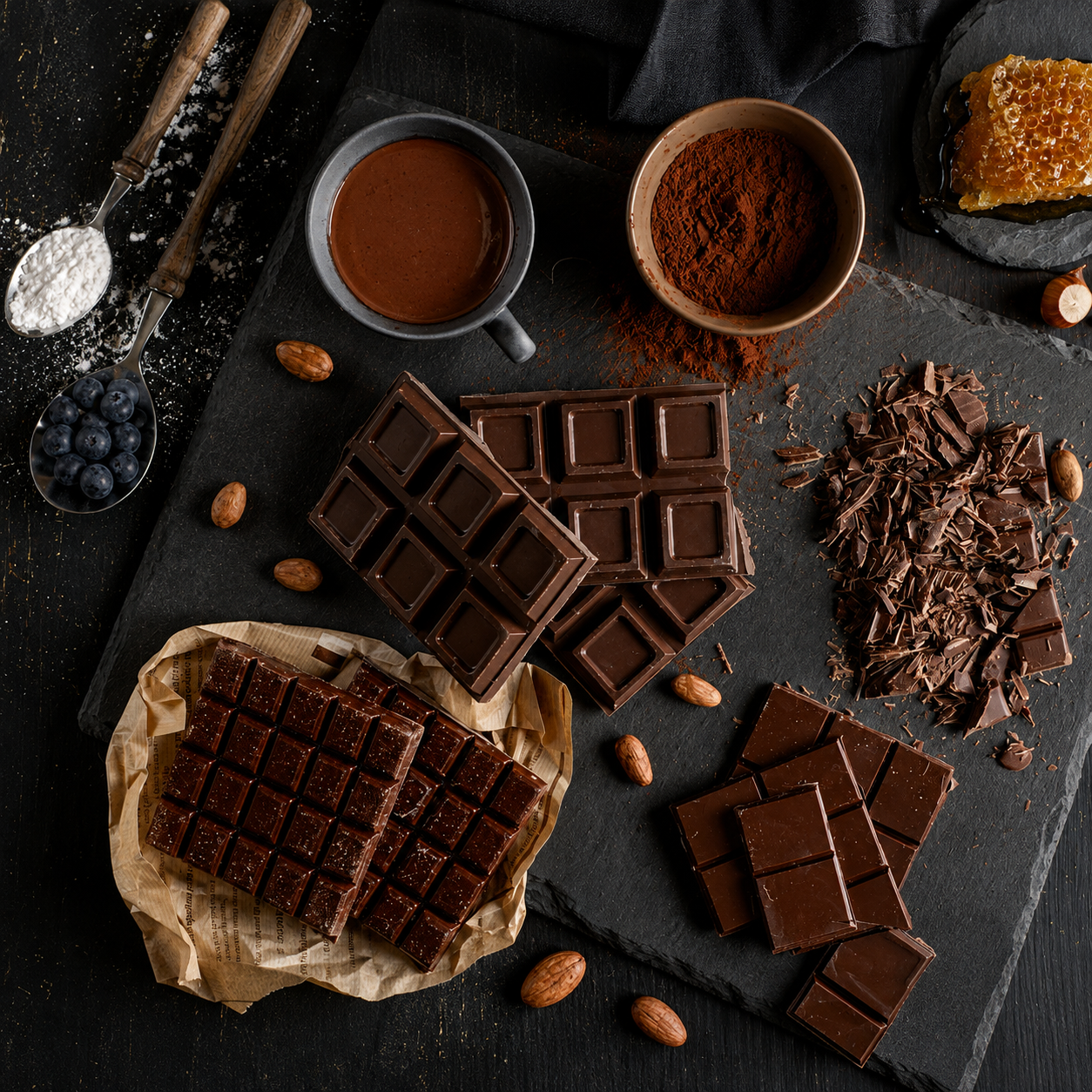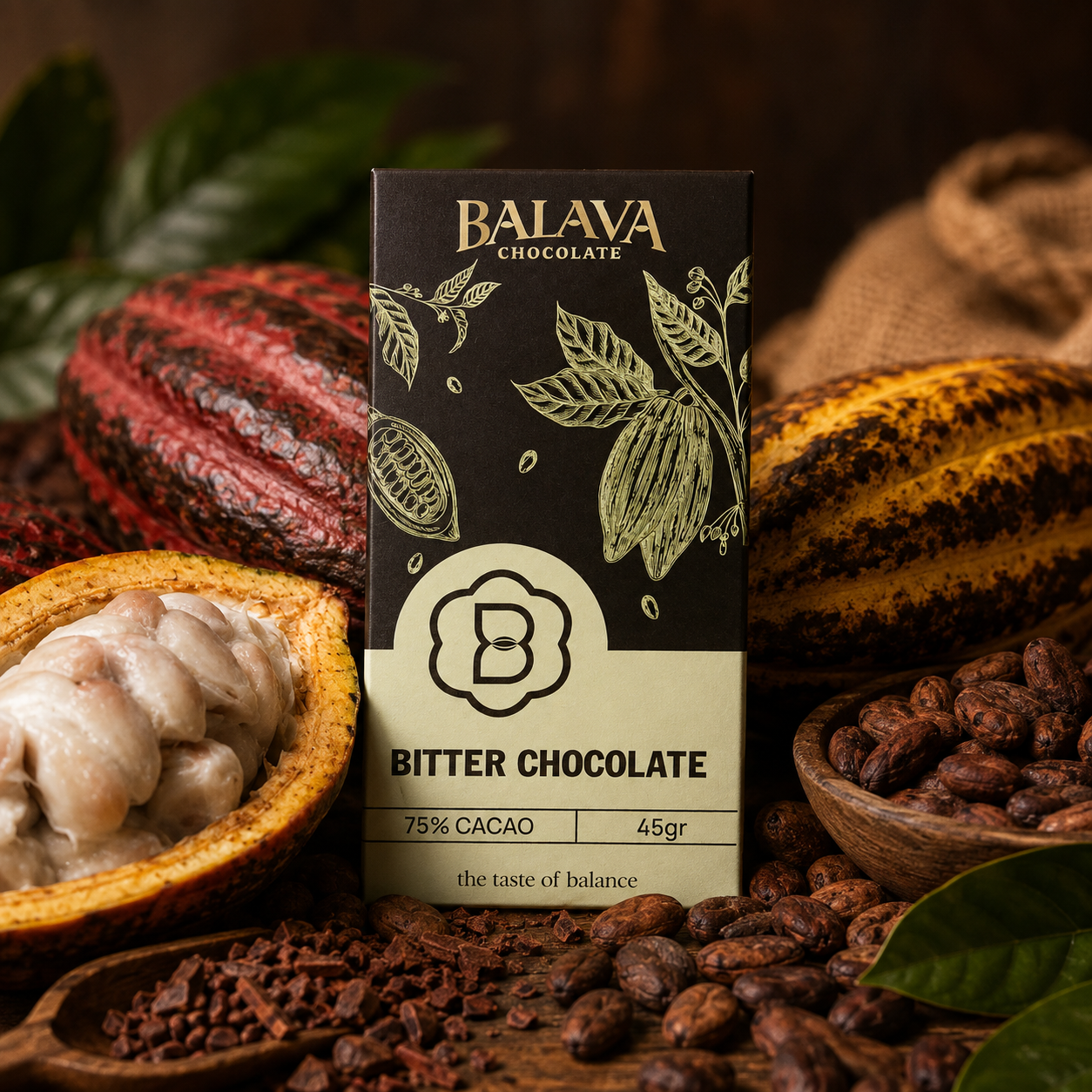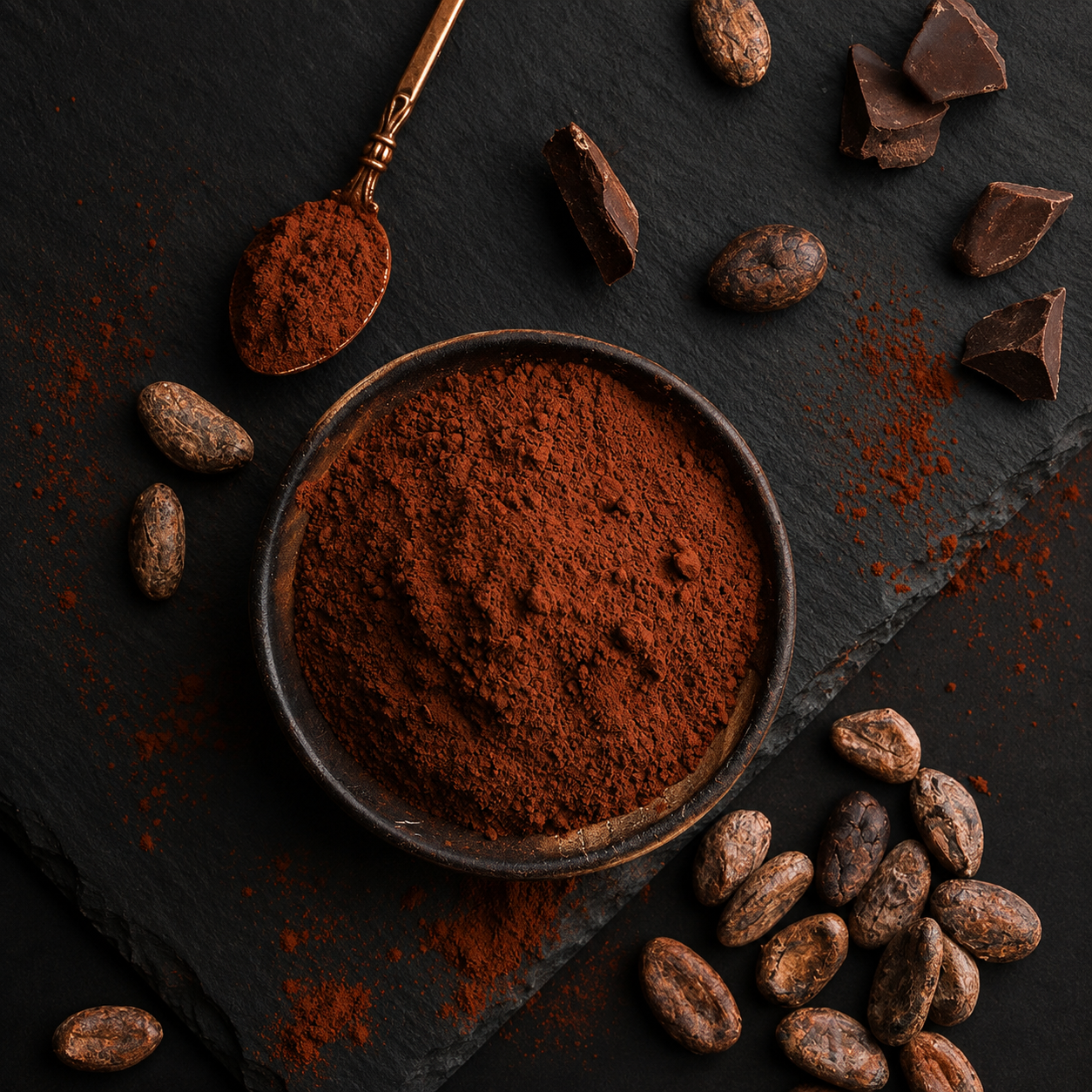
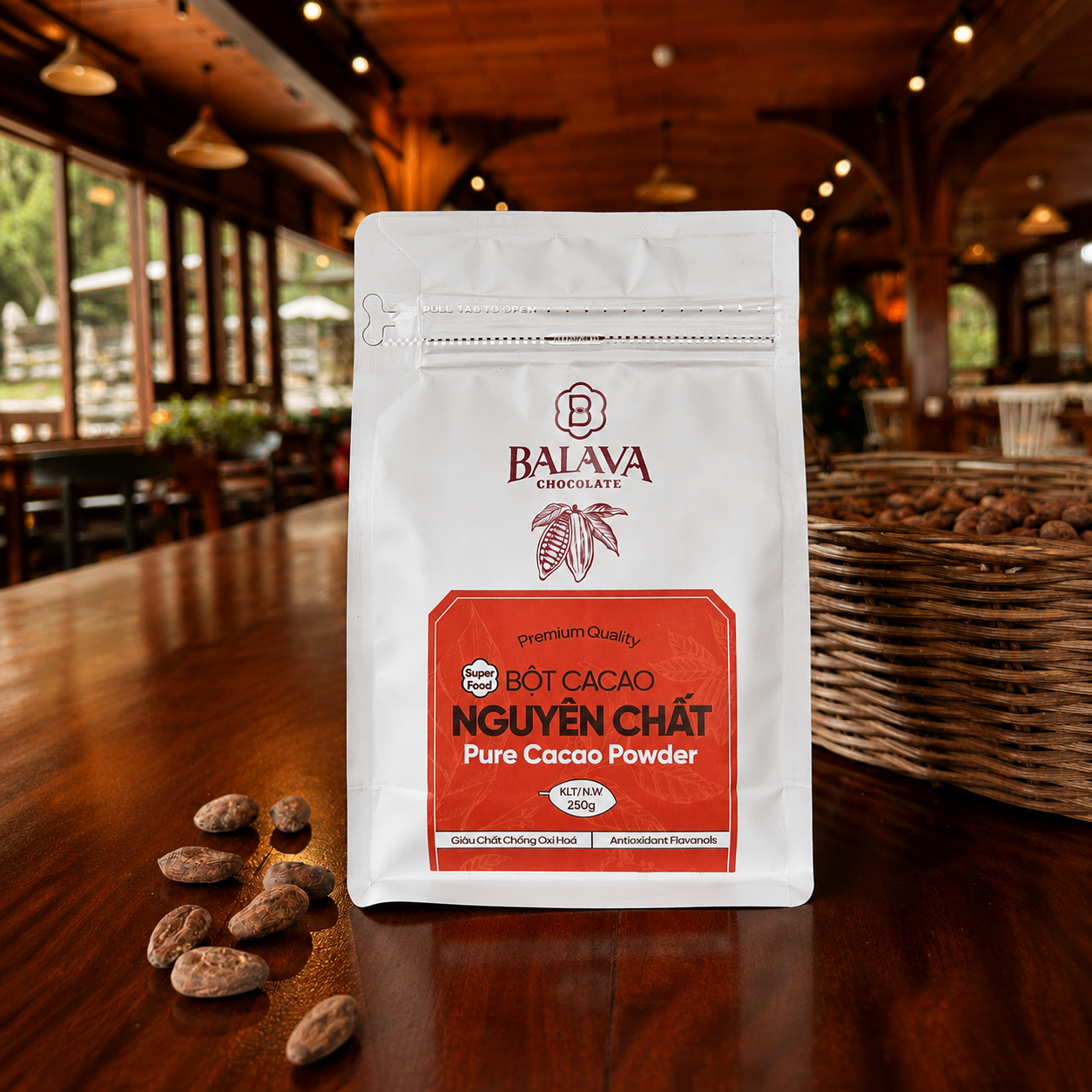
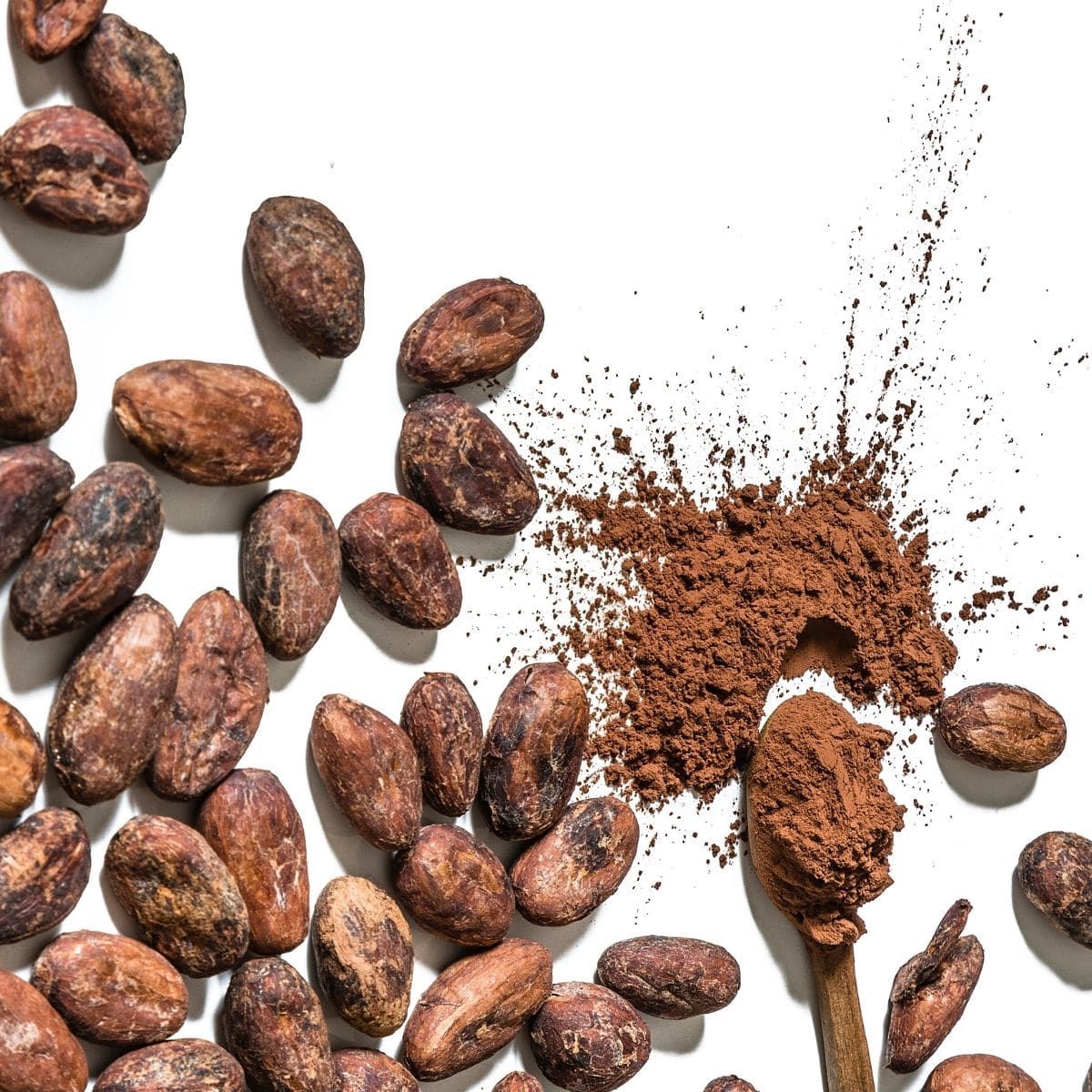
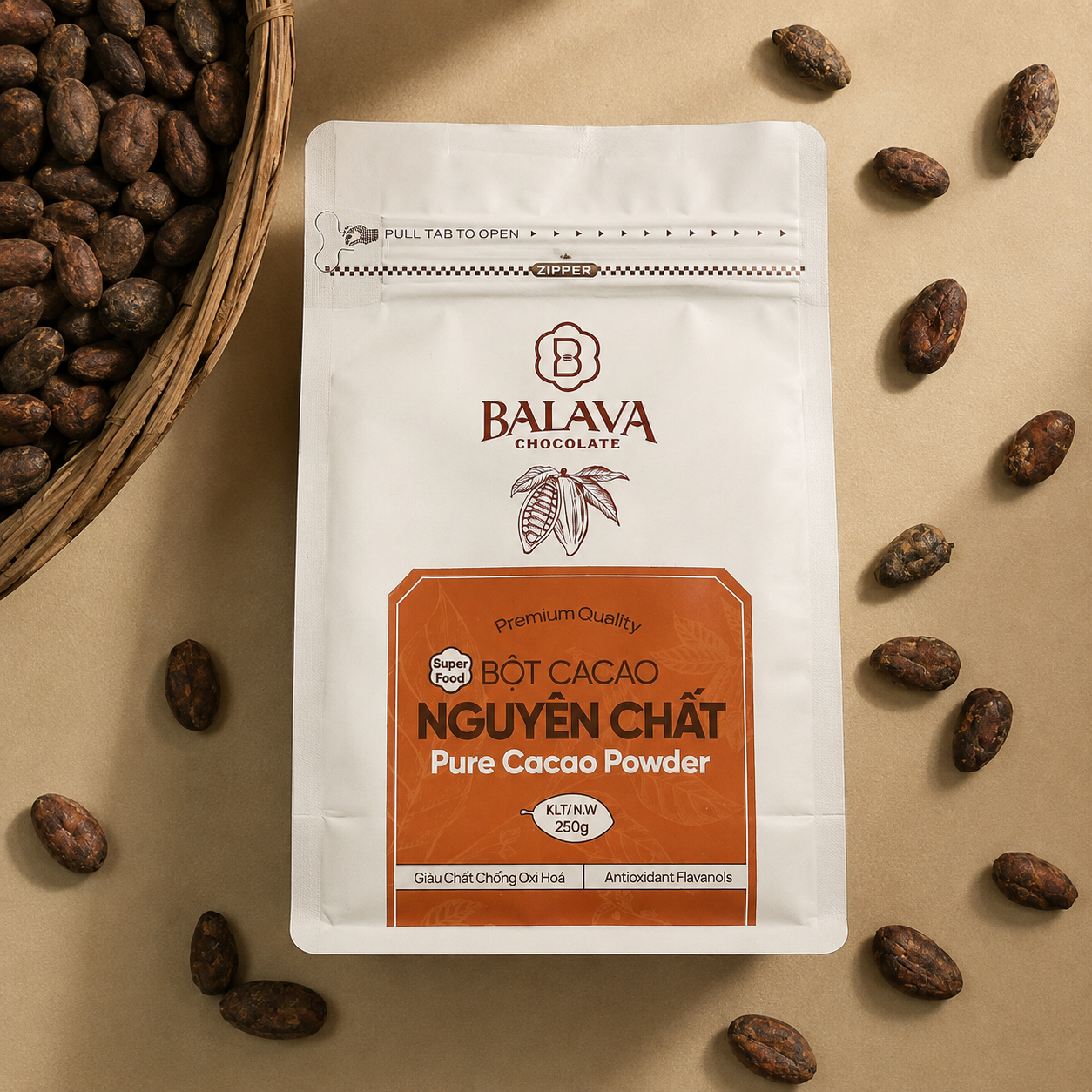
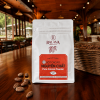
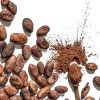
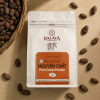
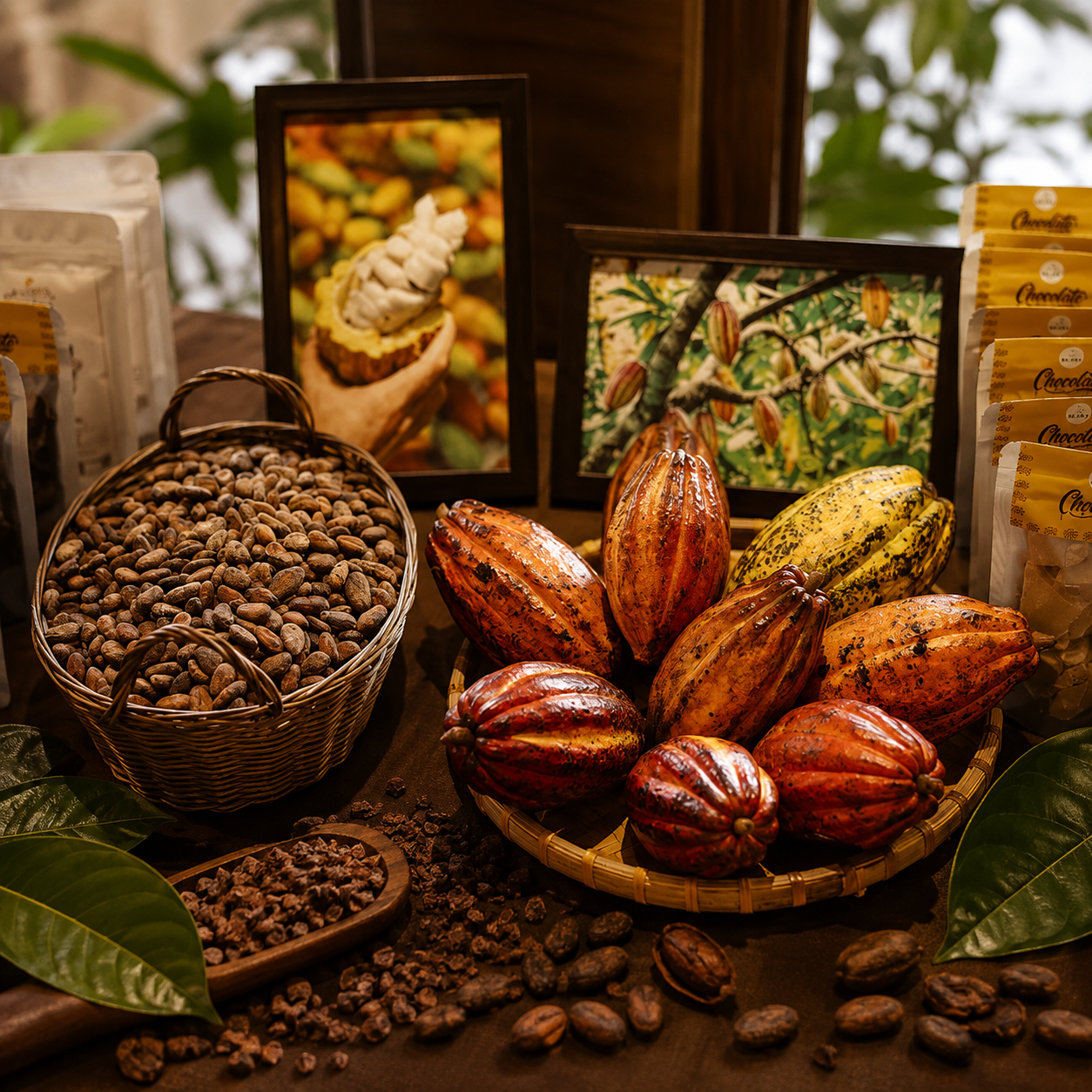
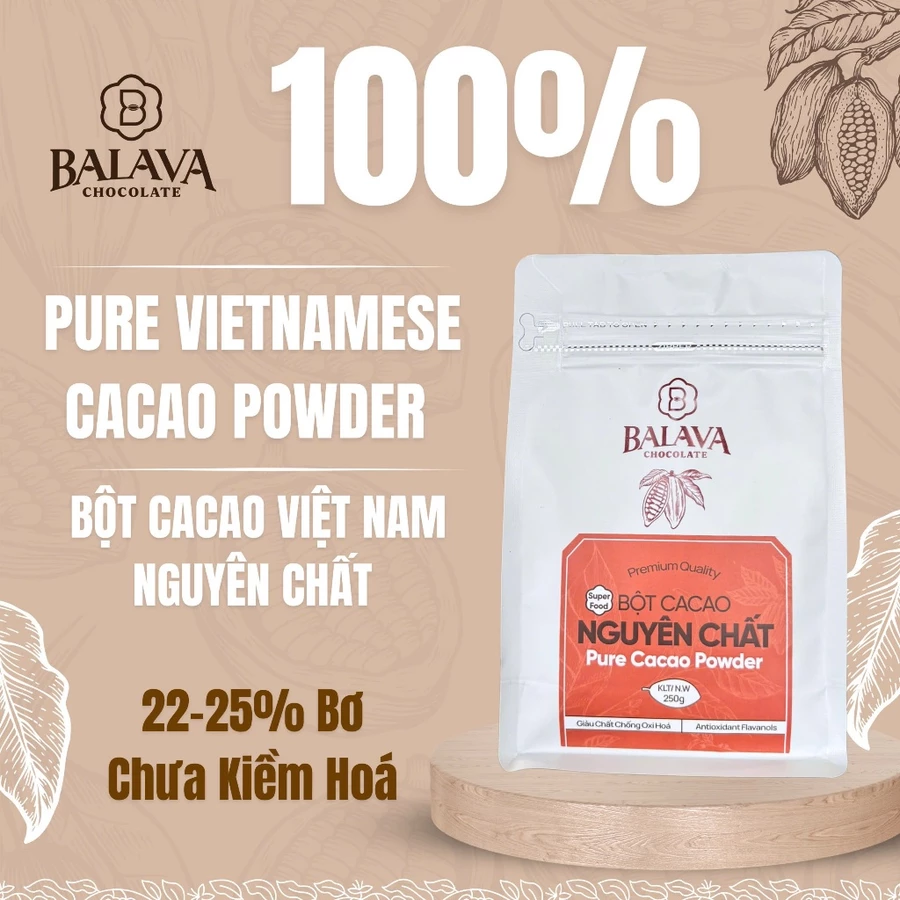
Most cocoa powder on the market has been alkalized and pressed almost dry. Darker colour, lower cost, and flat flavour. BALAVA goes the other way: non-alkalized, 22–25% cocoa butter retained, made from Lam Dong cacao that we ferment and roast ourselves.
Non-alkalized
Natural acidity and full flavanol content retained
22–25%
Cocoa butter — the highest US commercial grade
100–150 mesh
Fineness; disperses evenly without lumps
12 months
Shelf life from date of production
The two numbers that decide a cocoa powder
1. Non-alkalized — keeping what alkalization destroys
Alkalization, or Dutch processing, raises pH to darken the powder and soften acidity. The cost is flavanols, the antioxidant compounds that give cocoa its nutritional value.
Miller and colleagues, writing in the Journal of Agricultural and Food Chemistry (volume 56, issue 18, 2008), measured natural cocoa at pH 5.39–5.76 with total flavanols of 34.6 ± 6.8 mg/g. Lightly alkalized powder retained roughly 40% of that, medium about 22%, heavily alkalized about 11%. BALAVA powder goes through no alkalization step at all — clear fruit acidity, a clean finish, and the flavanol content the bean started with.
2. Cocoa butter at 22–25% — why the cup tastes rich without anything added
Industrial powder is usually pressed hard, because cocoa butter sells for more on its own. The lower the fat, the drier and duller the powder, and the thinner the drink.
Under the US definition in 21 CFR Part 163, powder at 22% fat or above is classified as breakfast cocoa — the richest of the three commercial grades. Standard cocoa is 10–22%; lowfat is under 10%. BALAVA keeps 22–25%: flavour carries further, the mouthfeel is round rather than chalky, and it disperses properly in fat-based work such as ganache, ice cream and mousse.
Specification
| Attribute | Detail |
|---|---|
| Composition | 100% pure cocoa powder — no additives, no preservatives, no added colour, nothing blended in |
| Cocoa butter | 22–25% |
| Alkalization | Non-alkalized (natural) |
| Fineness | 100–150 mesh |
| Colour | Natural chocolate brown to deep dark brown |
| Shelf life | 12 months from date of production |
| Storage | Cool, dry, away from direct sunlight. Reseal after opening |
| Cacao origin | Lam Dong and Binh Phuoc, Vietnam |
| Produced in | Da Lat, Lam Dong, Vietnam |
| Brand | BALAVA Chocolate |
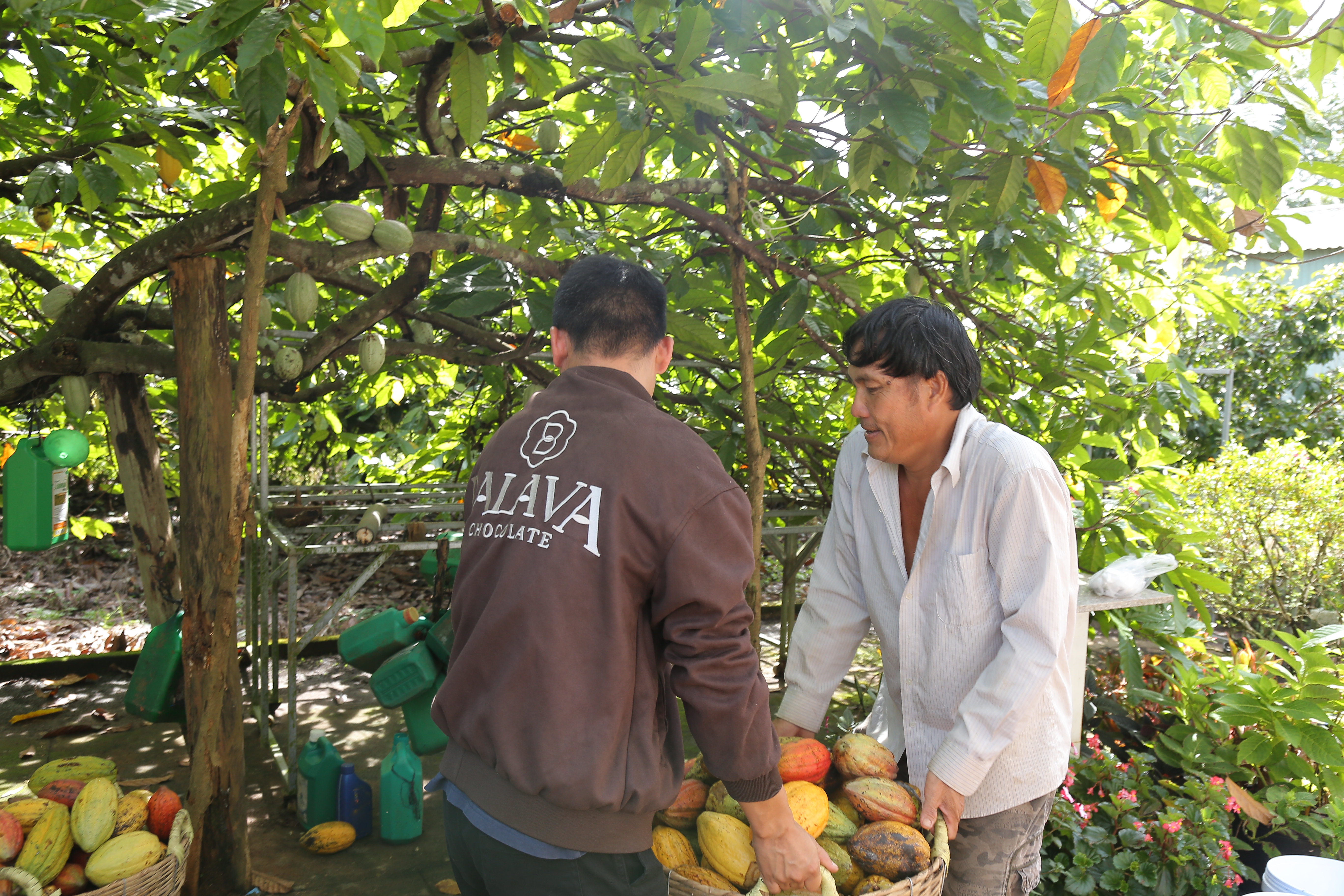
From the cacao garden to the pack
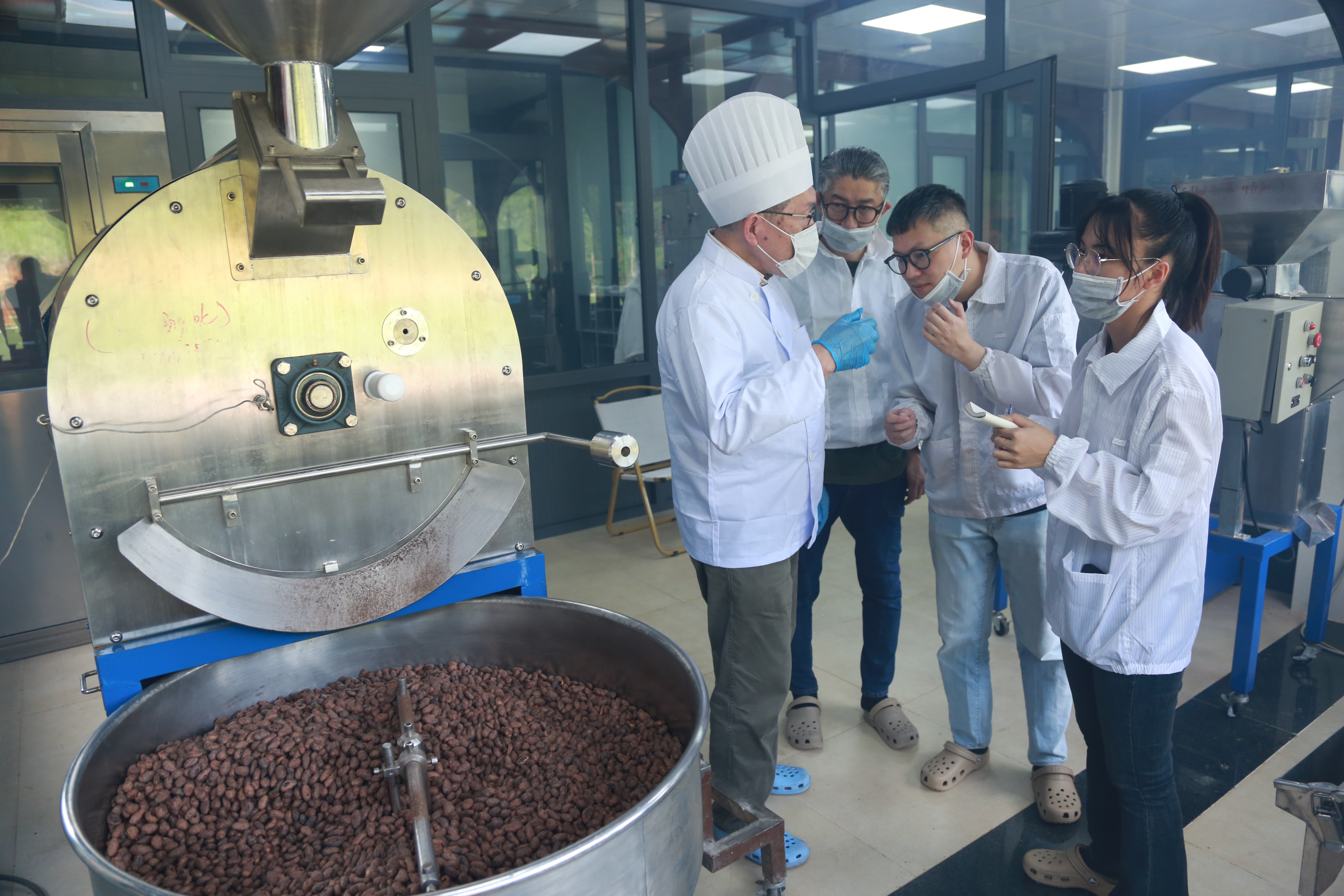
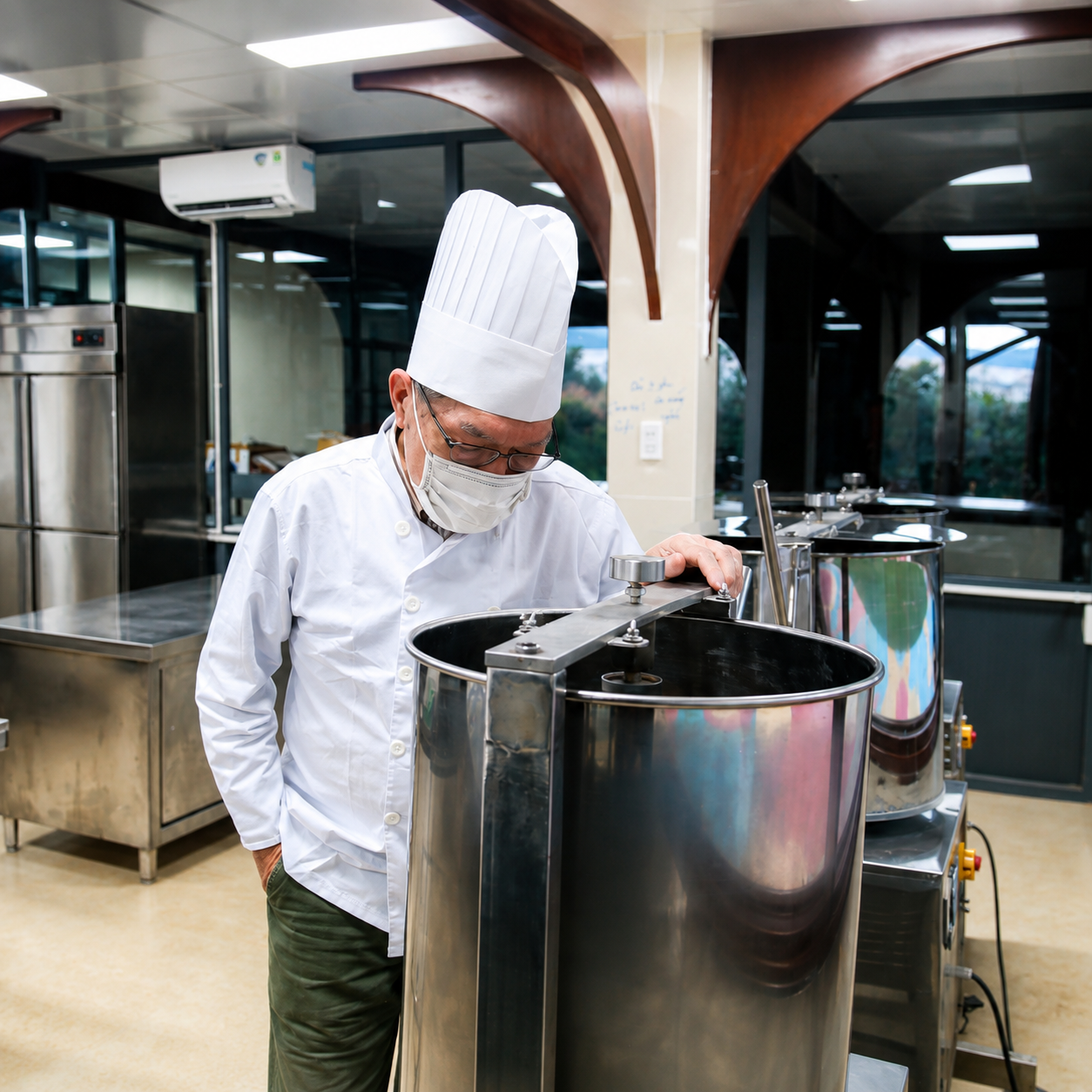
The difference is not made at the mill. It is made at fermentation — the stage that determines most of the final flavour. Most producers buy beans someone else has already fermented. BALAVA runs this stage too.
| Step | What happens |
|---|---|
| 01 · Harvest | Pods selected at full ripeness in Lam Dong. Under-ripe fruit lacks the pulp sugars fermentation needs, and nothing downstream recovers that |
| 02 · Fermentation | By the Nakano Mame method, with time and temperature closely controlled so the beans develop natural aroma, lose astringency and build a balanced flavour structure |
| 03 · Drying | Dried to specification, with moisture controlled before roasting |
| 04 · Roasting | A gentle roast that preserves aromatics rather than driving them off |
| 05 · Pressing and milling | Part of the cocoa butter is pressed out, 22–25% retained, then milled and sifted to 100–150 mesh |
| 06 · Check and pack | Every batch is checked before packing |

How to use it
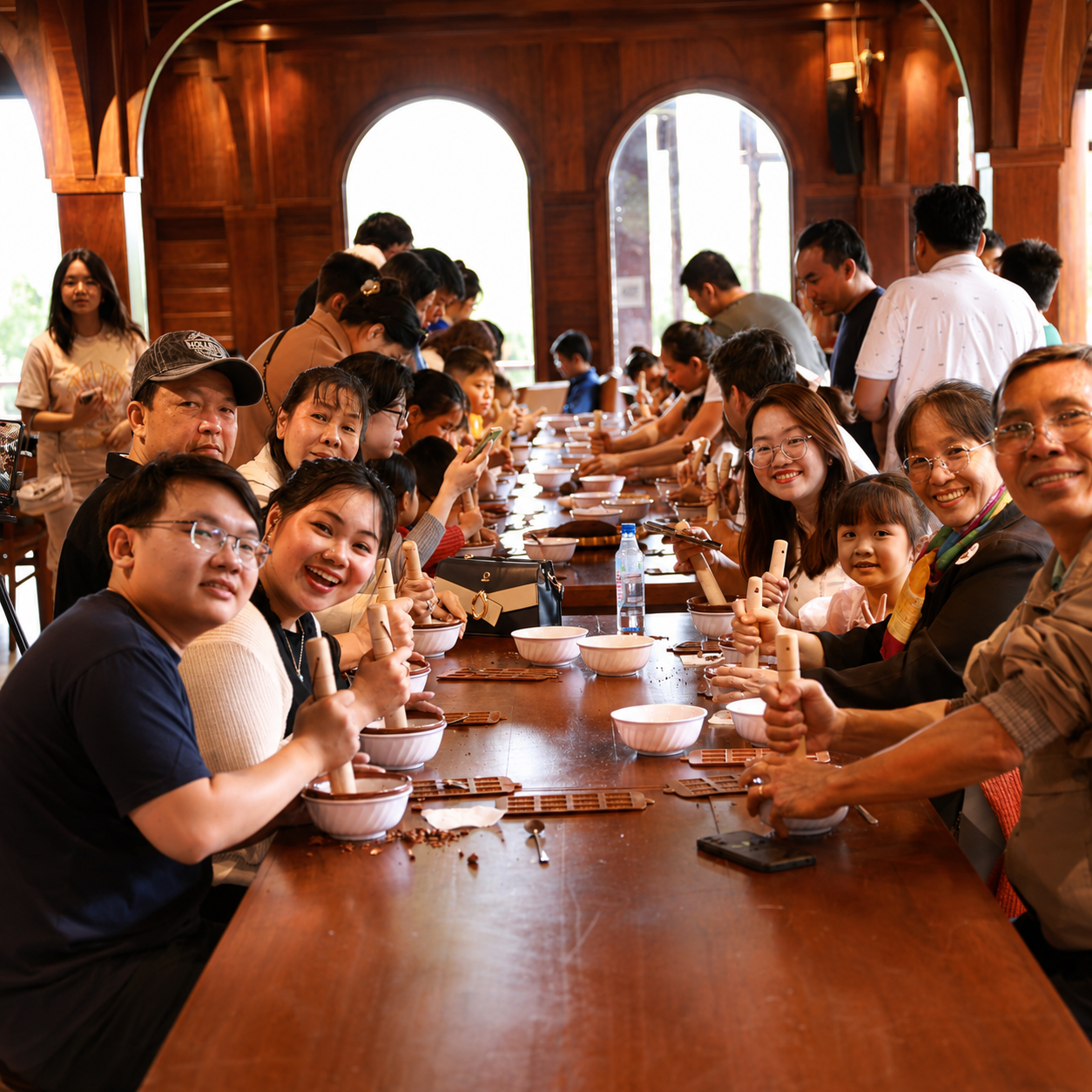
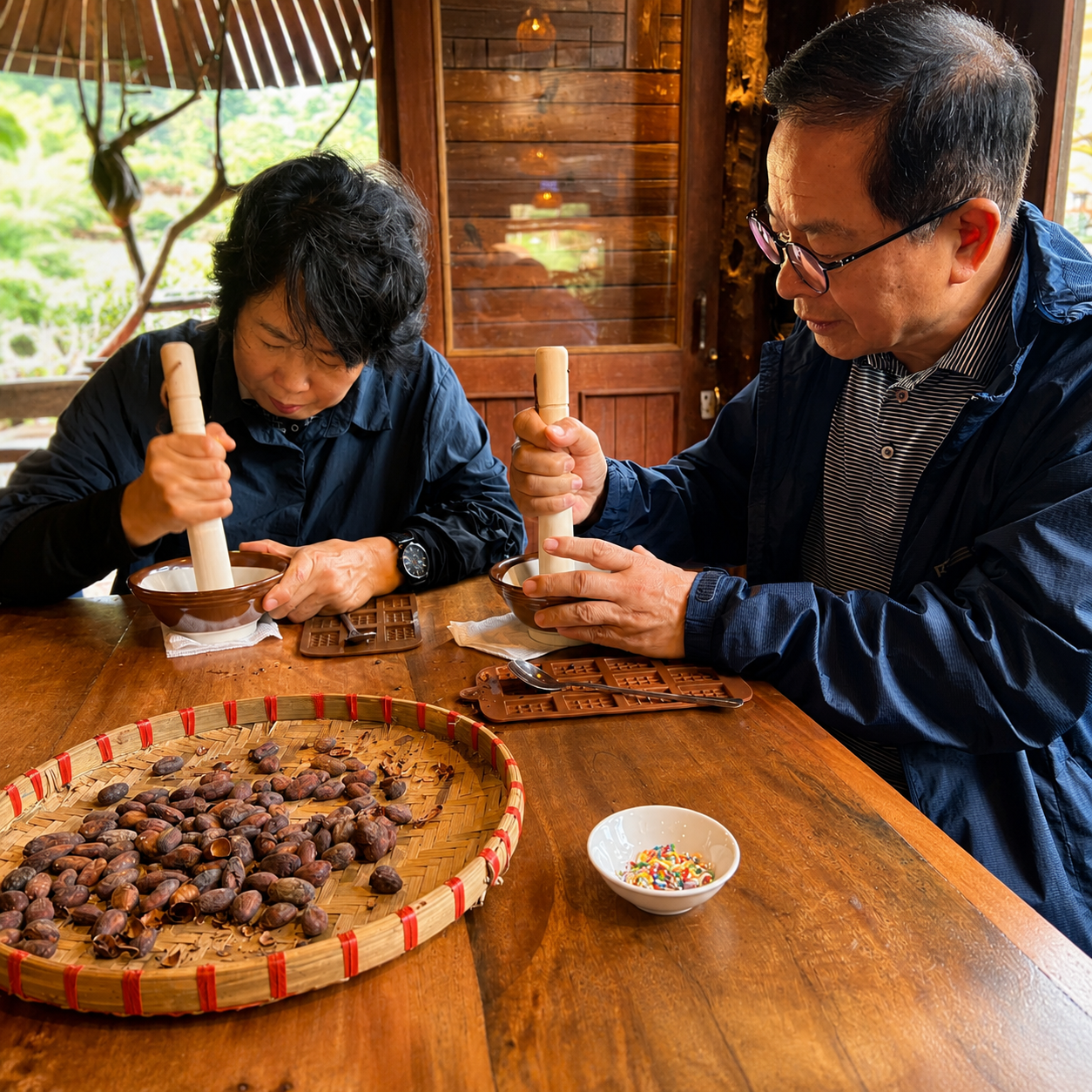
Hot cocoa — the workshop method
| Step | Action |
|---|---|
| 1 | Put 10 g of cocoa powder (about 2 teaspoons) into the cup |
| 2 | Add 30–40 g of condensed milk and stir to a smooth paste before adding any water |
| 3 | Pour in 150–180 ml of hot water at about 90°C and stir until fully dissolved |
| 4 | Adjust sugar and milk to taste. Add ice for a cold version |
One tip. Always work the powder into a paste with condensed milk or a little warm water before the hot water goes in. Pouring boiling water straight onto dry powder is the most common cause of lumps.
Baking and beverage work
With high residual cocoa butter and its natural acidity intact, BALAVA powder suits recipes where cocoa is the lead: brownies, cocoa cupcakes, tiramisu, chocolate mousse, ice cream and artisan drink work. In recipes written for Dutch-processed powder, expect a lighter colour and more pronounced acidity. If the recipe uses baking soda, natural powder is what you want, since it supplies the acid the soda reacts with.
Packing formats
| Format | Specification |
|---|---|
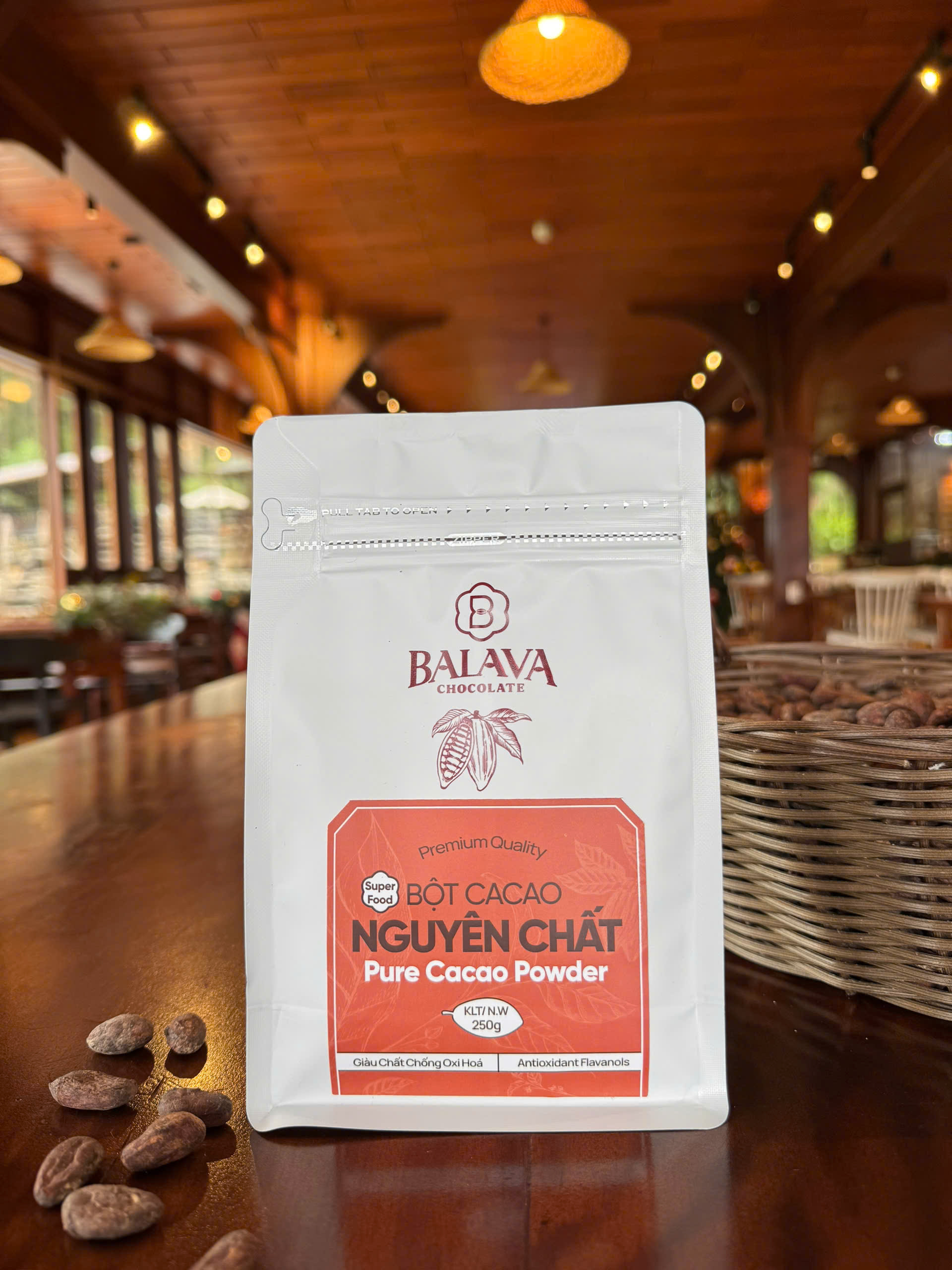
| Retail | 250 g and 500 g pouches |
| Wholesale | Kraft paper sacks with PP/PE liner, 20–25 kg each |
| Custom | Packing and labelling to buyer specification |
BALAVA cocoa powder is supplied domestically in Vietnam and exported to Australia, Russia, Korea, Japan, Germany and Denmark.
Frequently asked questions
How does non-alkalized powder differ in the cup?
Clearer fruit acidity and a cleaner finish, with a slightly lighter colour than Dutch-processed powder. If you are used to dark alkalized cocoa the first cup tastes different — most people do not go back.
Can I mix it with cold liquid?
Dissolve it first in a little warm water or condensed milk, then add cold milk and ice. Cocoa powder does not disperse directly into cold liquid.
Do I need to adjust my baking recipes?
If the recipe uses baking soda, use it as is — natural powder provides the acidity the reaction needs. If the recipe was written for Dutch-processed powder, the result will be lighter in colour and a little more acidic.
Why does cocoa butter content matter so much?
Cocoa butter carries aroma across the palate and produces a rounded mouthfeel. Heavily pressed powder tastes thin and dry. 22–25% delivers a full cup without added fats or flavourings.
How do I request bulk pricing or a sample?
Email or message us with your application and expected volume. We send powder from a current production batch together with the product documentation.
Laboratory test results
This product was independently tested at a laboratory accredited to ISO/IEC 17025:2017. Report no. 2510285A/KQKN, sample received 3 October 2025, testing period 3–11 October 2025.
Heavy metals and mycotoxins
| Parameter | Result (mg/kg) |
|---|---|
| Lead (Pb) | 0.16 |
| Cadmium (Cd) | 0.35 |
| Mercury (Hg) | 0.0082 (<LOQ 0.02) |
| Arsenic (As) | 0.033 |
| Aflatoxin B1 | Not detected (LOD 0.4) (µg/kg) |
| Total aflatoxins (B1, B2, G1, G2) | Not detected (LOD 0.4) (µg/kg) |
Aflatoxins were not detected on either parameter, and mercury was not detected. These are the two parameter groups buyers scrutinise most closely in nut and cacao products.
On cadmium in cocoa powder. Cadmium is taken up by the cacao tree from the soil, which makes it the parameter importers examine most closely when buying cocoa powder. The European Union sets a maximum level of 0.60 mg/kg for cocoa powder sold to the final consumer, under Regulation (EU) 2023/915.
The tested batch returned 0.35 mg/kg — below that level. We publish the figure rather than a general assurance, so wholesale and export buyers can check it against their own market standard.
Test results are valid only for the sample tested. Heavy metals and aflatoxins were determined by AOAC methods. LOD: limit of detection. LOQ: limit of quantification. Full copies of the test reports are available on request.
Order or request a wholesale quote
Retail, wholesale for cafés and pastry kitchens, custom packing, private label and export. We answer in English.
Email: mint@tgroup.vn
Zalo: zalo.me/640678654565315593
Phone: +84 979 600 379
Workshop: BALAVA Chocolate House, Da Lat, Lam Dong, Vietnam
Zalo: zalo.me/640678654565315593
Phone: +84 979 600 379
Workshop: BALAVA Chocolate House, Da Lat, Lam Dong, Vietnam